
Atikur Bhuiyan
This report will show theories identified and related with governance and sustainability and their suggestions in the real-life leadership and decision-making process. Governance is the way toward establishing standards rules and methodology for running an organization and ensuring their usage at each level of the organization (Aras and Crowther, 2012). Sustainability, instead is the method of guaranteeing environmental adjust in the business tasks.
Theories of governance and sustainability
In this section of the report the stakeholder versus shareholder hypothesis of governance will be reviewed. Stakeholders are the general people who impact a business’ decisions and the decisions of the business additionally impact them. The workers, society, government, general people, media, all are a part of the stakeholder group. The stakeholder theory is of the view that a business has more extensive responsibilities towards this stakeholder group other than making profit and henceforth decisions and plans ought to be taken that hold the enthusiasm of this group (Admin, 2013). The shareholder theory is of the view that a business exists to expand profit. shareholder is the general people who give or provide money to an organization. The management is employed as an operator of the owners to run the organization and subsequently they are legitimately and ethically dedicated to serve to the greatest advantage of the business (Hogevold and Svensson, 2016).
Sustainability is the performance of doing business together in a way that leaves more positive effect on the general public, society, and environment (Holt-Jensen and Pollock, 2009). There are three main concerns to Sustainability in business; these are economy, society and condition.
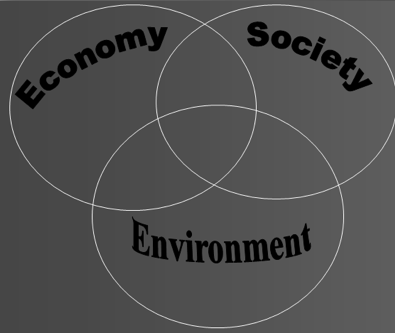
Economic and Financial sustainability alludes to holding stable profitability and development throughout the years. Societal sustainability implies giving general public eco- friendly items and guaranteeing their happiness and safety (nbs, 2017). Environmental sustainability implies diminishing the measure of carbon impression produced by a business.
Boardroom simulation exercise
The governance theory clarified above will enable me to recognize stakeholders and shareholders and the sorts of decisions that are designed for these two groups so as to hold their advantage and interest. Knowing the particular commitments and contributions that these two groups have in the business will likewise enable me to define decisions and systems that make a trade off of interest between these two groups and the general customers (Høgevold and Svensson, 2016). The sustainability theory, then again, explains the business’ parts in guaranteeing sustainability. Furthermore, it will be of assist in taking business decisions that incorporate the three sorts of sustainability applies stated above. These hypotheses have given me an arrangement of rules that can give me direction on where to begin basic leadership and decision-making from and the variables to consider in such manner. The sustainability issue will surely be included as another basis in the later basic leadership and decision-making process that generally would have been disregarded.
Challenges and opportunities of the theories presented
The stakeholder vs shareholder theory will unquestionably put the leaders and decision-makers in a predicament as to whose interest is to be held. Both are vital for the business. Serving the shareholders’ concern would put unnecessary impacts on the stakeholders as more noteworthy price, less occupations and less tax to the government (Admin, 2013). Though, holding the stakeholders’ interest may prompt less profit and growth of the business which is an infringement of one of the bottoms of sustainability. Henceforth, a business needs to trade-off. Organizations can spend money in welfare events as CSR and circulate the rest as profits among the shareholders. This little measure of spending can really establish a positive picture of the business and upgrade its acknowledgment among the clients and government which thus may bring about improved sales and support of the government (Lehman, 2015). These over the long run would serve the interest of the shareholders as the business can grow and make profit and advantage successively.
Nonetheless, spending through cash for sustainability cause may bring about huge spending at first, however it will over the long run save cost of the organization (Lehman, 2015). For instance, eco-friendly office will save service and utility bills and fuel-proficient vehicles will save transport cost. Cost minimization is equivalent to revenue increase. Welfare activities went for the environment and people will manufacture positive picture and give the business more prominent negotiating power with the government and clients. These decisions over the long run can create more benefits and accordingly save the concentration of both, the stakeholders and shareholders. Thus, it can be said as opposed to taking extraordinary side, making a trade-off is more gainful.
Explanation of the two phrases
Competing
There are difficulties and doubts in the business world. In addition, there are errors in the framework and diversities in individual’s view process. Every one of these obstructions are impractical for the business to deal with overnight. The best approach in such manner for the business is to set claim guidelines of doing business together in consistence with the ones set by the government. This can enable the business to keep running in a systematic way serving the enthusiasm of the two stakeholders and shareholders. This can assist them to dispose of pointless problem and persuade the customers of the business’ trustworthiness and sense of duty regarding the general public and society.
Games Against Nature
Conclusion
An organization does its business in the general public and society. Consequently, the intrigue and preferences of the general people must be contemplated while making decisions. The organizations can utilize the theories as a base of taking decisions that improve the viability of the decisions taken. It can direct them towards taking great decisions and evading mistakes.
References
Admin, C. (2013, July 16). Shareholder & Stakeholder Theories of Corporate Governance.
Corplaw.ie. Available at: http://www.corplaw.ie/blog/bid/317212/Shareholder-Stakeholder-Theories-Of-Corporate-Governance.
Aras, G. and Crowther, D. (2012). Business strategy and sustainability. Bingley, U.K.: Emerald.
Høgevold, N. and Svensson, G. (2016). Framing the development and directions of business sustainability efforts. Corporate Governance: The international journal of business in society, 16(4), pp.709-725.
Holt-Jensen, A. and Pollock, E. (2009). Urban sustainability and governance. New York: Nova Science Publishers.
Lehman, C. (2015). Sustainability and governance. Bingley, UK: Emerald Group Publishing Limited.
Low, K. and Arumugam, S. (2011). The Sustainability of Business Corporate Governance: Evidence from the Malaysia Public-Listed Companies. SSRN Electronic Journal.
Network for Business Sustainability. (2017). What is Business Sustainability? – Network for Business Sustainability. [online] Available at: http://nbs.net/about/what-is-business-sustainability/.
 Market Research