People everywhere throughout the world can make various decisions in view of various inclinations. Buyers purchase the items with which they feel natural and comfortable. An individual’s inclinations and level of comfort is determined through the intrinsic things that guide him or her to make choices in a specific sequence while they decide. The culture in which a person was raised represents a noteworthy impact in the inclination for one’s apparel. In the most recent, the world business condition is encountering radical changes by moving the clothing business from mass marketing into a time of mass customization.
Separated items went for particular fragments have turned into a fundamental marketing methodology in an industry portrayed by wild rivalry to see who can satisfy the clients the best. Truly, most buying of clothes was arranged as financial assets were rare. Notwithstanding, we currently observe a developing number of customers purchasing clothing on impulse i.e. an impromptu buy. This is another test for the clothing business.
What: The motivation behind the present examination is, to research consumer buying behavior of fashion apparel in The Netherlands.
Why: Most of the past research have concentrated on western nations. None of the examination study can discover regarding the Dutch context. Like this it is intriguing to direct an examination concentrated on the Dutch context.
How: Hopefully this investigation will be useful for the retailers and marketing supervisors to comprehend the consumer buying behavior in the unique situation.
Utilizing a quantitative approach, the examination will be led with a sample of 250-300(could be more) representing to the Dutch nations. A self-controlled questionnaire will be utilized to test five variables affecting consumer buying behavior.
1.Introduction
Fashion is greatly impacted by clothing through its continuous revolution of appearance and its traditional uses (O’Connor, 2005). Fashion is a method for individuals use to express the sense of beauty, and convey what society needs. (Klepp, 2005) comment that, clothes can be utilized as a strategy for showing the dissimilarities of standards, pull in consideration and irritate response.
Statement of the Problem
Companies and Markets (2015), one of the world’s biggest databases for statistical surveying, revealed that the worldwide clothing industry constantly demonstrates promising development with roughly 1.2 trillion dollars of retail sales. The internationalization of fashions industry has made an incredible effect on consumers’ purchasing behaviour regarding their clothing (Subhani, Hasan, and Osman 2011). The consumers buying behaviour are significant contributors of the utilization of fashion items. There are numerous investigations on customers buying behaviour in the fashion in other growing or developed markets, yet there are not any examinations conducted in the Dutch context. Kumar, Kim, and Pelton (2009) suggested that, more investigations are needed to decide the significant factors in connection to consumers fashion apparel Buying Behaviour.
In spite of the fact that Kumar et al’s. (2009) study found that the need for uniqueness and self-concept have a significant influence of consumers fashion apparel Buying Behaviour, examines on consumers fashion apparel Buying Behaviour that considers the influence from the marketing perspectives, for example, brand image, word of mouth and price are still rare and have minimal empirical evidence. Moreover, Tsiotsou (2006) has contended that the quality of clothing, Cultural Impact acts a vital role in in influencing individual’s fashion apparel Buying Behaviour. Furthermore, this investigation aims to analyse variables which are effectively influence consumers fashion apparel Buying Behaviour among the Dutch consumers.
Significance of the Study
Empirical gap
Despite the fact that, observing consumers’ fashion apparel buying behaviour is an important sector, most of the examinations related to this field has concentrated on USA (Lee and Kacen ,2008). Maheswaran and Shavitt, (2000) feature that, because of the high effect on consumer buying behaviour, it’s principal to give consideration to these distinctions so as to achieve in this worldwide business world.
Conceptual gap
As it is shown that significant conceptual gap in particular examination context related to the Netherlands and to the extent researchers’ understanding, there isn’t any research focused on the Netherlands, so far concerning to this issue. Since 1985, a growing number of studies have been conveyed to study buyers’ purchasing behaviour regarding fashion wear items (Davis, 1992; Ottaman, 1993) however has not previously been focused on the Netherlands fashion industry. In this way, there is an extremely limited knowledge on consumers’ buying behaviour perception about fashion apparel of Dutch context. Meanwhile, consumer buying behaviour itself is more prominent a subjective understanding is important to comprehend the determinants from the cultural, psychological and marketing point of view. Subsequently, managing this investigation, the researcher considers filling the important conceptual gap related to this examination context.
Scope and limitation of the study
Most importantly, this examination is focused on fashion clothing items. This is generally as of the limited resources, for example, budget and time. For instance, the researcher needs to financial plan individual financial resources to have the ability to effectively manage this study. Other than that, time limitation is an additional significant issue as there is a deadline to complete this examination in the academic year. Moreover, the examination is planned to be completed in the Netherlands. Additionally, the sample size (250) of this study is very small contrasting with the population size of the Netherlands.
Objectives of the Study
Based on the problem statement, the examination attempts to achieve the accompanying particular research objectives:
i) To analyse the key factors influencing consumers’ fashion apparel buying behaviour in the Netherlands.
Structure of the Study
The structure of this document is as per the following. The literature review which helps to develops main basis to this examination. Parts of this chapter will be established on consumers buying behaviour, fashion apparel and Factors Influencing consumers fashion apparel buying behaviour particular concerns about the related theories that has existed through literature developed by past researchers. Subsequently, the hypothetical foundations of this examination are discussed, which additionally include a research question which is furthermore divided into sub-questions. Afterwards, in the methodology part, it generally gives the point by point clarification about the research design which is being utilized for this investigation such as information collection methods, data analysing method, validity and reliability and so on that has being utilized to the investigation. Subsequently, experimental outcomes from the analysis are presented. The last section of this examination involves a conclusion and followed by recommendations for future research.
2.Literature Review
Fashion Apparels
When refer the term fashion apparel, several synonymous terms, covering this implication can be seen such as: clothes, dress, apparels and fashions (Hansen, 2004). Eicher and Roach-Higgins (1992) as “ assemblage of body modifications as well as supplements,” which embodies both capacities of expressiveness of the dress and the key impact which is entitled with material properties. (Polhemus 1996) states that, the advanced studies have identified with clothes are a media of represent society cross the country and everywhere in the world.
Consumer Buying Behaviour
”Consumer buying behaviour can be characterized as the idea, feeling and activity of consumers and the impacts on them that decide the trade” (Gilbert A. churchill, 1998), further express that, consumer buying behaviour comprises of scope of activities performed by consumers to use to choose, secure, utilize and discard item and services. Moreover, (PEREIRA, 2010) acknowledge that culture, ecological elements, and social elements correspondence additionally have a specific capacity to make some impact on consumers buying behaviour. Nonetheless, Kotler and Keller (2006) recognize that factors like physiological variables, socio-cultural components, individual elements, psychological elements can have a considerable effect on buying behaviour. Anyhow, the greater part of the buying behaviour that individuals require a structure and effort to comprehend the circumstance, identify alternative, gather data, and draw the required origins (Weitz and wensley, 2002).
Consumers’ Buying Behaviour on Fashion Apparel
Fashion apparel purchasing behaviour is an individualistic gender-based action. The decision to buy clothes due to feelings can be different from individual to individual as indicated by the covering, brand, and material. For instance, numerous individuals utilize colour and difference to express emotions in their mind. Nonetheless, elements, for example, item possessions, designs, comfort and uniqueness are assuming a definitive part on buyer’s clothing purchasing behaviour (PEREIRA, AZEVEDO, FERREIRA, MIGUEL, and PEDROSO, 2010). (Arriaga, 2005), ” design begins and finishes at the customers”.
“Unique” signifies “the one of a specific kind” (Dictionary.com, 2014). Mostly, people are interested to provide an awareness of uniqueness in personalities and need to project that unique self onto others (Snyder and Fromkin 1980). The individual’s consumers who have a higher need for uniqueness mind in general have a higher desire of difference from others and high enthusiasm for new items and brands; and they continually pay special mind to self-differentiating and non-outdated products (Lynn and Harris 1997; Tian and Mckenzie 2001). Consumers who want to be different from the others often use clothing items to show their special personalities and social image (Kumar et al. 2009; Workman and Kidd 2000).
H1: Need for uniqueness does not influence consumer fashion apparel buying behaviour.
Self-Concept
Self-concept refers to the way by which individuals take responsibility of their own thinking, behaviours, emotions and activities in understanding the condition that surrounds them (Farber 1983; Stryker 1987). As indicated by Kumar et al. (2009), self-concept can be regarded as an inclination whereby an individual has the idea and feeling of being different from others. In the customer market, purchasers regularly utilize certain items to describe their character or identity despite the fact that those items might not have much functional (Kumar et al. 2009).
H2: Self-concept does not influence consumer fashion apparel buying behaviour.
Brand Image
Brand image is characterized as a set of perceptions about an item that is reflected by the brand relationship in the purchaser’s memory (Keller, 1993). An item’s brand performance is a vital responsibility in marketing. It functions as a source of data to relate to the item in connection to its unique features (Aaker, 2009). The brand image makes values to consumers in a variety of ways. It helps customers to process data about the item, to differentiate one item from the other, to give motivations to buy the item, to create positive thoughts from the item, and to form a reason for expanded utilization of the item (Rajagopal, 2006). It has been stated that the brand is being noticed by the purchasers, the higher their interests with a specific item (Koh and Fang 2012; Matthiesen and Phau 2010; Zeb et al. 2011).
H3: Brand image does not influence consumer fashion apparel buying behaviour.
Word of Mouth (WOM)
Word of mouth (WOM) is characterized as “any informal, individual-to-individual communication process between a clear non-business communicator and a gatherer concerning an organization, a service, a brand, or an item” (Harrison-Walker 2001). Several remarks made by an individual to someone can have great or awful experience with a few items. As such, WOM is a kind of special communication about a brand item. Though the sender of data has no business expectation (Arndt 1967), the conducted data may impact another person to buy a specific item (Harrison-Walker 2001; Hung and Li 2007). WOM has been considered as a standout amongst the most influential forces in buyers’ decision making for fashion apparel (Martin and Jacob 2010). WOM impacts customer purchasing behaviour particularly when it makes one’s enthusiasm for fashion apparel (Schindler and Bickart 2012).
H4: Word of mouth does not influence consumer fashion apparel buying behavior.
Price of the product
Price has been a typical factor impacting consumers’ fashion apparel buying decision-making and selection of items (Ryu and Han 2010). Consumers will assess the awareness or appropriateness of the price for fashion apparel item and compare the prices charged by other competing organizations (Chen, Gupta, and Rom 1994; Gauzente and Roy 2012; Han and Ryu 2009). Consumers may not buy the item if the price is excessively costly in comparison to that offered by different sellers. This phenomenon is known as price awareness. Price consciousness mentions to “a purchaser’s ‘unwillingness’ to pay a higher price for fashion apparel item” (Lichtenstein, Ridgway, and Netemeyer 1993).
H5: Price of the product does not influence consumer fashion apparel buying behaviour.
Perceived Quality
Perceived quality refers to the purchaser’s judgment on fashion apparel item’s general execution instead of the actual quality of the fashion apparel item itself (Zeithaml 1988). Customers reviewer the quality of the product dependent on some educational signals and after that form an arrangement of conviction towards the item. The informational signals include both extrinsic and intrinsic features in connection to the item (Zeithaml 1988). In shopping for apparel, buyers mostly take an interest on a particular apparel dependent on their sensory perception—the look, and touch of the fashion apparel items. The sensory perception would lead a view of how great or terrible the fashion apparel would be as far as material, and design (Tsiotsou 2006).
H6: Perceived quality does not influence consumer fashion apparel buying behaviour.
Cultural Impact
Czinkota, Ronkainen (2004) specified in their book, “Culture is the thing that differs human from non-human. “Kotler and Armstrong (2014) take note of that, ‘culture is the most essential reason for a person’s wants and human behavior learned. In a developing society, a kid learns essential values, discernment, needs, and practices from his or her family and other imperative organisations.’ ‘culture is the most essential determents of a person’s needs and behaviour. It includes the fundamental values, discernment, needs and behaviour that individual gains consistently from a society’ (kotler, et al. 2010).
H7: ‘culture does not influence consumer fashion apparel buying behaviour.
Theoretical Framework
Sekaran and Bougie (2010) comments, theoretical framework communicates the beliefs of analyst about the relationship of specific variables which are utilized to examine the phenomenon. The framework of this investigation is stated below:
Research question
From the previously mentioned hypothetical and experimental literature, the analyst prepares the main research question:
What are the factors that influence Dutch consumers’ fashion apparel buying behaviour?
In order to complete this examination, the following sub-research questions were designed.
How does the need for uniqueness and self-concept affect the Dutch consumers’ fashion apparel buying behaviour?
How can brand image influence consumers’ fashion apparel buying behaviour?
How does Word of mouth influence Dutch consumer attitudes and purchase behaviour?
How do Dutch consumers’ get influenced by perceived quality and price of the product?
How does culture influence the fashion apparels buying behaviour of Dutch consumers?
3.Methodology
Research Approach
For The goal of this examination, the researcher will follow deductive approach with quantitative research method. Consequently, this specific research is design as a quantitative research according to analysis and developing survey method. Research problem and therefore the aim of the analysis are mainly the influencing factors to choose this reliable study technique. The collected information for this study is to be appraised with the use of SPSS to accept or reject null hypotheses, which is created by the researcher. By managing these hypotheses testing, the analyst recognizes the role of elements on consumer buying behaviour of fashion apparel in the Netherlands.
Research design
(McGivern,2006) states that, ‘’research design may be a framework on that sensible quality analysis is developed.’’ Hence, the exact research design structure develops an accurate foundation to provide evidence to honestly answer the research problems. In this research, cross-sectional research design will be used because it is the greatest function to answer the survey questions in this examination. A cross-sectional study is “the collecting of information on more than one case and at a particular point in time so as to the collection of quantitative data in relationship with at least two or more factors, which are then examined to recognize examples of association” (Bryman, 2007). There are a few motivations or reasons to select this technique. Above all else, Cross-sectional research design incorporates a higher number of cases, to sum up, and discover differences between variables. Moreover, it uses a positivist approach and completed with quantitative information collecting. Besides that, SPSS will be utilized to examine collected information and hence enables the researcher to compare between variables.
Data Collection:
The goal of this examination, the researcher will use both secondary and primary sources of data information. To collect secondary data from Books, databases and other dependable sources which assists to decide different elements that may have an influence on the consumer buying behaviour of fashion apparel. Surely, dependable literature inspires us to comprehend customers’ purchasing behaviour, fashion apparel and factors influence consumer fashion apparel buying behaviour.
In order to examine the present research issue, the researcher will collect primary data by utilizing the self-administered questionnaire. To collect primary information questionnaires will distribute at the supermarket, universities students and clothing store in the Netherlands.
To collect information, the researcher selects a convenience sampling technique. This technique is chosen as respondents are effortlessly accessible. convenience sampling technique which includes choosing the sample objects from which areas are now accessible to choose or members who are prepared to answer for research problems (joseph F. Hair, J., et al. 2007). This strategy is perfect for unknown people and investigating new research setting (David and Sutton, 2011; Kent, 2007).
Population and Sample size
Polit and Hungler (1999; 37) define “population as a total or totality of the considerable number of objects, subjects or individuals that conforms to an arrangement of particulars”. Notwithstanding, a sample is a subsection of an aggregate or a small amount of the population, chosen by the analyst to take part in the study project (Brink 1996:133; Polit and Hungler 1999:227). Though, sampling size is the procedure to choose a percentage of the population that characterise the total population (LioBiondo-Wood and Haber, 1998; Polit and Hungler, 1999).
The goal of this examination is to discover the factors of fashion apparel influencing customers’ purchasing behaviour. Thus, the researcher chooses a survey as a study strategy, where a consumer analysis will be directed to collect data from buyers who purchase consumer fashion apparel in the Netherlands. A survey achieves demonstrate from a sample of individuals throughout self-report where individuals respond to a sequence of questions presented by the researcher (Polit and Hungler, 1993).
The researcher expects to conduct a survey of 250 individuals in the Netherlands. Thusly, the questions of this analysis are effortlessly accessible. Additionally, this method needs a low cost to tool and as the analyst is a student who has less money, this methodology is the best choice. Moreover, the subjects are comprising of individuals of various ages, sexes, instructive qualifications, work and social status.
Data analysis
Once gathering data, it must be recorded, organized and analysed. On the other hand, information should be refined and relevant. Consequently, the collected information from this analysis is submitted and investigated with the support of SPSS so as to have the capacity to make a correlation between factors. There are many ways and methods available for hypothesis testing.
The researcher will apply inferential statistics and ttest to test the hypotheses. t test is chosen as it tests the null hypotheses that is developed from the existing literature. Moreover, the researcher codes the responses which allows to gain inferential statistics.
Data testing
This thesis will be conducted the multicollinearity test, model specification test, normality test for residuals, linearity test, autocorrelation test, unit root test, and heteroskedasticity test.
Measurement
Reliability
Saunders et al., (2009), defines reliability as “the amount of your information collection strategies or analysis method that will produce predictable findings “. There are three noticeable variables incorporated in reliability which are internal validity, stability and interobserver reliability.
The researcher attempts to set up stability throughout measurement procedure by discovering indicators and avoid emotional presence while developing the questionnaire try to ignore the influence of the results by any outside factors. The researcher believes that the measure will not differ after some time by measuring the Cronbach’s alpha before conducting statistical tests. The researcher plans to set a minimum Cronbach’s alpha value i.e. 0.5 with the goal that each summating scale should have satisfactory internal validity which begins from the resulting measurement. However, 0.7 is the minimum level of Cronbach’s alpha for the limited research, on the other hand, the author will accept 0.5 as a basic Cronbach’s alpha value as the surveys are administered so that avoid the researcher’s effect on the outcome.
Additionally, researchers have thought about how completely answered questionnaires will be analysed. Subsequently, researchers can be said that the primary data applied in this analysis is reliable and safe for the next prediction.
Validity
Sekaran and Bougie (2010 pp.157) specify that validity is a test of how well an instrument that is created measures the specific idea it is expected to measure’. Researcher believe that validity of this paper is high because of Researcher is measuring what Researcher are mean to measure. Researcher developed the self-design questionnaire with a minimal risk of misunderstanding. The answers will be collected from online survey, traditional paper and pencil self-administration ‘interview’ methods (PAPI) and all participant are Dutch nationality. When Researcher developed our questionnaire, Researcher had theoretical concepts in mind. It is explained that the questionnaire is for academic research in order to receive more positive results and return rates.
In my report validity is extern because of organize the question, solve the question and finding the result. In addition, the data Researcher will collect through this questionnaire it is can be free from systematic and random error. Thus, it can be said the questionnaire has met all of the requirements of validity.
The questionnaires designed for this research which taken from the conceptual framework which is important to generate a response on consumer fashion apparel buying behaviour. The measurement of independent variables will be applied very first time in this report. All The independent variables are measured from the five-point liker scale measurement. These questionnaires measured under independent variables.
Need for Uniqueness
My expectation regarding products Uniqueness is high.
I am looking for unique products.
I think that the design of the clothing is unique and very appealing to me.
Self-Concept
I feel self-concept go with my buying behaviour.
Without a lot of thinking I buy clothing when I find something like self-concept.
Brand Image
I think brand products are fashionable and elegant.
I think brand products is well- known and prestigious.
I think brand has a reputation for high quality.
I consider loyal towards brand products.
I think brand Offers products with excellent design.
Brand Offers very durable products.
Word of Mouth (WOM)
I take recommendation from my friends and family.
I have favourable attitudes towards Word of Mouth.
It is important that others like the product that I buy.
Price of the product
Offers good quality products with reasonable price.
price is my first priority among cloths.
I generally choose brands because of price.
Perceived Quality
I can understand products quality by seen it.
It is easy to find products reliability by seen it.
Cultural Impact
I believe culture plays important role in buying behaviour.
Do you believe that fashion products are influence by culture?
Research Ethics
Kent (2007, p. 38) states, ” Ethics are moral standards that monitor the techniques by which people treat their fellow individuals in circumstances where they can reason of actual or potential damage, regardless of whether financial, physical and psychological”. The researcher monitors different ethical positions in connection to the confidentiality of the two respondents and the outcomes of the analysis. It is important for this examination to save the respondents data top-secret and not to inform the results to unknown persons and outsider. Other than that, the originality of all contributors will be kept private to avoid any problem to them. The researcher avoids any sort of dishonesty in this examination and clarifies the honest reason for this information gathering method to the respondents.
Reference:
Aaker, D. A. 2009. Managing brand equity. New York: The Free Press.
Arndt, J. (1967). Role of Product-Related Conversations in the Diffusion of a New Product. Journal of Marketing Research,4(3), 291. doi:10.2307/3149462
Brink, H. (1996). Fundamentals of research methodology for health care professionals. Kenwyn.
Bryman, A. a. (2007). Business research methods. Oxford University Press.
Bryman, A. (2008). Social research methods. Oxford: Oxford University Press.
Bryman, A. a. (2011). Business research methods. Oxford University Press.
Bryman, A., & Bell, E. (2011). Business research methods. Oxford: Oxford Univ. Press.
Chen, I. J., Gupta, A., & Rom, W. (1994). A Study of Price and Quality in Service Operations. International Journal of Service Industry Management,5(2), 23-33. doi:10.1108/09564239410057663
Churchill, G. A., & Peter, J. P. (1998). Marketing: Creating value for customers. Boston, MA: Irwin.
Gauzente, C., & Roy, Y. (2012). Message content in keyword campaigns, click behavior, and price-consciousness: A study of millennial consumers. Journal of Retailing and Consumer Services,19(1), 78-87. doi:10.1016/j.jretconser.2011.09.003
Hair, J. (2007). Research methods for business. Chichester: Wiley.
Han, H., & Ryu, K. (2009). The Roles of the Physical Environment, Price Perception, and Customer Satisfaction in Determining Customer Loyalty in the Restaurant Industry. Journal of Hospitality & Tourism Research,33(4), 487-510. doi:10.1177/1096348009344212
Harrison-Walker, L. J. (2001). The Measurement of Word-of-Mouth Communication and an Investigation of Service Quality and Customer Commitment As Potential Antecedents. Journal of Service Research,4(1), 60-75. doi:10.1177/109467050141006
Hung, K. H., & Li, S. Y. (2007). The Influence of eWOM on Virtual Consumer Communities: Social Capital, Consumer Learning, and Behavioral Outcomes. Journal of Advertising Research,47(4), 485-495. doi:10.2501/s002184990707050x
Jayasingh, S., & Eze, U. C. (2012). Analyzing the Intention to Use Mobile Coupon and the Moderating Effects of Price Consciousness and Gender. International Journal of E-Business Research,8(1), 54-75. doi:10.4018/jebr.2012010104
Kawabata, H., & Rabolt, N. J. (1999). Comparison of clothing purchase behaviour between US and Japanese female university students. Journal of Consumer Studies and Home Economics,23(4), 213-223. doi:10.1046/j.1365-2737.1999.00112.x
Keller, K. L. (1993). Conceptualizing, Measuring, and Managing Customer-Based Brand Equity. Journal of Marketing,57(1), 1. doi:10.2307/1252054
Kent, R. (2007). Marketing research: Approaches, methods and applications in Europe. Thomson learning.
Klepp, I. G., & Storm-Mathisen, A. (2005). Reading Fashion as Age: Teenage Girls and Grown Womens Accounts of Clothing as Body and Social Status. Fashion Theory,9(3), 323-342. doi:10.2752/136270405778051329
Koh, T., & Fang, W. (2012). The effects of corporate social responsibility on purchase intention: The mediating effects of brand attachment and brand image. Journal of Business Administration,94, 41-68.
Kotler, P., & Keller, K. L. (2006). Marketing management. Upper Saddle River: Prentice Hall.
Kotler, P., Bowen, J., & Makens, J. C. (2010). Marketing for hospitality and tourism. Boston: Pearson.
Kotler, P., & Armstrong, G. (2014). Principles of marketing. Boston, MA: Pearson.
Kumar, A., Kim, Y., & Pelton, L. (2009). Indian consumers purchase behavior toward US versus local brands. International Journal of Retail & Distribution Management,37(6), 510-526. doi:10.1108/09590550910956241
Kumar, P. (2010). Marketing of Hospitality & Tourism Services. McGraw-Hill Education.
Kukar-Kinney, M., Xia, L., & Monroe, K. B. (2007). Consumers’ perceptions of the fairness of price-matching refund policies. Journal of Retailing,83(3), 325-337. doi:10.1016/j.jretai.2007.03.005
Lee, M., & Burns, L. D. (1993). Self Consciousness and Clothing Purchase Criteria of Korean and United States College Women. Clothing and Textiles Research Journal,11(4), 32-40. doi:10.1177/0887302×9301100405
Lee, J. A., & Kacen, J. J. (2008). Cultural influences on consumer satisfaction with impulse and planned purchase decisions. Journal of Business Research,61(3), 265-272. doi:10.1016/j.jbusres.2007.06.006
Lichtenstein, D. R., Ridgway, N. M., & Netemeyer, R. G. (1993). Price Perceptions and Consumer Shopping Behavior: A Field Study. Journal of Marketing Research,30(2), 234. doi:10.2307/3172830
LoBiondo-Wood, G. a. (1998). Nursing research: Methods and critical appraisal for evidence-based practice. Elsevier Health Sciences.
Lynn, M., & Harris, J. (1997). The desire for unique consumer products: A new individual differences scale. Psychology and Marketing,14(6), 601-616. doi:10.1002/(sici)1520-6793(199709)14:63.3.co;2-f
Martin, O., & Jacob, F. (2010). Empowered involvement and word of mouth: Conceptual model and first empirical evidence. Journal of Marketing Trends,1, 25-33.
Matthiesen, I., & Phau, I. (2010). Brand image inconsistencies of luxury fashion brands. Journal of Fashion Marketing and Management: An International Journal,14(2), 202-218. doi:10.1108/13612021011046066
Oconnor, K. (2005). 3 The Other Half: The Material Culture of New Fibres. Clothing as Material Culture,41-60. doi:10.2752/9780857854056/clmatcult0006
Palazón, M., & Delgado, E. (2009). The moderating role of price consciousness on the effectiveness of price discounts and premium promotions. Journal of Product & Brand Management,18(4), 306-312. doi:10.1108/10610420910972837
Pereira, M., Azeved, S., Ferreira, J., Migul, R., & Pedroso, V. (2010). The influence of personal factors on consumer buying behaviour in fashion. International Journal of Management Cases,12(2), 509-518.
Phau, I., & Lau, K. C. (2001). Brand personality and consumer self-expression: Single or dual carriageway? Journal of Brand Management,8(6), 428-444. doi:10.1057/palgrave.bm.2540042
Polit, D. F., & Hungler, B. P. (1993). Nursing research: Principles and methods (3rd edition). Philladelphia: Lippincott.
Polit, D. F., & Hungler, B. P. (1999). Nursing Research: Principles and Methods. Philadelphia: J.B. Lippincott.
Rajagopal. (2006). Brand excellence: Measuring the impact of advertising and brand personality on buying decisions. Measuring Business Excellence,10(3), 56-65. doi:10.1108/13683040610685793
Ryu, K., & Han, H. (2009). Influence of the Quality of Food, Service, and Physical Environment on Customer Satisfaction and Behavioral Intention in Quick-Casual Restaurants: Moderating Role of Perceived Price. Journal of Hospitality & Tourism Research,34(3), 310-329. doi:10.1177/1096348009350624
Saunders, M., & Lewis. P. and Thornhill, A. (2009). Research methods for business students. Prentice hall, Financial Times.
Schiffman, L. G., Hansen, H., & Kanuk, L. L. (2011). Consumer behaviour: A European outlook. Harlow: Financial Times Prentice Hall.
Schindler, R. M., & Bickart, B. (2012). Perceived helpfulness of online consumer reviews: The role of message content and style. Journal of Consumer Behaviour,11(3), 234-243. doi:10.1002/cb.1372
Tian, K. T., Bearden, W. O., & Hunter, G. L. (2001). Consumers Need for Uniqueness: Scale Development and Validation. Journal of Consumer Research,28(1), 50-66. doi:10.1086/321947
Tian, K. T., & Mckenzie, K. (2001). The Long-Term Predictive Validity of the Consumers’ Need for Uniqueness Scale. Journal of Consumer Psychology,10(3), 171-193. doi:10.1207/s15327663jcp1003_5
Trusov, M., Bucklin, R. E., & Pauwels, K. (2009). Effects of Word-of-Mouth versus Traditional Marketing: Findings from an Internet Social Networking Site. Journal of Marketing,73(5), 90-102. doi:10.1509/jmkg.73.5.90
Tsiotsou, R. (2006). The role of perceived product quality and overall satisfaction on purchase intentions. International Journal of Consumer Studies,30(2), 207-217. doi:10.1111/j.1470-6431.2005.00477.x
Vikkraman, P., & Sumathi, N. (2012). Purchase Behaviour in Indian Apparel Market: An Analysis. ZENITH International Journal of Business Economics and Management Research,2(2), 1-12.
Watchravesringkan, K. (., Yan, R., & Yurchisin, J. (2008). Cross‐cultural invariance of consumers price perception measures. International Journal of Retail & Distribution Management,36(10), 759-779. doi:10.1108/09590550810900982
Workman, J. E., & Kidd, L. K. (2000). Use of the Need for Uniqueness Scale to Characterize Fashion Consumer Groups. Clothing and Textiles Research Journal,18(4), 227-236. doi:10.1177/0887302×0001800402
Zeb, H., Rashid, K., & Javeed, M. (2011). Influence of Brands on Female Consumers Buying Behavior in Pakistan. International Journal of Trade, Economics and Finance,225-231. doi:10.7763/ijtef.2011.v2.107
Zeithaml, V. A. (1988). Consumer Perceptions of Price, Quality, and Value: A Means-End Model and Synthesis of Evidence. Journal of Marketing,52(3), 2. doi:10.2307/1251446
Appendices
Appendix A1: Questionnaire
Questionnaire for Consumer buying behavior
Following Questionnaire will be used to collect data as part of my master’s thesis which is titled ‘Influence on consumer behavior in the fashion industry.’ Data collected here will only be analyzed in general. All responses will be kept highly confidential and used for academic purpose only.
Section I: General Information. Please tick in front of the correct answer or and in other cases
Write Short answers.
Please state your gender
Male
Female
Please state your age group
18-24
25-34
35-44
45-54
55-64
65+
Please state your current employment status
Student
Unemployed
Self-employed
Part time employment
Full time employment
Retired
On average how much would you spend on fashion apparel?
€50-€99
€100-€149
€150-€199
€200-€249
€250+
for following statements. For Each Statement You have 5 choices ranging from Strongly Disagree to Strongly Agree. Following are the Values assigned for each choice.
Strongly Disagree = 1
Agree = 4
Disagree = 2
Strongly Agree = 5
Neither Agree nor Disagree = 3
Following Questionnaire are draft questions. It is not final survey question. Researcher collected these questions from different sources.
My expectation regarding products Uniqueness is high
1 2 3 4 5
I am looking for unique products
1 2 3 4 5
I think that the design of the clothing is unique and very appealing to me.
1 2 3 4 5
I feel self-concept go with my buying behavior.
1 2 3 4 5
Without a lot of thinking I buy clothing when I find something like self-concept.
1 2 3 4 5
I think brand products are fashionable and elegant
1 2 3 4 5
I think brand products is well- known and prestigious.
1 2 3 4 5
I think brand has a reputation for high quality.
1 2 3 4 5
I consider loyal towards brand products.
1 2 3 4 5
I think brand Offers products with excellent design.
1 2 3 4 5
Brand Offers very durable products.
1 2 3 4 5
I take recommendation from my friends and family
1 2 3 4 5
I have favorable attitudes towards Word of Mouth.
1 2 3 4 5
It is important that others like the product that I buy.
1 2 3 4 5
Offers good quality products with reasonable price.
1 2 3 4 5
price is my first priority among cloths.
1 2 3 4 5
I generally choose brands because of price.
1 2 3 4 5
I can understand products quality by seen it.
1 2 3 4 5
It is easy to find products reliability by seen it.
1 2 3 4 5
I believe culture plays important role in buying behavior.
1 2 3 4 5
Do you believe that fashion products are influence by culture?
The aim of this study is to examine the extent of employee motivation in UK retail sector, particularly Tesco Plc. This chapter provided the background issues of the research along with rationale of the research, research aims and objectives, research questions, organisational background, as well as organisation of the study.
1.1. Research Background:
Retail industry is one of the most crucial components of UK economy, mainly due to its acts on large scale. There are 428000 retail businesses (8.9% of UK business) in the UK that accounts 35% of all turnover (Rhodes, 2014) and 14% of all employment in the UK (Mosley et al. 2012). The retail industry in the UK undergone huge change over the last few decades and new retail facilities and formats ranging from retail stores to superstores have provided scope to widened the landscape of retail business (Experian, 2011). The industry is full of competition due to the existence of many local and international players mainly Tesco, Sainsbury’s, Asda, Morrison, and so on. Due to extensive competition in the market and the changing customer behaviour, retailers are subject to strive to have competitive advantage where employees play the crucial role as employees meet the customers (Rhodes, 2014). Therefore, human resource management is always a key concern of retailers in the UK.
Nowadays the business organisations are forcing by the globalisation and due to the rapid growth of information technology the firms are having a strong cut-throat competition in any business. Human resource management is one of the most important sectors to consider in any business and it plays a significant role in attaining the competitive advantage and sustain in the market as human resource or the employed are directly connected with the customer. Human elements and the firms are identical (Tella, 2007). Overcoming competition and meeting changing customer needs is the most difficult task retailers are facing where inspiration can be brought through by satisfying and motivating employees as the commitment and hard work of employees are likely to bring a base to develop organisational commitment that is crucial to deliver quality service to the customers (Kumar, 2014). Motivation is a part of human resource management, which are usually practiced in every aspect of activities to encourage people to work better. It is vast in nature than just defining with encouragement in terms of human resource management (Lisa et a., 2013).
The idea of motivation is quite old in the business world yet it is an important aspect to consider by a business to ensure the quality and effective performance of the employees and therefore the organisation as a whole (Wei-Tsong and Ya-Pei, 2015). Motivation is the internal and external driver to influence the employees in achieving their goals whether it is personal, professional or organizational. Similarly, it also inspires and influences the individuals’ interest towards the work resulting into the higher commitment towards their job leading to positive environment at workplace motivating others too. The commitment towards the job can be being efficient and effective, being punctual, following the policies, maintaining the standards and so on (Adzei and Atinga, 2012; Kaanfer, 1990). The importance of motivation is widely accepted and suggested by different author, researchers and writers, in the context of having potential workforce and ensures the highest level of productivity, performance of the firm and achieving the objectives of organisation goal.
Motivation is a widely studied human resource management concept. Over the years different authors developed different motivational frameworks which can be categorised or discussed two categories, which are content theories and process theories (Pattyanayak; 2006; Aina, 2014).
Content theories of motivation address the needs and values of people to be fulfilled, whereas process theories address the process of initiating behaviour, sustaining it and finally extinguishing. Content theories focus more on needs those are to be fulfilled so these needs are to be studied so that people can be satisfied effectively by fulfilling their needs. Hence, their performance can improve to higher level (Thomson, 1996; Aina, 2014). Some of the key content theories include Herzberg’s Two Factor Theory, Maslow’s Needs of Hierarchy Theory, Alderfer’s ERG Theory, McGregor’s X-Y Theory, and David McClelland’s Three-Need Theory (Adzei and Atniga, 2012).
On the other hand, process theories focus on the individual behaviour that needs to be uplift, lead and maintained. That means, process theories are more concerned with the individual behaviour driven by their satisfaction towards their job due to the kind of incentives or rewards they are provided with or no rewards at all. Process theories include Goal Setting Theory, Expectancy Theory of Victor Vroom and Adam’s Equity Theory (Aina, 2014).
1.2. Rationale of the Research
Employees or workforce are being more valuable and important asset for a firm and the employers needs to ensure the motivation of the employees with offering positive environment and different incentives (Honore, 2009). When the employees of the firm are motivated the turnover reduces and there have enthusiastic individuals who perform better. The motivation has been a strategy for organisation and the academic and practitioner’s community have identified different aspects of motivations on their studies (Robbins, 2003; Henderson and Tulloch, 2008). Employee motivation has been subject to research area over the years due to its significance contribution in the attainment of organisational goals. However, it is still remains unexplored to some extent as a general understanding has not yet been developed when it comes to researches conducted in different working settings at different times and retail sector (Kumar, 2014). Earlier studies have formulated different motivational tools (Aina, 2014), yet a unique motivational tool or framework is yet to develop for the UK retail sector though motivated workforce is required for this industry to ensure survival of the organisation.
The basic reason to constructs the topic motivation at work is particularly significant as well as appropriate in current consequence of the subject area and the results of researcher on the contest of motivational factors (Honore, 2009). This research is focus on the motivational key factors of employees at Tesco and identifies these factors which will allow the research to the literature to determine the key factors of motivation in modern business, especially in retail business in the UK.
The selection of the case study organisation is chosen Tesco Plc, where the researcher can enter to discover the main factors or the pointers of employee motivation (Henderson and Tulloch, 2008). In addition, Tesco needs motivated workforce to ensure its survival and competitive advantage in the dynamic marketplace full of competition while the purchasing behaviour of customers is changing constantly. Employee motivation is significant for the continued growth of the company (Times 100, 2014). Besides, the researcher has personal experience to work at the selected organisation as a part-time worker for two years which will facilitate the researcher to offer the insight into the aspects of motivation of the firm.
1.3. Aim and objectives:
The purpose of this study is to examine the extent of employee motivation in UK retail sector, particularly Tesco Plc. The objectives of this study include the followings:
To critically investigate the key employee motivation issues or factors in a retail setting.
To examine the extent of employee motivation of Tesco Plc.
To offer some recommendations to Tesco Plc to improve employee motivation.
1.4. Research questions:
In order to attain the above-mentioned research objectives, the following questions will be answered through collecting and analysing data:
What are the key motivational factors in retail the context of retail industry?
Are the incentives offered by Tesco to its employees enough to motivate the adequately?
How a retailer can improve employee motivation to enhance employee performance?
1.5. Organisational Background:
Tesco Plc is a UK based multinational retailers which spread its wings into 12 economies across United Kingdom, Europe and Asia. It is the largest retailer in the UK consisting of around 3378 stores and over 310000 colleagues (Reuters, 2014; Tesco Plc UK, 2014). In 12 markets, the numbers of employees of Tesco is over 50000 who are dedicated to offering the most impelling offer to the customers, and serving around 85 millions of customer every week (Tesco Plc, 2014).
Tesco consistently strives to understand customers, be the first to meet their needs, and act responsibly for the shareholders including communities. The company focuses to understand what matter to the customers, employees and communities so as to act in a manner to make those things better (Tesco UK, 2014).
Human resource management is always a key to Tesco. The company recognised employees as a key of its success and base to ensure its future success (Times 100, 2014). Thus, it treats colleagues how they really want to be treated such as working as team, sharing knowledge and experiences, trusting and respecting each other, and listening and supporting employees (Tesco UK, 2014).
Chapter 2: Literature review
2.0. Introduction:
Literature review refers to the use of ideas, concept, models or theories in the literature with the intention of justifying the specific approach to the research topic, and the demonstration which this research contributes something new (Hart, 1998). In this chapter, the concept of employee motivation, its importance and theories are reviewed to identify the dependent variables (motivational factors) and independent variables (employee motivation and job satisfaction). The ultimate goal of this chapter is to have a theoretical framework for this research.
2.1. Employee motivation
Motivation is a part of human resource management, which are usually practiced in every aspect of activities to encourage people to work better. It is vast in nature than just defining with encouragement in terms of human resource management. According to Meyer et al. (2004), there have been various involvements of authors in defining motivation where it has been described in different perspectives. So, there is no general universal definition of motivation. Nahavandi and Malekzadeh (1999) stated motivation as the key factor to establish mind-set in an individual with setting goals and attentiveness while operation, which consequently lead to accomplishment.
On the other hand, Steiner (1972) defined motivation as inner condition of individuals that influences their behaviour in such a way that directs them towards the goals achievement. That means, motivation is reflected as the internal forces that drives the individual’s effort, attitude, behaviour and persistence. In addition to that, Latham and Pinder (2005) also stated motivation as the set of internal and external forces of an individual to initiate activities, which determines the behaviour and passion. However, Locke and Latham (2004) argued that motivation couldn’t only be internal factor influencing individual behaviour but also set of incentives as encouragement.
Thus, as per the understanding from the above definitions from different perspectives, it can be summarized that motivation is the internal and external driver to influence the employees in achieving their goals whether it is personal, professional or organizational. Similarly, it also inspires and influences the individuals’ interest towards the work resulting into the higher commitment towards their job leading to positive environment at workplace motivating others too. The commitment towards the job can be being efficient and effective, being punctual, following the policies, maintaining the standards and so on (Adzei and Atinga, 2012; Kaanfer, 1990).
2.2. Importance of Motivation in retail sector
Motivation at work has been very influencing in achieving organizational goals (Manolopoulos, 2007). According to Nahavandi and Malekzadeh (1999), motivation contributes to individual performance and hence results into better organizational performance. It also provides strength to do any tasks for people and allow them to concentrate on their job committedly (Huitt, 2003). In addition to that Ogunrin (2007) added it to strengthen the individual psychologically. Whereas, Manolopoulos (2007) further stated apart from psychological strength, it also induces higher performance and productivity due to internal and external motivations.
On the other hand, Luthans (2011) signifies that motivation is an expression to understand the behaviour of the individuals in organizations. For example, any individual implied with motivational aspect might transfer or change its behaviour at work, which means the person was seeking motivations and inspirations. Likewise, it will benefit company to understand its employees closely. Similarly, in case of Dwivedi (2012), it defines motivation to be important aspects for the organization to enhance employees’ performance, which will consequently enhance the performance of the organization. On the other hand, as discussed by Curz et al., (2009), it is crucial for the employees as well to realize or experience their value being appreciated by the company. That means, if an employee works for a company and has never been appreciated or given any kind of incentives might not be able to perform well in long run. Hence, the company needs to make the employee that he or she plays important role in achieving company’s goals. This can be done by providing the employees with various further career opportunities and personal growth. It further adds that employers need to maintain the well-being and good relationship with employees by offering them a safe and satisfactory working environment, which will definitely enhance the performance resulting into efficient outcome from the employees. (Luthans, 2011)
Thus, according to Osterloh et al. (2002), it is clear that particular motivational factors implied at right time and right place can play a vital role in defining and achieving organization goals. While many other researchers (e.g. Griffine and Neal, 2000) recognized motivation as the significant factor that determines the creative and innovative behavioural aspects of employees (Shalley et al., 2004). So, in line with that Lin and Liu, (2012) justified that these creative and innovative skills are realized as the key success factor and competitive advantage that can be used to adjust with the changing environment of economy, workplace, social life and so on. Therefore, these innovative and creative skills are enriched with motivations so that it will lead to enhancement of the behaviour at work. (Amabile, 1988).
Furthermore, as mentioned earlier about influencing the work environment due to practice of motivational aspects, it can be understood that motivation stands as key factor to transfer the knowledge to the other colleagues at work and building proper relation at work (Curz et al., 2009). That means, practice of motivations allows employees to transfer the knowledge within the organization as a result of which it will incorporate the employees to work together efficiently and effectively. Hence, this will lead the individuals to generate extrinsic and intrinsic motivation. Extrinsic motivation addresses personal and professional wellbeing, whereas intrinsic motivation refers to the employees’ commitment towards the goals and objective of organization. Thus, these motivations, both extrinsic and intrinsic, will allow the individual to improve their personal and professional life (Pattanayak, 2006).
According to Gignac and Palmer (2011), when it comes to motivation it is also necessary to realize the organization culture where it is important to engage the highly committed employees. This will allow the company to enhance its organizational culture, which will further allow creating motivational workplace environment inspiring employees to work in team passionately and hence lead to organizational success. From the facts and figures analysed by Harter et al. (2009), it can be seen that when 75% of employees are engaged to prosper the organization culture has benefited more than the one with 25% employee’s engagement i.e. 16% higher profit. Thus, it is important for organization to engage more of its employees for thriving culture, which is also found out by Welch (2011) and it definitely influences and uplifts the organization performances, competitiveness and hence leads to success.
There are 428000 retail businesses (8.9% of UK business) in the UK that accounts 35% of all turnover (Rhodes, 2014) and 14% of all employment in the UK (Mosley et al. 2012). The retail industry in the UK undergone huge change over the last few decades and new retail facilities and formats ranging from retail stores to superstores have provided scope to widened the landscape of retail business (Experian, 2011). The industry is full of competition due to the existence of many local and international players mainly Tesco, Sainsbury’s, Asda, Morrison, and so on. Due to extensive competition in the market and the changing customer behaviour, retailers are subject to strive to have competitive advantage where employees play the crucial role as employees meet the customers (Rhodes, 2014). Therefore, human resource management is always a key concern of retailers in the UK.
Overcoming competition and meeting changing customer needs is the most difficult task retailers are facing where inspiration can be brought through by satisfying and motivating employees as the commitment and hard work of employees are likely to bring a base to develop organisational commitment that is crucial to deliver quality service to the customers (Kumar, 2014). Motivation is a part of human resource management, which are usually practiced in every aspect of activities to encourage people to work better. It is vast in nature than just defining with encouragement in terms of human resource management (Lisa et a., 2013).
2.3. Theoretical framework of Motivation:
Motivation is a widely studied human resource management concept. Over the years different authors developed different motivational frameworks which can be categorised or discussed two categories, which are content theories and process theories (Pattyanayak ; 2006; Aina, 2014).
Content theories of motivation address the needs and values of people to be fulfilled, whereas process theories address the process of initiating behaviour, sustaining it and finally extinguishing. Content theories focus more on needs those are to be fulfilled so these needs are to be studied so that people can be satisfied effectively by fulfilling their needs. Hence, their performance can improve to higher level (Thomson, 1996; Aina, 2014). Some of the key content theories include Herzberg’s Two Factor Theory, Maslow’s Needs of Hierarchy Theory, Alderfer’s ERG Theory, McGregor’s X-Y Theory, and David McClelland’s Three-Need Theory (Adzei and Atniga, 2012).
On the other hand, process theories focus on the individual behaviour that needs to be uplift, lead and maintained. That means, process theories are more concerned with the individual behaviour driven by their satisfaction towards their job due to the kind of incentives or rewards they are provided with or no rewards at all. Process theories include Goal Setting Theory, Expectancy Theory of Victor Vroom and Adam’s Equity Theory (Aina, 2014).
The purpose of the study is to examine the employee motivation in current scenario based in Tesco. This study will focus on the key factors those influence the motivational aspects of the employees in Tesco. It will mainly focus on content theories than the process theories of motivation. However, some of the process theories are also being addressed as correspond the analysis of content theories and the study.
2.3.1. Content theories of motivation:
According to Mcshame and Glinow (2000), content theories deals with the various aspects of employees’ need so that variances and fluctuations in employees’ need can be understood better varying in different time. In addition to that, similar levels of needs are hold by each individual in a workplace, which give rise to certain kind of behaviours those are seen in the workplace. So, it is also known as need theories. Likewise, content theories deal with the motivation of individual as per the level of satisfaction on their needs and values. These levels of satisfaction due to motivation influence their behaviour at work. Thus, content theories for motivation will allow the people to understand the others’ need, factors to energise or stimulate and their behaviours.
Adzei and Atniga (2012) have mentioned various content theories including Herzberg’s Two Factor Theory, Malow’ Needs of Hierarchy Theory, Alderfer’s ERG Theroy, McGregor’s X-Y Theory and David McClelland’s Three-Need Theory. From these given theories only two main theories will be analysed to understand the motivational theory. Those are Herzberg’s Two Factors and Maslow’s Needs of Hierarchy. Both of these theories are basically concentrated on the individuals’ needs and satisfaction that apparently motivate them upon fulfilment of need and gaining satisfaction.
Maslow’s Hierarchy of needs theory:
Maslow (1943) and Maslow (1970) enlightened the content theories developing the pyramid of hierarchical needs of human being. This is called Maslow’s Hierarchy of Needs Theory. Fincham and Rhodes (2005) mentioned this theory as widely referred literature while carrying out the studies of motivational theory. The pyramid of the Maslow’s Hierarchy of needs include the successive growth of the needs that starts from physiological and followed by security, then social, esteem and self-actualization as shown in the figure 2.1. So, the hierarchy of needs as shown in the pyramid has the initial need of physiological. Then, once the person is satisfied with the physiological needs then the motivational aspect will not work for the person as the need will shift upward to security. Similarly, when security is satisfied, it will further move upward and so on. (Maslow, 1943)
Figure 2.1: Maslow’s Hierarchy of Needs Theory
Based on Maslow (1970)
As shown above, Abraham Maslow classified various states of needs among which self-actualization lies at the top level. These four of the needs below self-actualization are classified as the deficiency needs. Such deficiency needs are always appearing one by one. For example, if one of the needs is fulfilled another need will appear in an individual. So, these needs are always found to be endless and insatiable. Likewise, people realize deficiency when they have such needs.
Adzeia and Antiga (2012) stated physiological needs as the basic survival needs of an individual, which includes water, food, air, health care, house, clothes, etc…. On the other hand, safety needs are moreover relating to the individual needs of protection various damages such as physical, mental, job and so on. While social needs include the needs for companionship, union and relationship. Whereas, esteem needs address the need of individual towards self-respects from any other personnel. It also includes key factors like appreciation, self-confidence, success, etc. Finally, self-actualization lies at the top level of the need. It exists when all the other needs are fulfilled. It holds the need of individual to acquire certain position or level working with efficient use of their capabilities, potentiality and skills. (Gwynne, 1997)
Due to successive use of the hierarchy and formation of new theories, Maslow’s theory of needs has also been criticized. According to Manfred (1992), the needs as mentioned in the hierarchy may not be in hierarchical in nature. That means, any need can arise randomly in an individual. Similarly, Wahba and Bridgewell (1976) have also criticized as inappropriate ranking of the level of needs. On the other hand, Hofstede (1984) also pointed out that Maslow’s hierarchy fails to explain about the differences in needs based on the distinctive and collectivist societies.
Herzberg’s Two Factor Theory:
Herzberg’s Two Factors Theory is highly used and appreciated theory due to its practicality in terms of motivation. It is also known as motivation hygiene theory, which was later on changed to Herzberg’s Motivation Theory in 1959. Pinder (1998) informed that it was modified from Maslow’s needs of hierarchy theory. It includes two factors of motivations; those are hygiene factors and motivation factors (ShaemiBarzoki et al., 2012). Pinder (1998) suggested them to be intrinsic motivations and hygiene factors, so, for example, when intrinsic factors are achieved then individual becomes motivated and hence enhances the performances. Thus, both the factors play key role in success, efficiency and failure.
As per the theory, it is likely to have satisfaction and dissatisfaction in employees. Any individual realizing the needs might face satisfaction or dissatisfaction upon achieving the need. Yet, there are only two hierarchies of needs for motivation unlike Maslow’s hierarchy of altogether five. The two factors are shown in the figure 2.2 with their key points to understand them better. (Landy and Conte, 2010; Ololube, 2006)
Figure 2.2.Herzberg’s Two Factor Theory
Based on Herzberg (1968)
Hygiene factors:
It is the key factor for motivation from Herzberg, which includes quality of supervision, pay (salary), company policies, physical working conditions, relationship, companionship and job security. So, each of them are studied below in relation with motivation (Landy and Conte, 2010; ShaemiBarzoki et al., 2012 Ololube, 2006).
Quality of Supervision: It assesses the ability of the seniors for supervision who are willing to teach, direct, delegate authority to take decision, fairness, etc… So, it has been found out that the relationship between supervisor and the subordinates play key role in significant motivational aspect leading to satisfaction. (Mayo, 1949; Lucas, 1985)
Pay: It accumulates every kind of cash benefits that employees can profit from, such as salaries, bonuses, wages, etc… It is obvious and has been acknowledged by various studies that monetary pay has been the most substantial motivation for the individuals. It is so because cash benefit can provide the individual to invest that money for other most preferred or needed desirable objects (Lawler, 1971), such as fulfilling basic needs e.g. shelter and food (Maslow, 1943).
Company Policies: It includes the policies those address the motivational approaches found in vision, mission, human resource strategy, dress code, holiday policy, communication strategy and so on.
Working Conditions: It relates to environment maintained or given by the workplace to carry out the activities that might motivation such as working hour, health and safety, work flexibility, working environment and so on. Job satisfaction and motivation of an employee can be influenced by the kind of working condition the company has provided to the employee. If the working hour is long then it might demotivate employee to be committed. (Parker and Wall, 1998)
Relationship with Peers: It addresses to the relationship that employees hold with managers, colleagues and associates. Depending upon the level of relationship one holds at work with peers can lead to self-motivation and satisfaction at work environment. So, it is necessary to hold socialization and workshop programs among employees. (Lucas, 1985)
Job Security: It is one of the strongest policies of the companies to retain their loyal and hardworking long-term employees. The kind of incentives provided to certain level of employees hold realization of motivation. (Ruthankoon and Ogunlana, 2003; Smith, 1999; Wiley, 1997)
Motivators:
Intrinsic motivators include promotion opportunities, opportunities for personal growth, recognition, responsibility and achievement.
Achievement: It includes the realization of success where tasks are completed, issues are resolved and personal pleasure is experienced. (Parker and Wall, 1998)
Responsibilities: It refers to the individual roles and duties, which are already communicated and cleared to the person about what to do and how to do. The roles and duties can range from functional level to higher-level decision-making. Any individual carrying responsibilities might seek to understand the nature of it and as per its nature the individual realizes motivation and satisfaction while carrying out those tasks. Also, allowing an individual to carry out responsibilities and followed by participation in decision-making can enhance the individual with higher level of motivation. (Hunsker, 2005).
Recognition: The positive reaction or compliments passed by the the organisation or the managers to the employees when performing the work or their tasks at work is recognition. The recognition may be verbal or written compliments or appreciation passed by the organisation or manager.
Growth opportunities: It implies the opportunities of training and developments for the employees in order to enhance their knowledge and development of the skills and also includes the advancement of job position i.e. promotion.
Promotion and advancement: this includes the opportunity to get advancement in job position on the basis of the job performance and recognition by the organisation or manager. Promotion emphasise the positive impact on the employees and their performance. Hence, it creates the best opportunities for the employees to show their best performance or their capabilities where as it may enhance the relationship of the employees and organisation as well (Simons and Enz, 1995).
The commitment of the employees towards their work and the organisation increases when the motivation issues are implemented in the organisation. Hence, it increases the capability of the employees, inspire employees at work, employees are more attracted towards their job in term of innovation and creativity. In contrary, the employees get bored, effortless and unattractive towards the job when the motivation issues are avoided in the country and hence may affect the entire activities at the organisation. Therefore, inspiring the employees are very important issues relating to organisation’s performance (Paswan et al., 2005).
The two factors that Herzberg pointed are hygiene and motivation that affects different areas of job and is different from traditional approach to motivation (Kafi, 2006). The hygiene factors and motivational factors stand on the same line but is different where hygiene factors avoid dissatisfaction and concludes that not satisfying doesn’t regard as dissatisfaction.
Hence, the motivation factors lead to satisfaction at work. (Herzberg, 1996) In addition, other researchers have concluded that the achievements are the main factors that is followed by money making, promotions, etc. that drives an individual satisfaction. (Patriota, 2009)
In contrast, the Herzberg’s two-factor theory is highly recognised and mostly implemented in organisations despite it is difficult to operate (Kafi, 2006). We the tests, studies and research of this theory, it is pointed that the need of job satisfaction is must in the organisations. However, the satisfaction level might not be enough in all aspects. The Herzberg’s theory on motivation experienced criticisms on the basis of limitations by various authors (Patriota, 2009). Furthermore, Herzberg et al. (1959) has been pointed out with major limitation of the two factors theory appears while presenting the content in terms of the motivation and its element. On the other hand, hygiene factors such as monetary benefit have most probability to be used to motivate the employees and gain high performance at work from them. However, this theory has proven to be useful on various factors to motivate and satisfy the employees at work. (McShane and Glinow, 2000)
Alderfer’s ERG Theory:
ERG stands for Existance Relatedness and Growth. This is the basic needs that the Alderfer (1972) advanced through the Maslow’s Hierarchy of needs. He extended and filtered the five Maslow’s Hierarchy of needs to ERG theory through outcomes achieved by empirical researches in order to separate the relationship of human needs and desires. This theory of Alderfer’s ERG was later supported by Schneider and Alderfer (1973) and Robbins and Judge (2008).
Figure: 2.4. Alderfer’s ERG theory
In Alderfer’s ERG theory, Existance includes the mixture of basic or materials need, safety needs and psychological needs extended and refined from Maslow’s hierarchy. The material needs refer to the basic needs of people that they use in their daily life. It is the basic things for survival that includes food, water, shelter, clothing, etc… Relatedness refers to the all the necessary factor that is needed to enhance the social security which includes the combination of belonging, security, respects, etc needed to standardise in the society. At last, Growth refers to the individual self-esteem required to enhance the power or gain respect in the in the society in term of self-actualisation and status. This stage includes the self-esteem factor and self-actualisation factor of Maslow’s hierarchy of needs.
Though there are many factors that have been refined from the Maslow’s hierarchy of needs in Alderfer’s ERG theory, the author disagrees to the significant points of Maslow’s hierarchy of needs theory where Alderfer’s points out that the individual seeks high level of need to satisfy themselves first and then only reach for the lower level of needs. Alderfer (1972) further suggests that strict formulation of hierarchy is not needed in order to satisfy the needs of an individual as described in Maslow’s hierarchy of needs. In addition, the ERG theory adds the difference cultural preference factor so the order of needs may vary from people to people and adds that an individual seek for higher level needs and if they fail to achieve higher level of needs to satisfy then they go for the lower level of needs to achieve satisfaction which is considered as the most significant factor of ERG theory compared to Maslow’s hierarchy of needs.
Furthermore, Alderfer’s ERG theory emphasizes on different factors of needs and wants of the individual to be satisfied at same time. He explains that there are different needs of an individual it once which can be satisfied together unlike the Maslow’s hierarchy theory that is based on upgrading to another level when one is satisfied. Hence, the emphasis is motivating to the employees where wide range of needs can be satisfied at a time as well as mentions the frustration-regression principles where the employees can change their job in order to satisfy their needs if they fail to achieve different needs at a time. (Alderfer, 1972)
Criticism of Content theories:
Content theories were supported by different authors for its potential applicability contents to satisfy the needs of people. However, at the same criticism, the theory has been criticised by different authors for different aspects of the theory. The major component of the criticism in this theory is that the difference in cultural aspects may fall in different circumstances and hence the theory is not applicable in such situations or barrier may occur. Furthermore, Luthans (1989 cited in Banerjee, 1995) includes that the theory lacks the difficulties in motivation in term of power at working environment and doesn’t suggest for strong desire to fulfil the different needs at work. Hence fails to motivate the employees for satisfying their needs and is not fruitful for the company’s practices for human resources.
In addition, the other criticism that the theory got by Crowther and Green (2004) is that the theory is constant on the basis of employees’ awareness at work where it tends to motivate the employees as well as demotivate at the same time. Hence the theory emphasis doesnot clarify prioritise of needs of an individual to the managers or an organisation. That means which content that an individual need to the first extent is not identified easily by the organisations or managers. (Raj and Morpeth, 2007)
2.3.2. Process Theories of motivation:
Process theories are mainly dynamic in nature and concerns more about the techniques or ideas that are creates the motivations rather than the ideas or strategies that are to be adopted to motivate. In short, it emphasises on how motivation occurs rather than what motivates people. Thos also includes the behavioural factors that explains the choices and preference of an individual including the initiation, sustainsion and extinguision level of human behaviour, explains (Thomson, 1996). Process theories include Goal Setting Theory, Expectancy Theory of Victor Vroom and Adam’s Equity Theory (Aina, 2014).
Vroom Expectancy Theory:
Vroom Expectancy Theory is a mathematical theory of motivation created by Victor Vroom in 1964 does not imply any ideas or comments on motivating individual and is different from the content theories of Herzberg, Alderfer, Maslow and McClelland. This theory implies on the cognitive factors that shows the difference in work motivation of employees. Vroom Expectancy theory of different from content theory that only limits to motivating factors in working area where as Vroom Expectancy Theory extends to process of employee’s motivation in term of ideas, efforts, working area, outcome, performance, etc.
The Vroom Expectancy Theory is based on the four main assumptions which include:
An individual joining a company or an organisation with the expectation of satisfying their needs and influencing their past experience with the expectation of motivation and their reactions to the company.
The second assumptions include the behavioural factors of an individual where their choices are prioritised and considered hat their choice to choose the motivational recommended behaviour on the basis of their own expectancy calculations.
The third assumptions are based on the employee’s expectations from the company ie good wages, promotions, job security, benefits, etc.
The fourth assumption is that an individual will performance the best and chose the suiFigure alternative in order to get best outcome or to satisfy them.
Furthermore, the key factors that the Vroom theory of expectancy is based on are pointed below:
Figure: 2.5. Basic Expectancy Model Based on Vroom (1968)
The Model shows that the motivation to an individual is done to the extent that the individual trusts and believes of what has been offered which includes the performance of an individual in a company that generates or shows its expectancy to the company. When the performance is rewarded it is known as instrumentally and the proportion of positive reward is Valence.
Equity Theory:
Equity Theory implies on the motivation that is taken equally to the social level. Adams (1963) established this theory considering the social aspects relating to the resources distribution. In addition, there are three categories of equity theory. They are achievement of fair return of the outcome through inputs and efforts of the employees at work relating to the acquisitions of resources. The employees monitor the outcomes and compare the returns achieved by others and try to control or reduce the difference in ineviFigure position.
Figure: 2.6. Adam’s Equity theory of Motivation Based on Adam (1963, 1965)
Adam’s Equity Theory of Motivation emphasise on the factors that impacts the perception of employees at work where the possible moves are formulated to balance the inputs and outputs of the employees. It calculates that the employees are motivated when inputs which are efforts, time, quality work, etc are fairly balanced to the outcome which includes benefits, job security, recognition, pay rise, promotions, etc… If the inputs do not balance the outcome then this may lead to the distress and impacts the performance as a whole. And hence may lead to de-motivation. However, it can also be diverted through change and rewards so as to appraise the efforts done by the employees. While this also depends on the relationship between the company or manager and the employees where they chose to decide fairly and individually
Goal Setting Theory:
Goal Setting Theory of motivation has been researched over 25 years of time by many researchers on the basis of organisational psychology where they found that high level of commitment towards the organisation is the result of high goals concentration through motivation. Hence, the commitment of an individual may lead to gain the desired goal. (Locke and Latham, 2002)
Figure: 2.7. Essential Elements of Goal Setting Theory and high-performance cycle Based on Locke and Latham (2002)
According to Robbins (2003), the managers set the difficult goals for the employees on the basis of performance or efforts they put in the job so as to achieve the desired goal of an organisation as a whole. However, when setting the goal, the manager considers and analyse the possible track of the goals such as challenging goals, formation of goal, goal specification, commitment and goal feedback.
Criticism of Process theories
Process theories are cultural based and mainly focus on the process of motivation and avoids the factors like contents. Hence, according to Mullins (2007), this theory is more likely appears in diverse cultural context. Therefore, the process theory of motivation is criticised. On the other hand, the equity theory and expectancy theory is criticised as it mainly focuses on psychological aspects that is applicable on motivation at work (Katzell andThompson, 1990).
However, it has been argued that this theory is based on external factors and eliminates the important parts i.e. personality, relationships, emotions, etc… (Landy and Conte, 2010)
2.4. Intrinsic and extrinsic motivation:
Many authors have researched over the motivational theories in order to create an effective theory over many years. However, the motivation is then classified to two elements i.e. intrinsic and extrinsic motivations which can be mobilised in any types of organisations. When the organisation successfully satisfies the needs of the employees or the employees are fully satisfied in term of psychological needs then it is intrinsic motivation. In contrary, extrinsic motivation implies the monetary rewards where employees tend to satisfy themselves indirectly (Manolopoulos, 2007).
2.5. Theoretical framework of the study:
The main objective of the dissertation is to analyse the motivational factors through various motivational theories critically so that the analysis of Tesco, employee’s satisfaction and performance orientation are examined and motivate people within the company. The analysis on content theory clarifies the ideas that motivates the employees and helps organisation to carry out framework to motivate their employees. When exploring these theories Herzberg’s Two Factor Theory is selected for the study and used as the basic framework for employee motivation in a retail organisation. Hence the questionnaire for the development of Tesco in relation to the motivation will be created on the basis of Herzberg’s Hygiene Factors and Motivators. In addition, the theory will be followed by the processes and other theories of the study.
Chapter 3: Methodology
3.0. Introduction:
Research methodology is the systematic way or process or techniques a researcher uses to conduct a research project. The successful completion of a research project mostly depends on the choices and execution of appropriate research methodology (Saunders et al. 2009). The purpose of this chapter is to justify the research methods and techniques for data collection and data analysis for this research.
There are different methodological frameworks which guide the researchers to select and justify appropriate methods and techniques. This research adopted the ‘Research Onion’ model (Saunders et al. 2009) to select and justify the methods and technique used in this research.
Figure 3.1: Research Onion
Saunders et al (2009, p. 138)
3.1. Research Philosophy:
Research philosophy forms, affects and guides the entire research procedure in a definite direction, thus the selection of the appropriate research philosophy is crucial. The concern of research philosophy in general is to deal with the nature of the knowledge and knowledge development (Saunders et at. 2009).
The two key philosophical views are positivism and interpretivism. These two philosophies of science are contrasting. Positivism is rooted in the school of traditional science seeking to ascertain laws through using quantitative approach. Positivists assume that the existence of an object truth in the world. Positivism philosophy focuses to measure relationship between variables (dependent and independent) to discover that truth. Such measurement is done a statistically and systematically. Thus, the key focus is on validity and reliability as well as generalization of the measurements (Anderson, 2004).
This research bases production and interpretation of knowledge of positivism philosophy. This research aimed to describe the situation, the extent of employee motivation at Tesco. In order to do so a theoretical framework was developed, based on earlier empirical findings and motivational theories that identified motivational factors in a retail context. In doing so positivism philosophy guides to develop knowledge as the social reality was treated here as observable and quantitative research methods were adopted to collect primary data or empirical data.
3.2. Research approach
Referring to the onion model, deductive and inductive are the two research approaches. A researcher develops hypothesis based on existing theory, knowledge and data when he or she applies deductive approach. Researchers use deductive approach attempt to test theories through collecting data often in quantitative form. (Bryman and Bell, 2011). Deductive approach is typically associated with quantitative data that is in the line with positivism philosophy though some large-scale studies can be considered as inductive deriving quantitative data (Hair et al. 2007).
On the other hand, researchers use indicative approach attempt to develop theory through collecting primary data often in qualitative form. Though some large-scale studies can be considered as inductive researches obtaining quantitative data, inductive approach is typically related with qualitative data that is in the line with interpretivism philosophy (Bryman and Bell, 2011).
Considering the nature of this research, its objectives and the types of data needed to answer the research questions so as to describe the situation; describing the relationship between the dependent variable (employee motivation) and independent variables (motivations facts), deductive reasoning is the best fitted research approach. In addition, the researchers collected data based on theoretical framework developed through critically reviewing existing motivational models and theories that is in the line with deductive logic and positivism philosophy.
3.3. Research strategy:
Research strategy is another important methodological choice as it refers to the general plan that guides how a research goes to conduct a research so as to answer research questions set (Saunders et al. 2009). The onion model shows numbers of strategies including survey, case study, ground theory, action research, ethnography, experiment and archival research.
This research adopted the survey strategy as it is the most widely used strategy in quantitative research. Survey allows the research to collect large amount from a large population using sampling technique time and cost effectively (Saunders et al. 2009). The aim of survey was to attain employees’ perceptions about the use and influence of different motivational factors at Tesco. The details of survey questionnaire are outlined later in this chapter.
3.4. Research choices – quantitative research
The purpose of this study was to examine the extent of employee motivation in UK retail sector, particularly Tesco Plc. The research questions were answered through collecting numeric data using a survey questionnaire due to its flexibility and usability (Hair et al. 2007). Considering the nature of this research, it is best fit with quantitative research that is based on deductive reasoning, in the line with positivism philosophy. Researchers use inductive logic start their project with developing hypothesis or theoretical framework and collect primary data to test the theories or hypothesis (Bryman and Bell, 2011). In this research, the researcher collected data based on theoretical framework developed through critically reviewing existing motivational models and theories that is in the line with deductive logic and positivism philosophy; thus, this research is a quantitative research.
In addition, quantitative method, often in the form of survey questionnaire, collects and analyse numeric data to test the theory or phenomena. It is further selected because it enables the researcher to collect large quantity of data from a large population cost and time effectively. Therefore, the collection of quantitative data is cheap and easy to collect (Yin, 2003). Most importantly, survey is the best fitted and the most widely used strategy in quantitative that allows the researcher to collect large quantity of data from a large population using a sampling technique (Connaway and Powel, 2010).
3.5. Types of research:
A quantitative research can be categorised into three: exploratory, descriptive and explanatory. Considering the nature of this research, this research is descriptive in nature because it will seek to offer precise descriptions of observations of a phenomenon. This research will collect data to describe the extent of employee motivation accurately at a particular point of time. Such research concerns with describing and counting particular features of people or market (Chisnall, 2005)
3.6. Data collection:
Data collection methods are categorised into two: secondary data and primary data (Saunders et al. 2009).
Secondary data:Secondary data are the published data which were acquired for other purpose than the purpose of this research. In this study, secondary data were used mainly in the literature chapter to develop the theoretical framework for this research. The needed secondary data will be collected from different employee motivation and retail industry related journal, books, newspaper and magazines. These were collected through using electronic library, print library and internet search. In addition, secondary data in relation to Tesco’s incentives and reward programme were sourced from company’s employee handbook, annual report, company website and Tesco’s monthly and yearly journals published for employees.
Primary data:On the other hand, primary data refers to the first-hand data collected only for the purpose of current research. In this research, primary data were required for the purpose of answering research questions and meeting research objectives. As mentioned above that this research was quantitative in nature and adopted survey strategy, a survey questionnaire was formed to collect primary data from the employees of Tesco’s selected store, Bromley-by-Bow store.
3.7. Survey questionnaire:
A survey questionnaire was the source of empirical data of this research. As mentioned earlier that this research is quantitative in the form of survey strategy. The aim of survey was to attain employees’ perceptions about the use and influence of different motivational factors at Tesco. A survey questionnaire consisting of multiple close-ended questions was designed based on the motivational factors suggested by the theoretical framework, the Herzberg’s Theory. Questionnaire survey was used because it allowed the researcher to collect large amount of data in a time and cost-effective manner. In addition to that data gather through conducting questionnaire survey is easy to compare and analyse as the questions used in the questionnaire were standard since they were based on empirical findings and theoretical framework that ensured that answers were predetermined in advance (Saunders et al. 2009).
Prior to the questionnaire generation, a very careful planning and preparation regarding the design and execution of the questionnaire was done to make sure the reliability and validity of empirical findings of this research. In addition to that a check list proposed by Saunders et al (2009) was used to very high extent regarding wording, order of questions and the lay-out of the questionnaire to make sure that questionnaire quality was standard enough.
Structure of the questionnaire:
Questionnaire refers to a set of predetermined questions used for gathering response from object of analysis (Connaway and Powel, 2010). The questionnaire was formed in a self-administrative format using close ended questions. Self-administrative format offered freedom and flexibility to the participants; while close-ended format of questions consumed less time in filling the questionnaire. In addition, close-ended format questions increased increase the validity and reliability of findings. Prior to the questionnaire generation, a very careful planning and preparation regarding the design and execution of the questionnaire was done to make sure the reliability and validity of empirical data.
The questionnaire was divided into two parts. The initial part consisted numbers of close ended questions regarding respondent demographic characteristics including their age, gender, duration of job, etc. The last part of the questionnaire was the key part as it consisted multiple close ended questions aim to gain response from the employees of Tesco regarding the use and influence of employee motivation.
Questionnaire administration:
As mentioned earlier that the form of the questionnaire was self-administrative, the questionnaires were distributed to 50 employees who were given the charge to answer the question with full of freedom and flexibility. A total of 50 employees of Tesco were conducted between the period starting 02 February 2015 and ending 17 February 2015. The employees were met after finishing their work in a walk-in basis by the researcher. Though this technique is considered as an expensive and difficult technique, the research found it flexible and easy as he or she resides in the same area and had experience of working in the same store.
3.8. Target population:
The target population of this research include the day-time employees of Tesco Bromley-by-Bow store. The participants will be met in walk-in basis after completing their shift by the researcher.
3.9. Sampling:
Though the numbers of employees of Tesco’s selected store was counFigure and limited, time resources and time allocated for this research is not adequate to conduct the entire population. Therefore, a sampling technique was used to select a manageable sample size. The sample size for this research was 50 and they were selected using probability, convenience sampling technique. Probability technique was selected because it offered opportunity to every unit of the total population to be included, while convenience technique allowed the research to select them based on their willingness and availability to participate the survey. Such technique was suiFigure in ensuring a larger response rate (Champion, 2002).
3.10. Pilot test:
A pilot test was conducted prior to the main survey. As a part of pilot study, 5 questionnaires were given to the customers of five different retail stores to fill. The successful completion of pilot test helped the researcher to modify the questionnaire. In addition to that, the researcher has god confidence on the research process and instrument used.
3.11. Data analysis technique:
Data are required to be analysed after collecting to answer research questions and meet research objectives. Since this research used quantitative method, in the form of survey questionnaire, it generated numeric and statistical data. Thus, the collected data were analysed using quantitative method, statistical tools, including statistical software such as SPSS, percentage, Figure and graph.
3.12. Accessibility:
Accessibility is a key issue a research needs to consider when it comes to data collection. Since this research involves human participation, the accessibility issue was crucial for this research. Since the researcher he or she worked in the selected organisation and the target population of the research are the employees of his organisation, it was easily accessible. In addition, the respondents were met outside the store, after completing their work, in walk-in basis, thus the accessibility for the collection of primary data was a challenge in this research.
Considering the needs for secondary data, the accessibility was an issue since the required secondary data were collected from different published sources from where the researcher had access to source them and cite them.
3. 13. Reliability and validity:
Prior to the questionnaire generation, a very careful planning and preparation regarding the design and execution of the questionnaire was done to make sure the reliability and validity of empirical data. In addition, the researcher has sought advised from the supervisor in each and every step of the research. Most importantly, a pilot test was conducted prior to the research to justify the applicability of the questionnaire and other research instrument and processes used in this research.
3.14. Research ethics:
Nowadays, the awareness for ethical issues and responsibility issues has become an evident concept and it is very much true in carrying out a research project. This research involves human participations; thus, the key ethical consideration of this research was mostly associated with consent and confidentiality. In order to comply with ethical guideline, the researcher took consent from the participants and other related parties. In addition, any sort of bias, false, conflicting and discriminatory activity or information was kept away from the research process. The privacy and the confidentially of the participants and the information they offered have key priority to the researcher. In addition, to what extent the collected information was published and used were based on the consent attained from the participants.
Chapter 4: Findings and analysis
4.0. Introduction:
The primary data for this research were collected from the employees of four Tesco stores located in Eastland, London using a self-administrative survey questionnaire consisting of a set of close-ended questions. A total of 50 employees of Tesco were conducted between the period starting 02 February 2015 and ending 17 February 2015. The employees were met after finishing their work in a walk-in basis. Among the 50 employees only 30 employees responded thus the response rate was 60%. It seems that the response rate is not very good, thus might be due to employees were on hurry to go home after finishing their job.
The purpose of this chapter is to present and analyse the collected data using different statistical methods including graph, table, frequency and percentage.
4.1. Demographic information
Demographic data include respondents’ age, gender, education, and length of service. In this section, 3 questions were developed to collect respondents’ demographic information because demographic characteristics or employees’ personality aspects have significant impact on job satisfaction.
Gender
GENDER
FREQUENCY
PERCENTAGE (%)
MALE
18
60
FEMALE
12
40
TOTAL
30
100
Figure 4.1: Gender of Tesco’s employees
According to the finding of the very first question, out of 30, 18 employees are male while rest are female and the percentages are 60% and 40% respectively. Therefore, it can be said that Tesco has both of male and female employees considerably.
Figure 4.1: Gender of Tesco’s employees
Age
AGE GROUP (YEAR)
FREQUENCY
PERCENTAGE (%)
20 OR LESS
0
0
21 TO 30
9
30
31 TO 40
14
47
41 TO 50
7
23
50 OR MORE
0
0
TOTAL
30
100
Figure 4.2: Respondents’ age
The above Figure shows that the highest numbers of Tesco’s employees are between 31 to 40 years followed by 21 to 30 years and 41 to 50 years; the figures are 47%, 30% and 23% accordingly. On the other hand, no employees are fond below 20 years or above 50 years. Therefore, most of Tesco’s employees are young.
Figure 4.2: Age of employees
Employment duration
DURATION
FREQUENCY
PERCENTAGE (%)
LESS THAN 1 YEAR
4
13
1 TO 4 YEARS
19
64
5 TO 8 YEARS
6
20
9 TO 12 YEARS
1
3
MORE THAN 12 YEARS
0
0
TOTAL
30
100
Figure 4.3: Employment duration
Duration of employment is crucial in determining employees’ commitment or motivation towards organisational goals. According to findings, the highest 64% of employees are 1 to 4 years experienced followed by 5 to 8 years, 20%. In addition to that 13% of employees were found working less than 1 year while only 3% were found 9 to 12 years experienced and none was found having more than 12 years’ experience. Therefore, Tesco has experienced employees.
Figure 4.3: Employment duration
4.2: Employee motivation- Motivators and Hygiene factors
4.2.1: Hygiene factors
In order to investigate how Tesco’s reward policy, meet the hygiene factors inducing quality of supervision, company policy, working conditions, relationship with college, and job security to prevent employee job dissatisfaction, a set of questions were set in 4.2.1 section. Supervision quality: Supervision quality is always curial in determining employee job satisfaction. According to Herzberg’s theory, it plays crucial role to prevent employee dissatisfaction. Supervision quality can be justified trustworthiness of supervisor and their relationship with associates.
OPINION
FREQUENCY
PERCENTAGE (%)
STRONGLY AGREE
6
20
AGREE
15
50
NEUTRAL
7
23
DISAGREE
2
7
STRONGLY DISAGREE
0
0
TOTAL
30
100
Figure 4.4: Supervisors’ trustworthiness
According to the above table, 50% of employees agreed that their supervisors are trustworthy and honest and 20% strongly agree with the statement; while only 7% opposed it as rest of 23% stayed neutral. Therefore, overall 70% of employees are happy about the trustworthiness of their supervisor. However, a considerable figure, 7% was found unhappy with the extent of their supervisors’ trustworthiness.
Figure 4.4: Supervisors’ trustworthiness
OPINION
FREQUENCY
PERCENTAGE (%)
STRONGLY AGREE
6
20
AGREE
15
50
NEUTRAL
7
23
DISAGREE
2
7
STRONGLY DISAGREE
0
0
TOTAL
30
100
Figure 4.5: Good relationship with supervisor
The above Figure shows that 50% of employees agreed that they have good relationship with their supervisors and 20% strongly agree with the statement; while only 7% opposed it as rest of 23% stayed neutral. Therefore, overall 70% of employees possess good relationship with their supervisor. However, a considerable figure, 7% do not possess good relationship with supervisors
Figure 4.5: Good relationship with supervisor
Pay
OPINION
FREQUENCY
PERCENTAGE (%)
STRONGLY AGREE
4
13
AGREE
13
43
NEUTRAL
8
29
DISAGREE
2
7
STRONGLY DISAGREE
3
10
TOTAL
30
100
Figure 4.6: Attractive salary/wages structure
Salary or wages is considered as the most crucial determinant of why people do work. According to the above table, the highest 43% of employees are agreed and 13% strongly agreed with the statement that the salary/wages structure of Tesco is attractive; while a total of 17% opposed it as rest of 29% were found neutral regarding this hygiene factor. Therefore, a mix response was found regarding the pay issue of Tesco.
Figure 4.6: Attractive salary/wages structure
Company policy
OPINION
NUMBER
PERCENTAGE (%)
STRONGLY AGREE
22
73
AGREE
7
23
NEUTRAL
1
4
DISAGREE
0
0
STRONGLY DISAGREE
0
0
TOTAL
30
100
Figure 4.7: Tesco’s employment policy is fair
The fourth question in Hygiene factor section significantly revealed that that highest 73 of employee strongly believe that Tesco’s employment policy is fair and out of bias procedures followed by 23% agree, while none of the respondents was found offering negative opinion as the rest of 4% were found neutral. Therefore, it can be said that Tesco successfully practices fair employment policy.
Figure 4.7: Tesco’s employment policy is fair
OPINION
FREQUENCY
PERCENTAGE (%)
STRONGLY AGREE
4
14
AGREE
7
23
NEUTRAL
14
47
DISAGREE
4
13
STRONGLY DISAGREE
1
3
TOTAL
30
100
Figure 4.8: Employees understand Tesco’s vision and mission as well as corporate goal
Understanding the mission, vision and goals of organisations is crucial to prevent employee dissatisfaction. The above Figure shows that the highest 47% of employees stayed neutral about this hygiene issue. Around 37% of respondents showed positive opinion that they understand Tesco’s vision, mission and corporate goals, while around 16% opposed it. Therefore, the employment policy of Tesco failed to ensure that its employees know what the company strives for.
Figure 4.8: Employees understand Tesco’s vision and mission as well as corporate goal
Working conditions
OPINION
FREQUENCY
PERCENTAGE (%)
STRONGLY AGREE
22
73
AGREE
5
17
NEUTRAL
2
7
DISAGREE
1
3
STRONGLY DISAGREE
0
0
TOTAL
30
100
Figure 4.9: Working environment at Tesco is hygienic, clean and safe
According to above table, the highest 73% of employees of Tesco are strongly agreed followed by 17% agreed with the statement that working environment at Tesco is hygienic, clean and safe, while on 3% opposed it. Therefore, it can be said that the management of Tesco successfully offered working environment enough to prevent employee dissatisfaction.
Figure 4.9: Working environment at Tesco is hygienic, clean and safe
OPINION
FREQUENCY
PERCENTAGE (%)
STRONGLY AGREE
22
73
AGREE
5
17
NEUTRAL
2
7
DISAGREE
1
3
STRONGLY DISAGREE
0
0
TOTAL
30
100
Figure 4.10: Facilities including tools, lights, temperature, and ventilation at workplace (Tesco) are up-to-date.
According to above table, the highest 73% of employees of Tesco are strongly agreed followed by 17% agreed with the statement that Facilities including tools, lights, temperature, and ventilation at workplace (Tesco) are up-to-date, while on 3% opposed it. Therefore, it can be said that the management of Tesco successfully offered facilities at workplace enough to prevent employee dissatisfaction.
Figure 4.10: Facilities including tools, lights, temperature, and ventilation at workplace (Tesco) are up-to-date.
OPINION
FREQUENCY
PERCENTAGE (%)
STRONGLY AGREE
2
6
AGREE
5
17
NEUTRAL
12
40
DISAGREE
8
27
STRONGLY DISAGREE
3
10
TOTAL
30
100
Figure 4.11: Tesco offers flexible working hours
Offering flexible working hour is considered as a key hygiene factor work to prevent employee dissatisfaction. However, Tesco failed to ensure that it offers flexible working hours at an extent that is adequate as around 37% of employees opposed with that statement that Tesco offers flexible working hours while only 23% showed positive response towards this statement.
Figure 4.11: Tesco offers flexible working hours
Colleague relationship
OPINION
NUMBER
PERCENTAGE (%)
STRONGLY AGREE
5
17
AGREE
3
10
NEUTRAL
13
43
DISAGREE
6
20
STRONGLY DISAGREE
3
10
TOTAL
30
100
Figure 4.12: Employees of Tesco are supportive and co-operative
According to findings, the highest 43% of employees stayed neutral on the statement that Tesco’s employees are supportive and co-operative. The above Figure shows that a total of 27% employees do believe that they have found their colleague supportive and co-operative while 30% of employee have found it opposite. Therefore, the extent in which employees find their colleague supportive and co-operative is not adequate.
Figure 4.12: Employees of Tesco are supportive and co-operative
OPINION
NUMBER
PERCENTAGE (%)
STRONGLY AGREE
5
17
AGREE
3
10
NEUTRAL
13
43
DISAGREE
6
20
STRONGLY DISAGREE
3
10
TOTAL
30
100
Figure 4.13: Tesco’s employees possesses friendly relationship with colleague
According to findings, the highest 43% of employees stayed neutral on the statement that T Tesco’s employees possess friendly relationship with colleague. The above Figure shows that a total of 27% employees do believe that they have good and friendly relationship with their colleague while 30% of employee have found it opposite. Therefore, the extent in which employees possess friendly relationship with colleague is not adequate.
Figure 4.13: Tesco’s employees possesses friendly relationship with colleague
Job security:
OPINION
FREQUENCY
PERCENTAGE (%)
STRONGLY AGREE
7
23
AGREE
14
47
NEUTRAL
5
17
DISAGREE
3
10
STRONGLY DISAGREE
1
3
TOTAL
30
100
Figure 4.14: Employees of Tesco have job security
The last question in Hygiene section was designed to investigate employee perceptions regarding their job security at Tesco. The above Figure shows that 70% of employees are positive about their job security at Tesco while 13% of employees are negative and rest of 17% stayed neutral regarding this hygiene factor.
Figure 4.14: Employees of Tesco have job security
Motivators
Motivators are the actual factors the fulfilment of which drive to job satisfaction.
Achievements:
Achievement is a crucial motivator. In order to investigate the extent of achievement at Tesco, two questions were designed.
OPINION
FREQUENCY
PERCENTAGE (%)
STRONGLY AGREE
4
13
AGREE
7
23
NEUTRAL
8
27
DISAGREE
6
20
STRONGLY DISAGREE
5
17
TOTAL
30
100
Figure 4.15: Tesco values individuals’ efforts and achievements
Recognition play crucial role in employee job satisfaction. The above Figure shows that around 36% of employees of Tesco do believe that the company values individuals’ efforts and achievements; while around 37% of employees showed contrary opinion as rest of 27 stayed neutral. Therefore, the way Tesco values individuals’ efforts and achievement is not adequate to satisfy the employees adequately.
Figure 4.15: Tesco values individuals’ efforts and achievements
OPINION
FREQUENCY
PERCENTAGE (%)
STRONGLY AGREE
4
13
AGREE
7
23
NEUTRAL
8
27
DISAGREE
6
20
STRONGLY DISAGREE
5
17
TOTAL
30
100
Figure 4.2.16: Tesco offers satisfactory bonus for achievement or accomplishment
Bonus of reward on achievement drives job satisfaction and motivates employees to strive for further achievement. According to findings, around 36% of employees of Tesco do believe that the company offers satisfactory bonus for the achievement or accomplishment; while around 37% of employees showed contrary opinion as rest of 27 stayed neutral. Therefore, the way Tesco offers bonus for achievement or accomplishment is not adequate to satisfy the employees adequately.
Figure 4.16: Tesco offers satisfactory bonus for achievement or accomplishment
Responsibilities:
OPINION
FREQUENCY
PERCENTAGE (%)
STRONGLY AGREE
5
17
AGREE
7
23
NEUTRAL
8
27
DISAGREE
7
23
STRONGLY DISAGREE
3
10
TOTAL
30
100
Figure 4.17: Tesco offers challenging tasks or responsibilities
Challenging tasks or responsibilities encourage employees to strive for accomplishment thus it leads to job satisfaction. According to findings, employees offered mix response regarding this motivator as around 40 of employees were found believing that Tesco offers challenging tasks or responsibilities while 33% were found opposite and rest of 27 found neutral. Therefore, it can be said that Tesco failed to understand the significance of offering challenging or breathtaking tasks or responsibilities to employees.
Figure 4.17: Tesco offers challenging tasks or responsibilities
OPINION
FREQUENCY
PERCENTAGE (%)
STRONGLY AGREE
1
3
AGREE
4
13
NEUTRAL
12
40
DISAGREE
8
27
STRONGLY DISAGREE
5
17
TOTAL
30
100
Figure 4.18: Tesco encourages and offer adequate opportunity to employees to involve in decision making
Employees were given the statement that Tesco encourages and offer adequate opportunity to employees to involve in decision making. The above Figure shows that the highest 40% of respondents showed neutral opinion regarding this motivator. Around 16% were found holding positive perceptions whereas around 44% were found showing negative perceptions. Therefore, employees usually do not get opportunity to be involved in decision making at Tesco.
Figure 4.18: Tesco encourages and offer adequate opportunity to employees to involve in decision making
Recognition:
OPINION
FREQUENCY
PERCENTAGE (%)
STRONGLY AGREE
7
23
AGREE
14
47
NEUTRAL
4
13
DISAGREE
3
10
STRONGLY DISAGREE
2
7
TOTAL
30
100
Figure 4.19: Employees get adequate appreciation when jobs are done well
Appreciation for the efforts is crucial to motivate employees. According to findings around 70% of employees think employees of Tesco get adequate appreciation from their manager or immediate boss when jobs are done well, whereas 17% oppose it and rest of 13% stayed neutral position.
Figure 4.19: Employees get adequate appreciation when jobs are done well
Personal growth and advancement:
OPINION
FREQUENCY
PERCENTAGE (%)
STRONGLY AGREE
7
23
AGREE
9
30
NEUTRAL
3
10
DISAGREE
8
27
STRONGLY DISAGREE
3
10
TOTAL
30
100
Figure 4.20: Employees can grow and develop as a person at Tesco
Employees offered mix responses on the statement that employees can grow and develop as a person at Tesco as around 53% of respondents were found either strongly agree or agree while 37% were found either disagree or strongly disagree and rest of 10% were found neutral regarding this motivator issue.
Figure 4.20: Employees can grow and develop as a person at Tesco
OPINION
FREQUENCY
PERCENTAGE (%)
STRONGLY AGREE
9
30
AGREE
13
43
NEUTRAL
5
17
DISAGREE
3
10
STRONGLY DISAGREE
0
0
TOTAL
30
100
Figure 4.21: Tesco offers adequate training and development to the employees
Training and development is one of the most significant motivator that motivates employees to be more committed towards organizational goals. Training helps the employees to be more skilled and competent to conduct their tasks successfully thus attain organisational goals more effectively and efficiently. The above Figure shows that around 73% of employees think that Tesco offers adequate training and development to the employees; while around 10 oppose it and rest of 17% stayed neutral.
Figure 4.21: Tesco offers adequate training and development to the employees
Promotion is always crucial for employee motivation thus to attain employee job satisfaction. The last question was designed to investigate the extent of employee satisfaction on promotion opportunity at Tesco. According to findings, 63% of employees think they get adequate opportunity of promotion while 20 oppose it and rest of 17% stayed neutral regarding this motivator factor.
Chapter 5: Interpretation and discussion
5.1. Introduction
Employees or workforce are being more valuable and important asset for a firm and the employers needs to ensure the motivation of the employees with offering positive environment and different incentives (Honore, 2009). Employee motivation has been subject to research area over the years due to its significance contribution in the attainment of organisational goals. However, it is still remains unexplored to some extent as a general understanding has not yet been developed when it comes to researches conducted in different working settings at different times and retail sector (Kumar, 2014). Earlier studies have formulated different motivational tools (Aina, 2014), yet a unique motivational tool or framework is yet to develop for the UK retail sector though motivated workforce is required for this industry to ensure survival of the organisation. The basic reason to constructs the topic motivation at work is particularly significant as well as appropriate in current consequence of the subject area and the results of researcher on the contest of motivational factors (Honore, 2009). This research is focus on the motivational key factors of employees at Tesco and identifies these factors which will allow the research to the literature to determine the key factors of motivation in modern business, especially in retail business in the UK.
The purpose of this study is to examine the extent of employee motivation in UK retail sector, particularly Tesco Plc. The objectives of this study include the followings:
To critically investigate the key employee motivational issues or factors in a retail setting.
To examine the extent of employee motivation of Tesco Plc.
To offer some recommendations to Tesco Plc to improve employee motivation
The purpose of this chapter is to interpret and discuss the empirical data shown in the earlier chapter so as to describe the relationship between the dependent variable (employee motivation) and independent variables (motivational factors).
5.2. Interpretation and discussion:
5.2.1 Findings one: Demographic information
Demographic data include respondents’ age, gender, education, and length of service. In this section, 3 questions were developed to collect respondents’ demographic information because demographic characteristics or employees’ personality aspects have significant impact on job satisfaction. The findings showed in the Figure 4.1 to Figure 4.3 showed that the employees of Tesco Plc hold different demographic characteristics. Though the number of male employees is higher that the number of female employees, it can be said that Tesco has both of male and female employees considerably. In the someway, the employees of Tesco fall under different age group, yet they are mostly young. Finally, duration of employment is crucial in determining employees’ commitment or motivation towards organisational goals. According to findings, the highest 64% of employees are 1 to 4 years experienced followed by 5 to 8 years, 20%.
5.2.2. Findings 2: Hygiene factors:
According to Herzberg (1968), the hygiene factors are not true motivator as they cannot lead to employee job satisfaction, yet they are imperative as they prevent employee dissatisfaction. Therefore, the fulfilment of hygiene factors is crucial to create a motivation workplace environment. Hygiene factors include quality of supervision, pay (salary), company policies, physical working conditions, relationship, companionship and job security. So, each of them are studied below in relation with motivation (Landy and Conte, 2010; ShaemiBarzoki et al., 2012 Ololube, 2006).
First of all, supervision quality is always curial in determining employee job satisfaction. According to Herzberg’s theory, it plays crucial role to prevent employee dissatisfaction. Supervision quality can be justified trustworthiness of supervisor and their relationship with associates (Mayo, 1949; Lucas, 1985). The findings revealed that the supervision quality at Tesco is adequate as same 70% of employees believe that their supervisors are trustworthy and employees have good relationship with their supervisors, while only 7% opposed it. However, still there is opportunity of improvement as 23% of employees were found neutral and 7% were found disagree regarding this issue.
Pay is another key hygiene factors accumulating every kind of cash benefits that employees can profit from, such as salaries, bonuses, wages, etc… It is obvious and has been acknowledged by various studies that monetary pay has been the most substantial motivation for the individuals. It is so because cash benefit can provide the individual to invest that money for other most preferred or needed desirable objects (Lawler, 1971; Adzei and Atinga, 2012), such as fulfilling basic needs e.g. shelter and food (Maslow, 1943). The findings revealed that the salary structure of Tesco is enough to satisfy only 56% of employees as 17% were found dissatisfied and rest of 29% were found neutral. Therefore, a mix response was found regarding the pay issue of Tesco.
Company includes the policies those address the motivational approaches found in vision, mission, human resource strategy, dress code, holiday policy, communication strategy and so on (Landy and Conte, 2010). The utilization of this hygiene factor at Tesco is quite remarkable as the empirical findings suggest that employees perceived Tesco’s employment policy as fair. However, the performance of the company in ensuring that employees are understood the mission, vision and goal of the company, is not adequate as only 37 showed positive opinion while 47%of employees stayed neutral about and 16% showed adverse opinion regarding this hygiene issue.
Working condition relates to environment maintained or given by the workplace to carry out the activities that might motivation such as working hour, health and safety, work flexibility, working environment and so on. Job satisfaction and motivation of an employee can be influenced by the kind of working condition the company has provided to the employee. If the working hour is long then it might demotivate employee to be committed (Parker and Wall, 1998). The utilization of this hygiene factor at Tesco is satisfactory except offering flexible working hours as only 23% of employee claimed that they got flexible working schedule from Tesco. However, the performance of the company in ensuring safe, and secure, hygienic working environment, and offering up-to-date facilities include tools, lights, temperature, and ventilation at workplace.
Relationship with colleague or peers addresses to the relationship that employees hold with managers, colleagues and associates. Depending upon the level of relationship one holds at work with peers can lead to self-motivation and satisfaction at work environment. So, it is necessary to hold socialization and workshop programs among employees (Lucas, 1985). Tesco failed to create a working environment where employee will have good relationship with colleague as only 27% of employees found their colleague supportive, and 27% of employees possess good and friendly relationship will colleague; while rest of the employees were undecided or disagreed with these factors.
Job security is one of the strongest policies of the companies to retain their loyal and hardworking long-term employees. The kind of incentives provided to certain level of employees hold realization of motivation (Ruthankoon and Ogunlana, 2003; Smith, 1999; Wiley, 1997). The findings revealed that 70% of employees are positive about their job security at Tesco while 13% of employees are negative and rest of 17% stayed neutral regarding this hygiene factor.
Finally, the performance of Tesco in term of the utilization of hygiene factors to prevent employee job satisfaction is not adequate though the highest numbers of employees were found satisfied with supervision quality, company policy, working environment, pay, colleague relationship and job security. Because considerable numbers of employees perceived these factors as inadequate as means of preventing their job dissatisfaction, specifically in term of pay, flexible working hour, and job security.
5.2.3. Findings 3: Motivators
Motivators are the actual factors the fulfilment of which drive to job satisfaction. According to Herzberg (1968), motivators are the factors which truly influence or motivate employees to be more committed and work hard and enjoy their jobs. Motivators entail what individuals actually do on the job and should be engineered into the jobs employees do for developing intrinsic motivation. Intrinsic motivators include promotion opportunities, opportunities for personal growth, recognition, responsibility and achievement (Daft, 2003; Hyun and Oh, 2011).
Achievement is a key motivator. It includes the realization of success where tasks are completed, issues are resolved and personal pleasure is experienced (Parker and Wall, 1998). The performance of Tesco in term of achievement factors is not adequate as 37% of employees think that the company does not value individuals’ effort and achievements, and does not offer satisfactory bonus for achievement adequately; in addition to 27% were found neutral.
Responsibility refers to the individual roles and duties, which are already communicated and cleared to the person about what to do and how to do. The roles and duties can range from functional level to higher-level decision-making. Any individual carrying responsibilities might seek to understand the nature of it and as per its nature the individual realizes motivation and satisfaction while carrying out those tasks. Also, allowing an individual to carry out responsibilities and followed by participation in decision-making can enhance the individual with higher level of motivation (Hunsker, 2005; Ncube and Samue, 2014). The performance of Tesco in term of responsibility is not adequate. The findings revealed that 33% of employees do not think that Tesco offer challenging tasks or responsibilities, while 27% stayed neutral. Therefore, it can be said that Tesco failed to understand the significance of offering challenging or breathtaking tasks or responsibilities to employees. In the same way, 44% of employees argued that Tesco does not encourage and offer adequate opportunity to the employee to be involved in decision making; while 40% stayed neutral. Therefore, employees usually do not get opportunity to be involved in decision making at Tesco.
The positive reaction or compliments passed by the organisation or the managers to the employees when performing the work or their tasks at work is recognition. The recognition may be verbal or written compliments or appreciation passed by the organisation or manager (Ncube and Samue, 2014). The performance of Tesco is not adequate though 70% of employees think employees of Tesco get adequate appreciation from their manager or immediate boss when jobs are done well. Because 17% showed negative opinion and 13% were found neutral.
Growth opportunity is another key motivator. It implies the opportunities of training and developments for the employees in order to enhance their knowledge and development of the skills and also includes the advancement of job position i.e. promotion (Ncube and Samue, 2014). According to findings, only 53% of employees think that they can grow and develop as a person at Tesco, while 37% opposed it and rest of 10% stayed neutral. Therefore, employees offered mix responses on the statement that employees can grow and develop. However, Tesco understand the significance of training and development because 73% of employees argued that the company offer adequate training and development to the employees while only 10% opposed it.
Promotion includes the opportunity to get advancement in job position on the basis of the job performance and recognition by the organisation or manager. Promotion emphasise the positive impact on the employees and their performance. Hence, it creates the best opportunities for the employees to show their best performance or their capabilities where as it may enhance the relationship of the employees and organisation as well (Simons and Enz, 1995; Ncube and Samue, 2014). According to findings, 63% of employees think they get adequate opportunity of promotion while 20 oppose it and rest of 17% stayed neutral regarding this motivator factor.
Finally, the commitment of the employees towards their work and the organisation increases when the motivation issues are implemented in the organisation. Hence, it increases the capability of the employees, inspire employees at work, employees are more attracted towards their job in term of innovation and creativity. In contrary, the employees get bored, effortless and unattractive towards the job when the motivation issues are avoided in the country and hence may affect the entire activities at the organisation. Therefore, inspiring the employees are very important issues relating to organisation’s performance (Paswan et al., 2005; Ncube and Samue, 2014). However, the way Tesco understand the significance of employee motivation and the execution of human resource strategy to get employees adequately motivated is not enough to ensure high level of employee motivation. Though the highest numbers of employees were found satisfied regarding each motivational factor, a considerable number of employees were found dissatisfied or in neutral position. Thus, the company must need to reshape its strategy to ensure adequate level of employee motivation.
Objective one: To critically investigate the key employee motivational factors or issues in retail industry
The first objective of this research was to investigate the key employee motivational factors or issues in retail industry. Over the years many motivational theories were suggested by different scholars who identified the factors that motivate people (Pattyanayak, 2006; Aina, 2014). Some of key motivational theories include Herzberg’s Two Factor Theory, Maslow’s Needs of Hierarchy Theory, Alderfer’s ERG Theory, McGregor’s X-Y Theory, David McClelland’s Three-Need Theory, Goal Setting Theory, Expectancy Theory of Victor Vroom and Adam’s Equity Theory (Adzei and Atniga, 2012; Aina, 2014). These theories identified motivational factors, and many empirical studies later supported these theories in different context. For the purpose of this research, the Herzberg’s Two Factor Theory was used as the theoretical framework.
According to this theory, motivational factors can be mainly divided into two: hygiene factors and motivators. Hygiene factors are not true motivator as they cannot lead to employee job satisfaction, yet they are imperative as they prevent employee dissatisfaction. Therefore, the fulfilment of hygiene factors is crucial to create a motivation workplace environment. Hygiene factors include quality of supervision, pay (salary), company policies, physical working conditions, relationship, companionship and job security. So, each of them are studied below in relation with motivation (Landy and Conte, 2010; ShaemiBarzoki et al., 2012 Ololube, 2006). Motivators are the actual factors the fulfilment of which drive to job satisfaction. According to Herzberg (1968), motivators are the factors which truly influence or motivate employees to be more committed and work hard and enjoy their jobs. Motivators entail what individuals actually do on the job and should be engineered into the jobs employees do for developing intrinsic motivation. Intrinsic motivators include promotion opportunities, opportunities for personal growth, recognition, responsibility and achievement (Daft, 2003; Hyun and Oh, 2011).
The findings of this research support Herzberg’s theory as employees of Tesco found both hygiene factors and motivational factors relevant to workplace motivation.
Objective 2: To examine the extent of employee motivation of Tesco Plc.
The performance of Tesco in term of the utilization of hygiene factors to prevent employee job satisfaction is not adequate though the highest numbers of employees were found satisfied with supervision quality, company policy, working environment, pay, colleague relationship and job security. Because considerable numbers of employees perceived these factors as inadequate as means of preventing their job dissatisfaction, specifically in term of pay, flexible working hour, and job security.
In addition, the way Tesco understand the significance of employee motivation and the execution of human resource strategy to get employees adequately motivated is not enough to ensure high level of employee motivation. Though the highest numbers of employees were found satisfied regarding each motivational factor, a considerable number of employees were found dissatisfied or in neutral position. Thus, the company must need to reshape its strategy to ensure adequate level of employee motivation.
Objective 3: To offer some recommendations to Tesco Plc to improve employee motivation
The last objective of this study is to offer some strategic recommendation to Tesco Plc upon the improvement of employee motivation. Some strategic recommendations are outlined in the following chapter.
Chapter 6: Conclusion and recommendation
6.1. Conclusion:
The idea of motivation is quite old in the business world yet it is an important aspect to consider by a business to ensure the quality and effective performance of the employees and therefore the organisation as a whole. Motivation is the internal and external driver to influence the employees in achieving their goals whether it is personal, professional or organizational. The importance of motivation is widely accepted and suggested by different author, researchers and writers, in the context of having potential workforce and ensures the highest level of productivity, performance of the firm and achieving the objectives of organisation goal.
Human resource management is always a key to Tesco. The company recognised employees as a key of its success and base to ensure its future success. Thus, it treats colleagues how they really want to be treated such as working as team, sharing knowledge and experiences, trusting and respecting each other, and listening and supporting employees. This research was focused on the motivational key factors of employees at Tesco and identifies these factors which will allow the research to the literature to determine the key factors of motivation in modern business, especially in retail business in the UK.
A quantitative method in the form of survey questionnaire was adopted to investigate the extent of employee motivation at Tesco or to assess how the reward strategy of Tesco does is effective to motivate its workforce. The questions of the questionnaire based on the Herzberg’s Two-Factor Theory of motivation.
The performance of Tesco in term of the utilization of hygiene factors to prevent employee job satisfaction is not adequate though the highest numbers of employees were found satisfied with supervision quality, company policy, working environment, pay, colleague relationship and job security. Because considerable numbers of employees perceived these factors as inadequate as means of preventing their job dissatisfaction, specifically in term of pay, flexible working hour, and job security.
In addition, the way Tesco understand the significance of employee motivation and the execution of human resource strategy to get employees adequately motivated is not enough to ensure high level of employee motivation. Though the highest numbers of employees were found satisfied regarding each motivational factor, a considerable number of employees were found dissatisfied or in neutral position. Thus, the company must need to reshape its strategy to ensure adequate level of employee motivation.
Finally, the findings of this research strengthened the employee motivation literature as it has found the relevance and applicability of Herzberg’s Theory in UK retail context. In addition to that, these findings will be very valuable to the retail managers, specifically the managers of Tesco to understand employee motivation, its importance and how the company lacks in offering adequate incentives or reward that caused lack of motivation. Such understanding will further help them to develop and execute their incentives or reward strategy and execute it more effectively and efficiently.
6.2. Recommendation:
After critically reviewing the related literature and analysing the findings of this dissertation, the following recommendations are suggested for Tesco Plc to consider for motivating the employees in the achievement of the highest productivity from them:
Job security is perceived as a mind state in which employees see their job stability with the existing organisation in near future and it is the outcome of organisations’ own practices and policies regarding employees that make them more secure towards their job. Job security has got countless significance as motivational factors through studies (Maslow, 1949; Herzberg, 1959; Pearce, 1998). Employees expect job security from employers (Roussean and Tijoriwala, 1998); and there is a negative inverse relationship between perceived job insecurity and both employee satisfaction and employee commitment (Steers, 1977; Oldham et al. 1986). But according to findings, the sales associates of Tesco perceived job insecurity. Thus, it is recommended that the company should ensure job security for the employees. The management of the company can apply employee involvement programs in superior faith efforts which in turn will lead job security.
According to findings the extent of promotional opportunity in Tesco Plc is not satisfactory though promotion opportunity has important optimistic relationship with employee performance (Guest, 2007); having a fair promotion policy means rewarding success and promotion enable the employee to have higher status and higher wage (Simons and Enz, 1995). Thus, in spite of having a certain career path for the employees, due to lack of application of the policy, the associates perceived the promotional extent negatively. Therefore, it is recommended that the company should review its promotional policy and ensure the employees that they will get promoted based on their performance and experience fairly.
There are numerous studies which found pay as one of the most significant motivation as it is useful to attain so many other desirable things (Lawler, 1971), to fulfil lower order needs such as food and shelter (Maslow, 1943), as yardstick for social status (Frank, 1999) and personal accomplishment (Trank et al. 2002). Despite of having the fundamental significant, the extent of salary in Tesco Plc is not satisfactory. Thus, the company should increase the salary range of the sales people. The company can offer a realistic and satisfactory salary to its associates based on their living expenses, skills, potential and productivity.
The company should offer greater roles and responsibilities and challengeable tasks to the employees that will enable them to attain confidence, learn new skills and abilities for further career development. The company can enhance the responsibilities through empowering the employees, engaging them in decision making, offering them more challengeable and exiting tasks, offering leadership, encouraging creativity etc.
Recognition play significant role as motivational variable in order to increase employee productivity that leads to improvement of organisational performance (Deeprose, 1994). Tesco should facilitate fair and effective recognition programme for ensuring the highest employee productivity. The managers should praise and gratitude or give thanks to the associates when job is well done through verbal appreciation or written letter. Moreover, the company should value the efforts and achievements fairly and rewarded them according to their performance or accomplishments.
There should be better communication channel between the superiors and the associates. Corporate communication is one of the important factors which play significant roles in motivating employees (Morgan, 1990). The managers should make sure that they practice effective communication system with their followers. They should schedule regular appraisal for employees to review the progress, problems and plans. Moreover, they should encourage the employees to feel free to discuss and problems with them.
6.3. Limitation and further research:
A cross-sectional study like most of academic researches, this research encountered numbers of barriers including time, money and other resources. Because of such barriers the research had to select a manageable sample size of 50 employees. Considering the numbers of employees of Tesco, the sample size seems not sufficient, thus the findings of this research may lack validity and reliability. In addition, the participants of this research were the employees of only one retail store of Tesco, thus they are likely to come from a limited geographic area hardly from outside the London. The findings of this research therefore are likely to vary in different geographic area or in different store.
Considering the limitations and barriers, it is suggested that the future research may be conducted in multiple Tesco stores as well as other retail stores in different geographical areas. In addition, a web-based survey questionnaire technique can be used to collect data from a large population.
References:
Adams, J. S., 1963. Towards an Understanding of Inequity, Journal of Abnormal and Social Inequity, Vol. 67, pp. 422-436
Adzei, F. A. and Atinga, R. A., 2012. Motivation and retention of health workers in Ghana’s district hospitals: Addressing the critical issues, Journal of Health Organization and Management, Vol. 26, No. 4, pp. 467 – 485
Aina, O. O., 2014. Application of Motivation Theories in the Construction Industry, Journal of Business and Management, Vol. 16, No. 7, pp. 1-06
Alderfer, C. P., 1972. Existence, Relatedness, and Growth, New York: The Free Press
Amabile, T. M., 1988. A model of creativity and innovation in organisation, Greenwich: JAI Press, pp. 123-167
Antomioni, D., 1999. What Motivates Middle Managers? Journal of Industrial Management, Vol. 41, No. 6, pp. 27-30
Anderson, V., 2004. Research Methods in Human Resource Management, London: Chartered Institute of Personnel and Development
Armstrong, M., 2007. Employee Reward Management and Practice, London: Kogan Page
Bartol, K. M. and Srivastava, A., 2002. Encouraging knowledge sharing: the role of organizational reward systems, Journal of Leadership and Organization Studies, Vol. 9, No. 1, pp. 64-76.
Belcher, D. W., 1962. Towards behavioural science theory of wages, Academy of Management Journal, Vol. 5, No. 2, pp. 102-116
Bjorklund, C., 2001. Work Motivation- Studies of its Determinants and Outcomes, Stockholm: Elanders Gotab
Blaxter, L.; Hughes, C.; Tight, M., 2006. How to do Research, 3rd Edition, Brekshire: McGraw-Hill Education
Blumberg, B., Cooper, D. R. and Schindler, P. S., 2008. Business Research Methods, 2nd edition, Berkshire, Mcgraw-Hill Education
Bowen, B. E. and RadhaKrinshna, R. B., 1991. Job satisfaction of Agriculture Education Faculty: A Constant Phenomena, Journal of Agriculture Education, Vol. 32, No. 2, pp. 16-22
Broussard, S. C. and Garrison, M. E. B., 2004. The Relationship between Classroom Motivation and Academic Achievement in Elementary School-aged Children, Journal of Family and Consumer Sciences Research, Vol. 33, No. 2, pp. 106–120
Bryman, A., 2007. Barriers to Integrating Quantitative and Qualitative Research, Journal of Mixed Methods Research, Vol. 1, pp. 8-22
Bryman, A. and Bell, E., 2007.Business research methods, 2nd Edition New York: Oxford University Press Inc.
Buchanan, D. and Huczynski, A., 2004. Organisational Behaviour: An Introduction Text, 5th Edition, Harlow: Prentice Hall
Burns, R. B., 2000.Introduction to research methods. London: Sage Publications.
Calder, B. J. and Staw, B. M., 1975. The self-perception of intrinsic and extrinsic motivation, Journal of Personality and Social Psychology, Vol. 31, No. 4, pp. 599-605
Carrell, M. and Dittrich, J., 1978. Equity Theory: The Recent Literature, Methodological Considerations, and New Directions, Academy of ManagementReview, Vol. 3, No. 2, pp. 202-210.
Chua, L. L., 2011. Importance of Perceived Competence and Intrinsic Motivation, Motivation in Educational Research, NIE
Collis, J. and Hussey, R., 2009., Business Research: A Practical Guide for Undergraduate and Postgraduate Students, 2nd Edition, Hampshire, Palgrave Macmillan
Cooper, D. R. and Schindler, P. S., 2006. Research Methods in Education, 9th Edition, Boston, McGraw-Hill Irwin
Connaway, L. S. and Powel, R. R., 2007. Basic Research Methods for Librarians, 5th Edition, California: ABC-CLIO
Crowther, D. and Green, M., 2004. Organisational Theory, London: Chartered Institute of Personnel and Development
Curz, N. M., Perez, V. M. and Cantero, C. T., 2009. The Influence of Employee Motivation on Knowledge Transfer, Journal of Knowledge Management, Vol. 13, No: 6, pp. 478-490
Daft, R. L., 2003. Management, 6th Edition, Mason, OH: South-Western
Daft, R. L., 2005. Why I recommended that your manuscript be rejected and what you can do about it, (in ends) L. L. Cummings and Peter, J. Frost, Publishing in the Organisational Sciences, Richard D. Irwin, Homewood IL, pp. 193-209
Deci, E., 1975. Intrinsic Motivation, New York, Plenum Press
Deci, E. L., Koestner, R. M., 1999. A meta analytic review of experiments examining the effects of extrinsic rewards on intrinsic motivation, Journal of Psychological Bulletin, Vol. 125, No. 6, pp. 627-668
DeCenzo D. A. and Robbins S. P., 2005. Human Resource Management, 2th Edition, London, John Wiley and Sons, Inc. pp. 34-45
Denscombe, M., 2007. The Good Research Guide for Small-Scale Social Research Projects, 3rd Edition, Buckingham: Open University Press
Frank, R. H., 1999. Luxury Fever: Why Money Fails to Satisfy in an Era of Excess, New York: The Free Press.
Gignac, G. E. and Palmer, B. R., 2011. The Genos employee motivation assessment, Industrial and Commercial training, Vol. 43, No. 2, pp. 79-87
Gill, J. and Johnson, P., 2010. Research Methods for Managers, 4th Edition, City of London, SAGE Publications Limited
Griffin, M. A. and Neal, A., 2000. Perception of safety at work: a framework for linking safety climate to safety performance, knowledge, and motivation, Journal of Occupational Health Psychology, Vol. 5, No. 3, pp. 347-358
Guest, D., 2007. Human Resource Management and the Worker: Towards a New Psychological Contract,International Journal of Human Resource Management, Vol. 12, No. 7, pp. 1092-1106
Hall, H., 2001. Input-friendliness: motivating knowledge sharing across intranets, Journal ofInformation Science, Vol. 27 No. 3, pp. 139-46.
Harder, M., 2008. How Do Rewards and Management Styles Influence the Motivation to Share Knowledge? Strategic Management and Globalization Working Paper No. 6. Copenhagen Business School
Harter, J. K., Schmidt, F. L., Killham, E. A. and Agrawal, S., 2009. Q12 Meta-analysis: The Relationship between Engagement at Work and Organizational Outcomes, Gallop, Omaha, NE
Henderson, L. N. and Tulloch, J., 2008. Incentives for retaining and motivating health workers in Pacific and Asian countries, Journal of Human Resources for Health, Vol. 6, No. 18.
Herzberg, F., 1966. Work and the Nature of Man, Cleveland: World Publishing Company
Hoffmann, S., 2007. Classical Motivation Theories: Similarities and Differences Between Them, Munich: GRIN Verlag
Holt, D. H., 1997. Management Principles and Practices, Sydney: Prentice-Hall
Hyun, S. and oh, H., 2011. Re-examination of Herzberg’s Two-Factor Theory of Motivation in the Korean Army Foodservice Operations, Journal of Foodservice Business Research, Vol. 14, No. 2, pp. 100-121
James, H. J., 2005. Why did you do that? An economic examination of the effect of extrinsic compensation on intrinsic motivation and performance, Journal of Economic Psychology, Vol. 26, pp. 549-566
Kafi, B., 2006. A Theory of Human Resource Management, Tehran: Faeazandishsabz Publications.
Katzell, R. A. and Thompson, D. E., 1990. Work motivation: Theory and practice, AmericanPsychologist, Vol. 45, pp. 144-153.
Kessler, H. W., 2003. Motivate and Reward: Performance Appraisal and Incentive Systems for Business Success, Norwich: Curran Publishing Services
Kumar, A., 2014. An Empirical Study: Relationship between Employee Motivation, Satisfaction and Organizational Commitment, International Journal of Management and Business, Vol. 4, No. 2, pp. 81-93
Landy, F. J. and Conte, J. M., 2010. Work in the 21st Century: An Introduction to Industrial and Organisational Psychology, 3rd Edition, New Jersey: Wiley-Blackwell
Latham, G. P. and Pinder, C. C., 2005. Work motivation theory and research at the dawn of the twenty first century, Annual Review of Psychology, Vol. 56, pp. 485-516.
Lawler, E. E., 1971. Pay and Organisational Effectiveness: A Psychological View, New York: McGraw Hill
Lin, C. Y. and Liu, F., 2012. A cross-level analysis of organisational creativity climate and perceived innovation: The mediating effect of work motivation, Europian Journal of Innovation Management, Vol. 15, No. 1, pp. 55-76
Lisa, E., Therese, G., Simon, B. and Mien, S., 2013. Employee motivation for personal development plan effectiveness, European Journal of Training and Development, Vol. 37, No, 6, pp. 527-543
Locke, E. A., and Latham, G. P., 1990. A theory of goal setting and task performance, New Jersey: Prentice-Hall.
Locke, E.A. and Latham, G. P., 2002. Building a practically useful theory of goal setting and task motivation: A 35-year odyssey, American Psychologist, Vol. 57, pp. 705–717
Locke, E. A. and Latham, G. P., 2004. What should we do about motivation theory? Six recommendations for the twenty-first century, Academy of Management Review, Vol. 29, No. 3, pp. 388-403.
Longest, B. B., Rakich, J. S. and Darr, K., 1992. Managing Health Services Organisation, 3rd Edition, Baltimore, Health Profession Press
Lucas, G. H., 1985. The relationship between job attitudes, personal characteristics, and job outcomes: a study of retail store manager, Journal of Retailing, Vol. 61, No. 1, pp. 35-61
Lunenburg, F. C., 2011. Expectancy Theory of Motivation: Motivating by Altering Expectations, International Journal of Management, Business, and Administration, Vol. 15, No. 1, pp. 1-6
Manfred, M., 1992. Development and Human Needs, New York: Routledge
March, J. G., 1999. The Pursuit of Organisation Intelligence, Oxford, Blackwell Publication
Manolopoulos, D., 2007. An evaluation of employee motivation in the extended public sector in Greece, Journal of Employee Relations, Vol. 30, No. 1, pp. 63-85
Maslow, A. H., 1943. A theory of human motivation, Journal of Psychological Review, Vol. 50, pp. 370
Maslow, A. H., 1970.Motivation and Personality, 2nd Edition, New York: Harper & Row Publishers.
Mathios, A., 1989. Education, Variation in Earnings, and Nonmonetary Compensation, Journal of Human resource, Vol. 24, pp. 456-468
Maylor, H. and Blackmon, K., 2005. Researching Business and Management: A Roadmap for Success, Basingstoke: Palgrave Macmillan
Mayo, E., 1949. The Social Problem of Industrial Civilization, London: Routeledge and Kegan
McShane, S. L. and Glinow, M. A., 2000. Organizational Behaviour: Emerging Realities for the Work Place Revolution, New York, McGraw-Hill
Meyer, J. P., Becker, T. E. and Vandenberghe, C., 2004. Employee commitment and motivation: a conceptual analysis and integrative model, Journal of Applied Psychology, Vol. 89, No. 6, pp. 991-1007.
Molander, C., 1996. Human Resources at Work, Lund: Student litterateur
Morgan, W. J., 1990. Hospitality personnel Management, Boston: CBI Publishing Company
Mosley, P., Winters, G. and Wood, S., 2012. Wholesale and retail sector skills assessment 2012, Wath upon Dearne: UK Commission for Employment and Skills
Mullins, L. J., 2007. Management and Organisational Behaviour, 8th Edition, Harlow: Pearson Education Limited
Nahavandi, A. and Malekzadeh, A., 1999. Organizational Behaviour: The Person-Organization Fit, New Jersey, Prentice Hall
Naylor, J., 1999. Management, Harlow, Prentice Hall
Ncube, C. M. and Samuel, M. O., 2014. Revisiting Employee Motivation and Job Satisfaction within the Context of an Emerging Economy: Theoretical Representation and Developing the Model, Mediterranean Journal of Social Sciences, Vol. 2, No. 9, pp. 267-282
Nykiel, R. A., 2007. Handbook of Marketing Research Methodologies for Hospitality and Tourism, New York: The Haworth Hospitality and Tourism Press
Ogunrin, F. O., Ogunrin, O. and Akerele, A., 2007. Motivating Nigerian doctors for improved healthcare delivery, International Journal of Health Care Quality Assurance, Vol. 20, No. 4, pp. 290-306
Oldham, G. R.; Julik, C. T.; Ambrose, M. L; Stepine, L. P., 1986. Relations Between Job Facet Comparisons and Employee Relations, Organisational Behaviour and Human Decision Processes, Vol. 38, pp. 28-47
Ololube, J., 2006. Teacher job satisfaction and motivation for school effectiveness: an assessment, Journal of Essays in Education, Vol. 18, [Online] Available at http://www.eric.ed.gov/PDFS/ED496539.pdf (Accessed at 10 February 2015)
Osterloh, M., Fery, B. and Frost, J., 2002. The dynamics of motivation of new organisational forms, International Journal of Economics and Business, Vol. 9, No. 1, pp. 6-771
Parker, S. K. and Wall, T. D., 1998. Job and Work Design: Organizing Work to Promote Well-Being and Effectiveness, San Francisco: Sage Publication
Parvin, M. M. and Kabir, M. M. N., 2011. Factors Affecting Employee Job Satisfaction of Pharmaceutical Sector, Australian Journal of Business and Management Research, Vol. 1, No. 9, pp. 113-123
Paswan, A. K., Pelton, L. E. and True, S. L., 2005. Perceived managerial sincerity, feedback seeking orientation and motivation among front line employees of a service organisation, Journal of Service Marketing, Vol. 19, No. 1, pp. 3-12
Patriota, D., 2009. Employee retention: an integrative view of supportive human resource practices and perceived organisational support, Master thesis in International Business Management
Pattanayak, B., 2006. Human Resource Management, 3rd Edition, new Delhi, Prentice-Hall India Private Limited
Pearce, J. L., 1998. Job Insecurity is Important, but not for the reasons you: The Example of Contingent Workers, Trends in Organisational Behaviour, Vol. 5, pp. 31-46
Pinder, C. C., 1998. Work Motivation in Organizational Behaviour, New Jersey: Prentice-Hall
Proctor, S., 1998. Linking philosophy and method in the research process: the case for realism, Nurse Researcher, Vol. 5, No. 4, pp. 73-90
Pugh, D. S., 1997. Organization Theory- Selected readings, 4th Edition, London, Penguin Group
Raj, R. and Morpeth, N. D., 2007. Religious Tourism and Pilgrimage Management: An International Perspective, Oxfordshire: CABI
Ramlall, S., 2004. A review of Employee Motivation Theories and Their Implications for Employee Retention Within Organisations, The Journal of American Academy of Business, Vol. 5, No. 2, pp. 52-63
Rhodes, C., 2014. The Retail Industry: Statistics and Policy, House of Commission, Economic Policy and Statistics,
Robbins, S. P., 2003. Essentials of Organisational Behaviour, 7th Edition, New Jersey: Pearson Education, Inc.
Robbins, S. P. and Judge, T. A., 2008. Organisational Behaviour, 13th Edition, Prentice-Hall
Ruthankoon, R. and Ogunlana, S. O., 2003. Testing Herzberg’s Two-Factor Theory in the Thai Construction Industry; Engineering, Construction and Architectural Management, Vol. 10, No. 5, pp. 333-342
Ryan, R. M. and Deci, E. L., 2000. Intrinsic and extrinsic motivations: classic definitions and new definitions, Journal of Contemporary and Educational Psychology, Vo. 25, No. 1, pp. 54-67
Salant, P. and Dillman, D. A., 1994. How to Conduct Your Own Survey, New York: John Wiley and Sons
Sansone, C. and harackiewicz, J. M., 2000. Intrinsic and Extrinsic Motivation: The Search for Optimal Motivation and Performance, San Diego, Academic Press
Saunders, M., Lewis, P., and Thornhill, A., 2009.Research Methods for Business Students, 5th Edition, Essex: Pearson Education Limited
Scheinder, B. and Alderfer, C. P., 1973. Three Studies of Measure of Need Satisfaction in Organisations, Administration Science Quarterly, Vol. 18, No. 4, pp. 489-505
Selart, M., Nordstrom, T., Kuvaas, B. and Takemura, K., 2008. Effects of reward on self-regulation, intrinsic motivation and creativity, Scandinavian Journal of Educational Research, Vol. 52, No. 5, pp. 439-458
Selden, S. C. and Brewer, G. A., 2000. Work motivation in the senior executive service: testing the high-performance cycle theory, Journal of Public Administration Research and Theory, Vol. 10, No. 3, pp. 531-550
ShaemiBarzoki, A.; Attafar, A. and Jannati, A. R., 2012. An Analysis of factors Affecting the Employee Motivation based on Herzberg’s Hygiene Factors Theory, Australian Journal of Basic and Applied Sciences, Vol. 6, No. 8, pp. 115-123
Shalley, C. E., Zhou, J. and Oldham, G. R., 2004. The effects of personal and contextual characteristics on creativity: where should we go from here, Journal of management, Vol. 30, No. 6, pp. 933-958
Silverman, D., 2000. Doing qualitative research: A practical Handbook, CA: Sage Publications
Simons, T. and Enz, C. A., 1995. Motivating Hotel Employees: Beyond The Carrot and The Stick, Cornell Hotel and Restaurant Administration Quarterly, Vol. 36, NO. 1, pp. 20-27
Skudiene and Aurusskeviciene, 2010. The contribution of corporate social responsibility to internal employee motivation, Baltic Journal of management, Vol. 7, No. 7, pp. 49-67
Smith, L., 1999. An Evaluation of Programmes for Staff in NHS and Hotel Ancillary, Staff Facilities, Vol. 17, No. 7, pp. 264-271
Steers, R., 1977. Antecedents and Outcomes of Organisational Commitment, Administrative Science Quarterly, Vol. 22, pp. 46-56
Steiner, I. D., 1972. Group Process and Productivity, New York: Academic Press
Strumpel, 1975. Higher Education and Economic Behaviour, New York: McGraw-Hill
Tella, A.; Ayeni, C. O.; Popoola, S. O., 2007. Work Motivation, Job Satisfaction, and Organisational Commitment of Library Personnel in Academic and Research Libraries in Oyo State, Nigeria, [Online] Available at http://www.webpages.uidaho.edu/~mbolin/tella2.pdf (Accessed at 26 February 2015)
Thomas, A. B. (2004) Research Skills for Management Studies, London, Routledge
Thomas, K. W. and Velthouse, B. A., 1990. Cognitive Elements of Empowerment: An Interpretive Model of Intrinsic Task Motivation, Academy of Management Review, Vol. 15, pp. 666-681
Thomson, D. P., 1996. Motivating Others: Creating the Conditions, New Jersey: Eye on Education
Tietjen, M.A. and Myers, R. M., 1998. Motivation and job satisfaction, Journal of Management Decision, Vol. 36, No. 4, pp. 226-31.
Trank, C, Q.; Rynes, S. L. and Bretz, R. D., 2002. Attracting Applicants in the War for Talent: Difference in Work Preferences Among High Achievers, Journal of Business and Psychology, Vol. 17, pp. 331-345
Trehan, M. and Trehan, R., 2010. Advertising and Sales Management, New Delhi: VK (India) Enterprise
Trifunovska, K. and Trifunovaski, R., 2010. Human Resource Management: Motivating Among Employees in Multinational Corporation, International Business and Economics Program, Spring 2010, Kristianstad University
Vroom, V. H., 1964. Work and Motivation, San Francisco: Jossey-Bass
Wahba, A. and Bridgewell, L., 1976. Maslow Reconsidered: A Review of Research on the Need Hierarchy Theory,Organizational Behaviour and Human Performance, Vo. 15, pp. 212–240.
Watson, T., 1994. Linking Employee Motivation and Satisfaction to the Bottom Line, CMA Magazine, Vol. 68, No. 3, p. 4
Wei-Tsong, W. and Ya-Pei, H., 2015. Motivations of employees’ knowledge sharing behaviours: A self-determination perspective, Information and Organisation, Vol. 25, No. 1, pp. 1-26
Welch, M., 2011. The evolution of the employee engagement concept: communication implications, Corporate Communications: An International Journal, Vol. 16, No. 4 pp. 328 – 346
Wheelhouse, D., 1989. Managing Human resource in the Hospitality Industry, USA: Timothy J. Eaton and Knet F. Premo
Wiley, C., 1997. What motivates employees according to over 40 years of Motivation surveys, International Journal of Manpower, Vol. 18, No3, pp. 264-280
Willis, J., 1995. A Recursive, Reflective Instructional Design Model based on Constructive-Interpretivst Theory, Education Technology, Vol. 35, No. 6, pp. 5-23
Winer, L. and Schiff, J. S., 1980. Industrial Salespeople’s Views on Motivation, Industrial Marketing Management, Vol. 9, No. 4, pp. 319-323
Part 1:
Demographic Data
Please choose the option goes with you and put a tick mark in the left box of the option
The dramatic development of information technology such as internet and web based platform, and the external trend including globalisation, increased competition, changing pattern in consumer behaviour have changed the innovation process which was traditionally executed inside the organisation (Dvorak, 2013). In this dynamic environment, the competitive strength of organisations is mostly determined and shaped by its general design and innovation capabilities and successful utilization of such capabilities. The readiness and responsiveness of design and innovation is commercially critical to the growth of success of organisations (Okpara, 2007).
Galaxy is the most revolutionary invention of Samsung Electronics in Smartphone Industry. The journey of Galaxy series started in April 2009 with its i7500 model as breakthrough innovation. The success of this model inspired Samsung to go beyond and to focus on incremental innovation of Galaxy series thereby the company introduced Galaxy S in the following year, S2 in 2011, S3 in 2012, S4 in 2013, and S5 in 2014. The real impact was made by S3 in the Smartphone industry. The overwhelming buzz Samsung has created with its latest S5 proves that the Galaxy family is still to dominate the Smartphone industry. Samsung launched S5 in February 2014. S5 was introduced with an enlarge screen 5.1-inch Super AMOLED option and 16 Mega Pixel camera and a 2800mAh rocking up battery (Neild, 2014). The introduction of Samsung Galaxy S5 was one of the most anticipated phones for the year 2014 (Samsung, 2014).
The objectives of this report is to critically demonstrate the innovative characteristics of Samsung Galaxy Phones, Specifically Galaxy S5 and how Samsung has changed innovative characteristics and innovation approach over time since 2009, first inception of Galaxy series, to suit the changing needs of the market. This report will be conducted through taking the following areas into the accounts:
The benefits and value derived by the customers
The uniqueness of design elements including shape, colour, design, imagination, relevance and usefulness
The brand appeal of Samsung in relation to competitors in contemporary market.
2. Benefits and value derived from Galaxy 5 by customers:
Customers derive value from both product attributes and the attribute performance and consequences of attaining desired goals from the use of the products (Woodruff, 1997). This statement is supported by the revolutionary motivation theory, Maslow’s Hierarchy of Needs Theory, developed by Maslow (1943) where he divided human needs into five categories: physiological needs, safety needs, belongingness needs, esteem needs, and self-actualization needs (Appendix 2). Based on the features of Samsung Galaxy S5 features and benefits, it can be said that it meet the basic needs trough offering mobile telecommunication facilities; safety needs can be filled health support, weather, as well as calendar information; social and love need can be filled through enabling users to contact with their loved ones though using mobile communication, social network, and so on; while esteem needs are filled as S5 symbolize high-class capable and luxury. Samsung Galaxy S5 delivered all these needs through three key segments recommended by Ben Thomson in his Mobile Hierarchy of Needs: Hardware, software, and apps (Thompson, 2013). The innovation of Samsung Galaxy phones including S5 outlined in the appendix 1 have good enough hardware, good enough software, and good enough selection of applications (Thompson, 2013).
In addition to delivering the best combination in term of increase variety and increase quality of functions (appendix 1) including camera, internet, email, mp3, user connectivity, games, video recording, and so on; Samsung innovates on the usability trajectory, the easiness of managing the devices and all the choice of service provided by it, in its Galaxy S5 that according the Christensen (1997) met the latent needs of customers creating new market for Smartphone. Nevertheless, the most significant value offered by a Smartphone is being a great mobile communicator and the compatibility of services is the key feature of what can make a Smartphone a great communication tool (Ritchie et al. 2014). The great text input, super notification, and compatibility with whatever communication services users’ friend, family and colleague use make it a great mobile communicator with compatible features.
Customer centric open innovation to fit with changing customer demand:
The dramatic development of information technology such as internet and web based platform, and the external trend including globalisation, increased competition, changing pattern in consumer behaviour have changed the innovation process which was traditionally executed inside the organisation. The concept of customer centric and open innovation approach or co-innovation entailing the knowledge, creativity and judgement of customers to generate value is considered to be an upcoming trend for organisations (Dvorak, 2013). Open innovation is described broadly by William (2003) as a paradigm which assumes that organisations should use external ideas and internal and external paths to market in order to advance their technology.
In order to ensure that the innovation of Samsung suits with the changing needs of the market, the company adopted customer centric and open innovation strategy that aims to trap into customer insights to drive growth, thus the company constantly seeks to look at their customer insights. A customer centric and open innovation approach with structured innovation management is applied by the company as they brought in external ideas from customers, other sources and organisations for adding to their own internal ideas (Olson, 2013).
Since the needs of customers and the marketing environment have been changing overtime (Dvorak, 2013), Samsung consistently tired to offer improved in the functionality and usability of Galaxy Family over the times since 2009. All the models of Galaxy Phones have seen advanced camera, improved network connectivity, improved processor, improved battery life and so on. The latest Galaxy S5 combines advanced camera with world’s fastest auto focus, superior network connectivity, improved device protection feature IP67 dust and water resistance and dedicated fitness tools with s Health 3.0.
3. Shape, colour, design, imagination, relevance and usefulness:
Samsung constantly strive to attain leadership is delivering the best and most innovative imaging products in the market. Colour, design and shape have always got impressive attention in Samsung (Samsung, 2014). In the Smartphone industry, the real impact was made by Samsung in May 2012 when it brought its flagship phone in the shape of the Galaxy S3 after a brief Google-sponsored detour to make the Galaxy Nexus. Samsung Galaxy S3 was in fact considered the best Smartphone till then. With bigger screen and enlarge AMOLED display to 4.8 inches with a resolution of 720 x 1280 pixels, and super design, design, display, battery life, and responsiveness made this product sense of pleasure to the customers (Neild, 2014).
S5 was introduced with an enlarge screen 5.1-inch Super AMOLED option and 16 Mega Pixel camera and a 2800mAh rocking up battery. The latest Galaxy phone, S5 is available in black, copper gold, electric blue and shimmery white (Samsung, 2014). The overwhelming buzz Samsung has created with its latest S5 proves that the Galaxy family is still to dominate the Smartphone industry. Samsung launched S5 in February 2014. S5 is 8.1mm thick, soft plastic, water-resistant; while its key competitor product, iPhone 6, is 6.9mm thick, anodised aluminium back (appendix 3) (Kypreos, 2014).
In order to match with the changing needs of customers and to beat the competitors, Samsung has constantly changed its Galaxy Phones since 2009. It has introduced a latest version every year with improved design, features, colour, functions, imagination as well as shape. For example, the Galaxy i7500 has 3.2-inches screen, while Galaxy S had 4-inch. At the same way, S2, S3, S4, and S5 have introduced enlarged screen 4.3-inch, 4.8-inch, 5-inch, and 5.1 inch. Like the screen, the battery life of these models was improved from 1500mAh in Galaxy i7500 to 2800mAh in S5.
Table 1: An overview of S5 design
Appendix 1 addressed how Samsung has changed the design, colour, shape and imagination of its Galaxy Phone since 2009.
Beside the physical layout the uniqueness of Samsung from its main competitors can be evident from the features of long lasted battery life, wireless charging facilities, stronger front camera, the size of RAM and the Samsung product is designed in flexible storage system which allow the user to install extra or additional SD card which is not match with the product features of iPhone. In addition to the above the longer battery life and keeping free from ‘call failure’ that still push the Apple Brand into a deep trouble and they are still surviving to resolve this problem.
The uniqueness of Samsung Galaxy phones can be mentioned the wider screen, long lasted battery life, heavy resolution for front and back camera, heavy storage size, wireless charging facilities, water resistance, ultra power saving mode, and download booster. However, it has failed to create uniqueness in scanner, plastic case, heart rate monitor, and bloatware. In addition to this software lacking, Samsung recognised its menu button (figure 1) to be re-implemented (Larsen, 2014).
Figure 1: Menu button of Galaxy S5
4. Brand appeal in relation to competitors in contemporary markets
Brand value refers the worth of a brand to management and shareholders. It can be conceived as the sale or replacement value of a brand (Tiwari, 2010). Interbrand is the most widely recognised body for the valuation of brands. According to its latest report on global top hundred brands, the brand value of Samsung has increased by 15% in 2014 to reach total brand value of US $45.462 billion. It further helped the company to be the top seventh global brand from eighth position in the last year. However, the foremost rival of Samsung in the Smartphone industry, Apple, retain the top position with an increase of 21% to reach total brand value of US $118.863 (Interbrand, 2014).
Figure 2: Top ten brand in 2013-2014
Source: Interbrand (2014)
Brand positioning is the act of designing the image and offer in accordance with placing distinct value in the minds of target customers (Kotler, 2000). Differentiation is the key contemporary strategy organisations use to create strong brand positioning (Janiszewska and Insch, 2012), specifically Smartphone industry (Hill and Jones, 2013). Differentiation is further one of the key strategies, suggested by Porter (2004), companies in Smartphone industry frequently used to attain competitive advantage. Though Samsung used the cost leadership strategy to attain competitive advantage over rivals, the differentiation is the key strategy the company used for its Galaxy phones (figure 3).
Figure 3: Competitive strategy for brand positioning, Galaxy S5
Created by the Author (2014, based on Porter, 2004)
In order to find a proper location in customers’ minds so that they can think about Galaxy S5, Samsung focuses on offering distinct value to the customers through investing in hardware and software. Considering the heavy competition in the market, Samsung constantly investing in software and hardware features into the Galaxy phones to make the real differentiation. The points of differentiation in Galaxy phones are more features and better features for the money customers pay for it. In spite of its advancement in cost leadership, and advanced features from the perspective of hardware and software, Samsung is yet to close with its foremost competitor, Apple: the degree to which Apple can dictate and exercise control (Golvin, 2014).
Samsung constantly strive to attain leadership is delivering the best and most innovative imaging products in the market (Samsung, 2014). However, Apple is the most profitable Smartphone marketer with numbers of competitive advantages. Momentum, design powers, complete control over its end-to-user experiences, and number of key new revenue channels. However, there is a key area, cost, where Samsung outplayed Apple and other stamrtphone marketers. The key advantage of Samsung is cost advantage.
The Galaxy phones, specifically S2 and S3 helped Samsung to be the market leader in the global Smartphone industry over its rivals, Apple and others. However, in recent years it slightly lost its momentum due to cheap Chinese Smartphone. The following figure 4 shows how other small companies are increasing their market share in the industry.
Figure 4: Global market share held by leading smartphone vendors from 4th quarter 2009 to 3rd quarter 2014(Source: Statista, 2014)
5. Conclusion:
The competitive strength of organisations nowadays is mostly determined and shaped by its general design and innovation capabilities and successful utilization of such capabilities. The readiness and responsiveness of design and innovation is commercially critical to the growth of success of organisations. Galaxy is the most revolutionary invention of Samsung Electronics in Smartphone Industry. The journey of Galaxy series started in April 2009 with its i7500 model as breakthrough innovation. The success of this model inspired Samsung to go beyond and to focus on incremental innovation of Galaxy series thereby the company introduced numbers of models in the following years. The real impact was made by S3 in the Smartphone industry. The overwhelming buzz Samsung has created with its latest S5 in 2014 proves that the Galaxy family is still to dominate the Smartphone industry.
Samsung consistently tired to offer improved in the functionality and usability of Galaxy Family over the times since 2009. All the models of Galaxy Phones have seen advanced camera, improved network connectivity, improved processor, improved battery life and so on. The uniqueness of Samsung Galaxy phones can be mentioned the wider screen, long lasted battery life, heavy resolution for front and back camera, heavy storage size, wireless charging facilities, water resistance, ultra power saving mode, and download booster.
Considering the heavy competition in the market, Samsung constantly investing in software and hardware features into the Galaxy phones to make the real differentiation. The points of differentiation in Galaxy phones to create strong brand positioning are more features and better features for the money customers pay for it. In spite of its advancement in cost leadership, and advanced features from the perspective of hardware and software, Samsung is yet to close with its foremost competitor, Apple: the degree to which Apple can dictate and exercise control.
Christensen, C., 1997. The Innovator’s Dilemma, Boston: Harvard Business School Press
Dvorak, T., 2013. Co-Innovation: Customer Motives for Participation in Co-Creation Processes via Social Media Platforms, The Netherlands: University of Twente
Janiszewska, K. and Insch, A., 2012. The strategic importance of brand positioning in the place brand concept: elements, structure and application capabilities, Journal of International Studies, Vol. 5, No 1, 2012, pp. 9-19.
Kotler, P., 2000. Marketing Management: Analysis, Planning, Implementation and Control, 10th Edition, New Jersey: Prentice –Hall
Okpara, F. O., 2007. The value of creativity and innovation in entrepreneurship, Journal of Asia Entrepreneurship and Sustainability, Vol. 3, No. 2, pp. 1-14
Tiwari, M. K., 2010. Separation of Brand Equity and Brand Value, Global Business Review, Vol. 11, No. 3, pp. 421-434
William, C. H., 2003. Open Innovation: The New Imperative for Creating And Profiting from Technology, Boston: Harvard Business School Press
Appendix
Appendix 1: Continuous improvement of Galaxy phone
Series
Year
Product description
Galaxy i7500
April 2009
Screen: 3.2-inch OLED, 320 x 480 pixels Battery: 1500mAh CPU: 528MHz, 128MB RAM Key features: One of the early phones to run Android Internal storage: 8GB OS: Android 1.5
Galaxy S
June 2010
Screen: 4-inch Super AMOLED, 480 x 800 pixels Battery: 1500mAh CPU: 1GHz Cortex-A8, 512MB RAM Key features: Stronger TouchWiz overlay, front-facing camera Internal storage: 8GB / 16GB OS: Android 2.1
Screen 4.8-inch Super AMOLED, 720 x 1280 pixels Battery 2100mAh CPU quad-core 1.4GHz Cortex-A9, 1GB RAM Key features Smart Stay, Android Beam, Pop up Play – all about the software and screen Internal storage 16GB / 32GB / 64GB OS Android 4.0.4
S4
April 2013
Screen 5-inch Super AMOLED HD, 1080 x 1920 pixels Battery 2600mAh CPU quad-core 1.6GHz Cortex-A15, 2GB RAM Key features Air gestures, Smart Scroll, Smart Pause, Drama Shot, Infra red remote, humidity sensor Internal storage 16GB / 32GB / 64GB OS Android 4.2.2 Price at launch: £600
S5
February 2014
Screen 5.1-inch Super AMOLED HD, 1080 x 1920 pixels Battery 2800mAh CPU Quad-core 2.5GHz Snapdragon 801, 2GB RAM Key features Waterproof, Super fast autofocus, heart rate monitor, fingerprint scanner Internal storage 16GB / 32GB / 64GB OS Android 4.4.2
Appendix 2: Maslow’s Hierarchy of Needs Theory
Appendix 3: Design, Shape, Colour and Resolution of Samsung Galaxy S5
The Galaxy S5 is actually a little bigger than the S4. It’s 5.4mm taller, 2.7mm wider, and 0.2mm thicker. Samsung used this extra space to bump the display up to a 5.1-inch, 1080p AMOLED, slightly larger than the 4.99-inch display in the S4. The screen size increase didn’t keep pace with the bigger body though. In a world where bezels are constantly shrinking and OEMs like LG are touting the screen-to-bezel ratio on their devices, Samsung took a step backward. The company made the side bezels thicker and the top and bottom of the device taller. If the image above wasn’t labeled, you would think the S4 (the one on the right) was the newer device.
Other than the bloated bezels, the design is very similar to the Galaxy S4. The corners are a little less round, so along with the bigger size, the device creeps slightly closer in appearance to the Note 3. The fronts of Samsung’s entire product line seem to vary only in screen size and corner roundness. Though it’s worth noting the button layout has changed—Samsung finally killed the menu button and now uses the trio of “Recent,” “Home,” and “Back,” with home being a physical button and the other two being capacitive. Being able to quickly hit Recent Apps is a big improvement over the increasingly useless dedicated menu button, which was deprecated in stock Android all the way back in version 3.0. The only downside is that the button layout is backward when compared to everything else—usually the positions of “Recent” and “Back” are swapped.
With the theft, robber, rape, violence, terrorism and other public safety incidents becoming more and more, security issues are always at the forefront of our increasingly sophisticated society. The rapid development of technology, with diversified and advanced equipment, increasingly contributes to the protection of the people. Under this current situation, to fit with the advanced digital age and technological improvement, our company SMARTO is aiming at protecting the safety of people’s lives and other legal rights, maintaining social security order and striking crimes. With this smart glass, social security guards like the police, the military or the secret agents will be able to quickly detect crimes, as well as the dangerous things such as weapon, flammable and explosive. In order to protect the people in urgent situations, developing the most technologically advanced equipment that support social security is essential.
1.2 Research Objectives
As technological innovations make our life better and easier, smart glasses are a kind of Optical Head Mounted Displays (OHMD) that coordinates a camera and a show in an exceptionally decreased frame factor, enabling them to be wearable over a glass type object. Among the proposed utilizes for smart glasses are reading real-time notifications and visual guidelines, instant connectivity access, moment photography or video catching and augmented reality.
The aim of the project is to use facial recognition technology with the help of government database to identify suspect or wanted within seconds. The facial recognition glasses are aimed to assist polices, anti-terrorist force and other security staffs to find out suspicious people in order to keep our society in a safety way. People are facing problems that they are not safe enough because of increasing terrorist activities and crime rate. It’s the product only made for governmental organizations and our company have to follow the certain privacy terms and regulations in target location.
1.3 Research Method
Interviews and questionnaires were distributed for the purpose of letting us know what people especially the policemen thought about our product, how acceptability amongst our customer segmentations and which degree of willingness of using it to ensure public safety.
Market Research
Last year Pokemon Go got us comfortable with the surreal idea that wherever we go there exists an unseen realm and an alternate dimension. This world of “augmented/virtual reality” is set to grow exponentially with the broader adoption of smart glasses that overlay our physical world with a digital one. ABI Research figures that the market for wearable computing like smart glasses will grow from $10.5 billion last year to $55 billion in 2022 as unit volumes explode from about 6 million last year to 50 million (Helman, 2017).
The biggest competitors of our Smarto glasses are Google glass but they are not facial recognition glasses and discontinued. Therefore, we strongly believe that facial recognition glasses idea will become the mainstream in the future and we estimate that it will be on the market within the next 5 years. Then, SMARTO have an opportunity to be a leading company by adopting this technology into business plan. Additionally, as it seems like a traditional glass with lots of functioning programme, polices will use it in a more convenient and portable way when catching the criminals.
With access to the Dutch market at early stage as a test case, we also have to study policy issues in this market, such as privacy policy. The initial testing area will be in Groningen with the help of 5Groningen company, then the main markets in the Netherlands will be Amsterdam, Rotterdam, and Den Hague, which have the highest crime rates in the country. Then it will expand into the whole EU and other potential markets such as the UK, USA, Spain, Germany, and China, which countries may need more police support equipment.
Prototype:
Figure 1: Smarto glasses prototype
Figure 1 above shows the prototype of our glasses, by the help of 5G technology, the main features of this product are: face recognition with wanted or suspect, matching the photos from governmental database, VR/AR imaging when receive signal and checking map, voice control, live connection through several department and audio/video recording when needed.
Figure 2: Smarto glasses workflow
Figure 2 above shows the glasses work flow, which means how it works when using it. When the glasses help its user to recognise a suspect or wanted, it will immediately send the signal to our cloud database, by the way, the database is offered by government. Then it will analyse the signal automatically and send it to police station and also hospital just in case that someone get injured. In some urgent cases, the user can do some basic treatment by the remote help of doctor in the hospital through Smarto glasses.
The user also can communicate with his or her colleagues to find more people to help them. In addition, when police station receives the signal, based on the situation of incidents, they can also connect with firefighting department and the security control department such as Veiligheidsregio in Groningen. CCTV is also connected with the glasses, if suspect escaped, the CCTV nearby will help for catching them. If large scale terrorist attack happens, some security control department will receive a signal and warning local people.
By the rapid data transmission based on 5G technology, the incidents will be prevented in early stage and save time and money at the same time.
Figure3: An example image in glasses when it recognises a wanted
When the glasses help the user, whatever police, anti-terrorist force or security staff, to recognize suspect or dangerous thing in crowd, the glasses will show an image like this to notify the target objectives.
So the product will be the best equipment that can fit in the densely populated place, for example, the airport, train station, subway, and some important festivals like King’s day, and some activities such as parade. Under these situations, the more people the more dangerous, those are the place with high incidents rate.
Business Models
(See the whole business model Canvas in Appendix A)
For the customer segments, some of our key partners are also our customers. In order to ensure the database is safety and updated, our company will only focus on the governmental organization. We even expect that government can occupy certain percent of our stock rights, which will build close and long-term cooperation to protect the data privacy.
We offered several product features in value proposition, including: Information speedy and security deliver; Flammable and explosive detection; Live connection (with other police, police station, CCTV and hospital, firefighting system etc.); Face recognition when finding wanted or suspect; VR-AR imaging when checking map or CCTV; Voice control; Multi department linkage; Check injury status (with remote help by doctors); High visibility (in dark and long distance situation); Recording in both audio/video format. After our customer research, our users picked the top four features they most interested in.
Unique selling point:
As we are one of the pioneers in this field, our Smarto glasses are not just normal glasses on the market. By applying the most advanced 5G technology, our USP is:
– High security, flexibility and efficiency
Team/Partner
Our team is very diverse in terms of culture, language, and background. We come from many different cultures, namely: China, Vietnam, Morocco and Bangladesh. With a variety of insights and close cooperation, we are confident that we will bring the best products with the high applicability in many different areas.
Our Smarto partners include three aspects: production, development and business partners. Production partners include manufacturers in Europe and China. We have special partnerships with research organizations and technology companies to develop the special features of the products. Of course, we also have to work with large 5G mobile communication operators like Kpn and Vodafone to support our signal connection by the much higher data rate of 5G. For the development partner, we need some technical company such as 5Groningen to support our research and development and to ensure our system could be operated smoothly. For business partners, we promote product awareness of our partners from governmental organizations, such as police station, hospital, firefighting department and security control department. Combined with those organizations, our system will be linked and get together to prevent criminal behaviour.
Customer Research
As our products do not face the public, take the narrow customer segments into consideration, the total number of interviewees was 20, which all are police officers in Groningen (see the whole questionnaires and statistics in Appendix B).
The research shows that the majority of interviewees are interested in this kind of product and will introduce to their police station. Although none of them had the opportunity to experience the similar product before, most police have heard of smart glasses by the science-fiction film or news. And all the participants are very care about the convenience of the smart glasses, the same as its features.
For the problem that which feature they have the most interested in, the result shows that customers pay huge attention to the top 4 features: Face recognition; Live connection with other polices, police stations and CCTV; Flammable and explosive detection (including weapon and other dangerous things); Security and Durability. For the concern of user security, which means strangers have no access to use it, Smarto will also use face recognition to match one user with one glass.
Take the privacy problem into consideration, more than half person thought that it’s legal and acceptable. But there still 9 people assumed it has ethical problem. For whom will be the user, most interviewee support police and army can use it.
Legislation
The Dutch police identified 93 suspects using facial recognition system Catch last year (Pieters, 2018). The Catch system was launched in 2016 with 800 thousand photos in database. According to NLtimes, with this system, photos of suspects are compared with photos on this database of convicted criminals or suspects in other crimes. In addition, according to Scully (2017), Schiphol airport is already use face recognition during a “biometric boarding” trial. Passengers will be given the option to board quickly and easily using a separate gate that identifies them using face recognition. Those two cases showed some existing examples of using this technology and database. And our customer research also show the acceptability is high among people.
The Schengen Information System (SIS) is the most widely used information-sharing instrument today. Competent national authorities can use it to consult alerts on wanted or missing persons and objects, both inside the EU and at the external border (European Commission, 2015). In April 2016, a new reform of data protection policy was adopted, namely Data Protection Police Directive (Jourová, 2016). The exchange of such data is essential in the fight against terrorism and cross border crime. Under the new Directive, everyone’s personal data must be processed lawfully, fairly, and only for a specific purpose, a purpose that is always linked to the fight against crime. Setting EU-wide rules related to personal data protection in the field of criminal justice will make cooperation easier for the police and criminal justice authorities across the EU. Under the General Data Protection Regulation and new directives, a third party organization has the chance to use the database. Finally, in the case of Uzun v. Germany in 2010, the EU Court noted, it had pursued the legitimate aims of protecting national security, public safety and the rights of the victims, and of preventing crime, the right to respect for privacy is under the security problem (EU Court of Human Rights, 2018).
Make comparison with other types of smart glasses today. From leisure, to military and security guards using, these types of smart glasses may have fewer features than the Smarto glasses, but the price also depending on the customer and the intended use of the product. It can be seen that the prices of competitors’ products vary from 600 to more than 3000 USD. So the price really depends on the features of the glass. Along with that is dependent on the customer, our customer is organizations, which means buy in bulk. In addition, our products will be different for different governmental customers, as the requirement from police to force is different. Combined with the features and customised for different groups, Smarto offers the average price for about $ 1000 per.
Revenue Forecast:
According to Police and Safety Regions Department, at the end of 2007, the total strength of the Dutch police was 54,700 FTEs, consisting of 35,400 fully qualified police officers, some 6,000 trainees (who count only partially in the total calculation), and 16,600 administrative and technical officers. Women accounted for some 34% of the total strength.
The Dutch police service is divided into 25 regional forces and the National Police Services Agency (KLPD), which has various specialist and support departments. The size and character of regional police forces vary according to factors like population size, crime levels and urbanisation. The largest force, in a mainly urban area with over 900,000 inhabitants, has over 6,000 staff. That amounts to one police officer for every 150 inhabitants.
• Revenue for 3 biggest cities in Netherlands (Amsterdam, Rotterdam, and Den Hague)
Amsterdam: 813,562 inhabitants à police is around: 813,562/150 = 5543 polices
Den Hague: 524,882 inhabitants à police is around: 524,882/150 = 3500 polices
Rotterdam: 994 000 inhabitants à police is around: 994 000/150 = 6626 polices
In the testing stage, we would need the investment at least 150 $ for each sunglass. We would need approximately 300 sunglasses, which would be a total of 150 x 300 = 45000 usd.
In the launching stage (launching in Amsterdam, Rotterdam, Den Hague) from 2020, if 30% of staff willing to use our product, 15669 x 30% = 4700.7. In this case, the investment would be 4700 x 150 = 705,000 usd. If all the staff willing to use it, then the investment would be 15669 x 150 = 2,350,350 usd
Furthermore we searched for places to rent in Groningen in order to be well organized and the costs of this will be a 395 $ per month. As planned we will sign a one year contract to first see how it goes as we are still a start-up business. The total cost yearly would be then; 395 $ x 12 = 4740 $. The picture down below shows the place that we are going to rent.
For advertising we will hold an exhibition for the government and the police and military department. Since we want to keep this on the low and a secret, we will hire a bodyguard to stand at the door and check every ones ID and invitation. This bodyguard will cost us approximately 25 $ per hour. The event will take place from 18:00 till 00:00. That means that the bodyguard will work a 6 hour shift and the total cost would be 25 $ x 6 = 150 usd. Furthermore we need to make a hundred invitations that will cost us 100 usd. Also, there will be drinks and food provided and that will cost us 250 usd. The total budget spent on this event would be 500 usd.
In testing stage, the total investment would be 50,740 dollars.
In launching stage, the total investment would be 2,359,830 dollars.
Milestones / step by step plan
8/2017 – 8/2019: Research and development
8/2019: Testing in Groningen, Netherlands
6/2020: Launching in Amsterdam, Rotterdam, Den Hague
6/2021: Entering Germany, Spain, UK
1/2022: Entering China, USA
6/2022: Worldwide
Conclusion and recommendation
To sum up, Creating Business Opportunities lecture was a phase for us where we participated our discoveries to create a creative business plan for SMARTO. Subsequently, it was a decent opportunity for us to utilize our hypothetical knowledge while at the same time practising. As a group, we came up with a thought of developing a facial recognition glasses which alludes to an advanced glass with lots of functioning programme and variable substance depending on the demand. It is called Smarto glass. The primary thought of this innovative item is giving polices the distinctive experience to catch the criminals.
The advantages of this item are everything organised in one glass, the substance can be updated, it is ecological-friendly, and it gives customization facility. In addition, in light of our market search and survey, we figured out that the larger part of polices willing to utilize our smart glass. In this way, in the wake of considering the review comes about, we found an inspiration to present our thought.
Last but not least, we are happy to give a pitch to 5G Groningen and other jury members, it was a pleasant experience for us to practice what we learnt and furthermore making another new idea increase our minds. In the group we had a friendly, understanding and equivalent way to deal with each other which made the procedure simpler and gentler.
Reflection
Creating Business Opportunities gave us a chance to make our own business plan and take in another state of mind. Accordingly, the hypothesis is supported by training. Additionally, amid our group meetings, we had a chance to have a discussion in a group where there is cultural variety. In all honesty, our group contains individuals from Morocco, Vietnam, Bangladesh and china which helped us comprehend social contrasts and work in a group. We learnt how to impart our insights and how to listen to and regard the others’ opinions. In addition, we additionally faced the way that notwithstanding thinking about new thought appears not all that difficult in any case, it is quite hard to make something which does not exist since completing a statistical surveying and making sense of what client needs make the procedure more difficult. As we learnt in the class, enchantment happens when you go promote from your customary range of familiarity. In this way, it was a test for us to think in new business plan yet at last, we learnt a considerable lot from that.
Another aspect we learnt was that the thought should be clarified well since no one thinks about it before you clarify it. Hence, the best words ought to be picked as far as portraying a thought and it ought to likewise be supported by means of prototype.
Presumably we were not ready to communicate obviously amid the presentation since it is justifiable that everybody was under the pressure of timing and furthermore giving a pitch to the group of jury. We had basically a similar inclination when we did surveys, a large portion of our participants did not figure out what a smart glass would resemble. At that point, we had a lot of time to clarify it legitimately so toward the end they had a thought on their minds.
We trust that our new business plan if connected well has an ability of bringing new opportunities for organizations. In addition, the organization that initially prepare for this innovation will be the one that will produce more profit.
Page Break
References
EU Court of Human Rights. (2018). Personal data protection. [pdf]
[Text Box][Text Box]Appendix A: Business Model Canvas
Key Partners
Key Activities
Value Proposition
Customer Relationships
Customer Segments
Manufacture factory Technical organizations (5Goningen) Research institutions Mobile Communication Operators (Kpn/Vodafone) Veiligheidsregio Groningen Governmental organization (police station, military, hospital, fire department, security company, etc) Partner organizations (airport, train station, subway, etc.)
Brand building Customer relationship Technology support Update service Maintenance service
The value that will be offered to our target customers: Efficiency Flexibility Security Our offered product features are the followings: Information speedy and security deliver Flammable and explosive detection Live connection (with other police, police station, CCTV and hospital, firefighting system etc.) Face recognition VR-AR imaging Voice control Multi department linkage Check injury status (with remote help) Check map High visibility (in dark and long distance situation) Recording (audio/video)
Close cooperation Long-term
Police man Anti-terrorist force Security staff (Airport & Train station, etc.) Governmental department
Key Resources
Channels
Patents Hardware equipment R & D Personnel Government policy support Server platform
Partner network Industrial exhibition
Cost Structure
Revenues Streams
R & D (research & development) Advertisement Rent Labor cost Management fees Hardware production Patent fees Security fees
Hardware sales Maintenance service Technology support VC (Venture Capital) Government funds
Appendix B Questionnaires
Question 1: Do you think we need a smart tool to support police?
Yes (15)
No (5)
Question 2: Have you ever use Smart Glass to catch criminal?
Yes (0)
No (20) = 100%
Question 3: Have ever seen the police wear the smart glass to catch criminal?
Yes (15)
No (05)
Question 4: What would be the first consideration of wearing smart glass?
Fashion (8)
Feature (20)
Convenience (20)
Question 5: Which of the following services do you want from Smart Glass?
Face recognition? ( 20 )
Communication with other polices and police station (nearby)? ( 20 )
Check injury status for police and victims (status, instruction, etc)? (13)
Connect directly to hospital (to the emergency department to get ambulance)?( 14)
Connect to CCTV nearby? (18)
Check map? (12)
See in the dark? (10)
Check the weapon from certain distance? (19)
Recording? (16)
Flammable and explosive detection? (12)
Security and Durability (20)
Question 6: What do you think about private law if the police can see all personal information from people?
It is illegal (0)
It is legal but unethical (9)
It is legal and normal, just for safety (11)
Question 7: What kind of people can use the smart glass?
All police, agent, army (9)
Police but high position (7)
High position police and secret agent (3)
High position police and secret agent and army (1)
Question 8: If possible, will you introduce to your police station this smart glass?
Modern data innovations and the approach of machines controlled by artificial intelligence have as of now intensely impacted the universe of business in the 21st century (Singh Thakur, J. (2012). Businesses have a particular motivation to take up new innovation, that trumps others, Cost Effectiveness. Any innovation that can profit for a business is very quickly actualized, in order to help organization benefits.
More banking associations are utilizing artificial intelligence to introduce chatbot solutions, decreasing expenses and serving progressively well-informed customers. In numerous examples, chatbots are produced to encourage two-way correspondence, changing channels for example, telephone, email or content. The goal is to give fast administration and transactional help (Jena, M. (2017).
As indicated by Gartner, by 2020 clients will supervise 85% of their dealings with the industry without communicating with a human (Gartner.com. (2012). Now is the ideal time for banking industry to begin arranging and actualizing. Not one year from now or a half year from now. Expansive buyer brands are progressively utilizing the energy of AI and machine learning out how to get a more profound comprehension of their clients’ conduct, propensities, and setting so they can convey opportune and pertinent substance and offers. Besides, even the most moderate, ” offline” enterprises are not insusceptible to this most recent tendency of digital interruption (Mrkal, M. (2017).
According to Ron Shevlin from Cornerstone Advisors, “For banks and credit associations to work for AI/chatbots/voice, a more major change in the thoughts customers have towards the banks and credit associations they work with – and an in a general sense distinctive kind of relationship – is required. A relationship based on an incentive of guidance, not comfort” Shevlin, R. (2018).
Bots here, bots there, bots all over the place! Conversation is the new frontline for user boundaries, flawlessly interfacing individuals to brands, their items, and facilities. There’s nothing a client needs to download, no new line to learn or complex menus to explore. The experience for the client is regular and it just streams, similar to any conversation should (Mrkal, M. (2017).
Most fundamental tasks, for example, bank account details, balance inquiry, credit questions and so on can be dealt with by a bot productively, permitting customer service agents time for complex issues. prompting a more positive banking involvement. After some time, AI and new computerized innovations will give the banking sectors extended types of commitment, conceivably moving past bots to advanced voice interactions. Fraud in the banking sector is expanding each year. Nevertheless, AI-powered chatbots can be used for fraud prevention and detection for a bank (Marous, J. (2018).
To examinations profoundly about chance to keep safe banking division in terms of innovation, particularly by using AI-powered chatbots, there are some research questions that should be formed. These research questions will help discovering more data about the current AI-powered Chatbots performs and what should be there to enhance the utilizing of AI-powered Chatbots in the banking sectors.
The research questions are the following:
why does the banking industry need AI-powered chatbots?
How does bank benefits from chatbots and how does it function?
Methodology
This report is applying qualitative research methodology to break down AI-powered chatbots in banking industry. More particularly, this research is utilizing contextual investigation to have inside and out understanding and find relevant and significant data regard to AI-powered chatbots in banking industry. Case study is applied for investigating a phenomenon in a characteristic setting utilizing an assortment of techniques to acquire inside and out learning (Collis, J. and Hussey, R. (2014).
Data collection
In this report, researcher have applied primary information sources to get the AI-powered chatbots. primary sources incorporate reports, approved websites, academic books and articles, information from research papers and journals.
Reliability and Validity
To better understand the extent of our report measures (Collis, J. and Hussey, R. (2014) and in order to increase the validity of the research, the research questions have been made specifically. In addition, to ensure that the information used for this report are reliable, this report make use of relevant journal articles, books, report, periodicals, and specific internet resources.
Limitations
There are a number of limitations that have occurred during this research. Also, time constraint is also a limitation because of a tightly planned semester. Moreover, the available information on the AI-powered chatbots in banking industry is limited. Although, there has not been many journals or case studies that discuss the AI-powered chatbots in banking industry.
This report is beginning with and clarification about applying artificial intelligence in banking industry in general. Besides, there will likewise a clarification about why the banking industry needs AI-powered chatbots. How the bank benefits from AI-powered chatbots and Giving some example of AI-powered chatbots functions. Also, researcher will write conclusion with reflection. Finally, this paper will discover an opportunity by applying AI-powered chatbots in banking industry.
Artificial Intelligence in Banking Sector
AI has discovered a home in Banking Sector and is recognized as an important expansion to various business applications. Refined technologies incorporating neural systems and business controls alongside AI-based procedures are agreeable positive outcomes in transaction-oriented situations for Banking Sector (Singh Thakur, J. (2012). In the field of Banking Sector, artificial intelligence has for quite some time been utilized (Singh Thakur, J. (2012). Zadrozny et al. (2000) concurred that the most ideal approach to encourage Human Computer Interaction is by permitting clients “to express their advantage, wishes, or questions straightforwardly and normally, by speaking, writing, and pointing. A few utilizations of Artificial Intelligence are:
• Credit authorization screening
• Mortgage risk assessment
• Financial and economic forecasting
• Risk rating of exchange-traded, fixed income investments
• Prediction of default and bankruptcy
• Security/and or Asset Portfolio Management.
AI-powered Chatbots in Banking Sector
At first, developers built and utilized chatbots for no particular reason, and utilized basic keyword coordinating systems to discover a match of a client input, (Weizenbaum, 1966, 1967). The eighties, previously the entry of graphical UIs, saw quick development in content and natural-language interface inquire about, e.g. Bluff and Atwell (1987), Wilensky et al. (1988). Since that time, a scope of new chatbot structures have been produced, for example, MegaHAL (Hutchens, 1996), CONVERSE (Batacharia et al., 1999), ELIZABETH (Abu Shawar and Atwell, 2002), HEXBOT (2004) and ALICE (2007). With the improvement of information mining and machine-learning systems, better basic decision-making abilities, accessibility of corpora, chatbots have turned out to be handier, with numerous business applications (Braun, 2003).
The channels the banking client uses is more difficult than ever. It is not any more conceivable to outline a single client journey. clients utilize online and offline channels and expect a customized understanding from their bank at all steps of their journey (Marous, J. (2018).
Chatbots in banking are a computerized arrangement that is comparatively inexpensive to create and maintain. First off, chatbots require less coding than independent banking apps. Furthermore, the present development in popularity of messaging platforms saves banks the cost of building up their own particular channels and saving on information storage because of chatbots’ cloud-based frameworks.
Bank must connect with their clients and members in the appropriate way, and at the perfect place and time. A decent understanding of chatbots as a component of the commitment procedure can provide customers with speedy and customized connections, utilizing machine learning and AI as a foundation. Though just 19% of customers are at present utilizing chatbots, 95% customers think they will make more utilization of chatbots in the coming years (Marous, J. (2018).
The bank benefits from AI-powered chatbots
The chatbots have made life simpler for humans. The way chatbots are planned, today chatbots are capable for helping us with nearly everything. The chatbots can be our companion, philosopher (Makadia, M. (2017). We can see chatbots marking their quality around us. While some of them are straightforward in their plan, few are sufficiently difficult to surprise even a well-informed individual with their capacities.
chatbots have the mastery to benefit our and direction like an expert. Indeed, with no physical presence chatbots can be advantageous for Banking Industry (Makadia, M. (2017). In any case, we should not run with irregular decisions and endeavour to comprehend the advantages offered by Artificial Intelligence based chatbots for Banking Industry:
Smooth Customer Support
Today, serving clients in the most customized way is the key to development. Without guaranteeing consumer satisfaction, no association can hope to support for long in the competitive market. The same is the situation with the banking sector (Makadia, M. (2017).
With the appearance of chatbots, it is conceivable to give the clients a 24*7 emotionally supportive network. They can assist clients with the assignments like client KYC, settling inquiries, and recognizing them about your new items and services. With this, bank can guarantee better consumer satisfaction, by resolving more inquiries in less time. Other than this, bank frequently spend a decent amount of money over conveying Call Centre’s for Customer Support. With the support of these AI based chatbots, bank don’t need to make any additional investment on utilizing HR and furthermore allocating an assigned place for them to work (Makadia, M. (2017).
Easy to Use
It has been seen that clients regularly escape away by experiencing the online approval process. They need to fill up details over and over to guarantee the framework about their legitimacy. The AI chatbots are smart enough to assist clients with it. It gives customers a Personal Finance Assistant that can help them at each phase of banking simply through a Mobile (Makadia, M. (2017).
Automation
Chatbots aren’t only a fantastic device to interface and help customers. Indeed, they have demonstrated their ability in fraud detection, bringing investigation, and information catch. Prevention of frauds is a basic strategy for each bank (Makadia, M. (2017). Here chatbots can expand the assistance by sharing a notification. The automatic notifications about the exchanges made can keep clients refreshed with the record exercises progressively.
Aside from this, their capacity to comprehend a client’s points and needs can enable them to assist a much-improved way. This enables them to share the information got, which can in the long run help bank in finding the areas of client disappointment (Makadia, M. (2017).
Increase User Engagement
Banking industry has a variety of products and enterprises for its customers. It has been seen that not every one of the clients know about these items and services. Chatbots can be an advantageous asset to spread this message to end clients. They can send not just the insights about these items and services yet in addition test the client commitment on them. Likewise, as we all know that Bots are not humans, but rather a machine that acts like people. Chatbots can be easily paused or stopped by a client through a simple text if they are bothering them (Makadia, M. (2017).
Safety against Fraud
This is presently utilized by all the financial organisations. Remember, the last time you swiped your card, and you got the message recognizing you about the movement? All things considered, that was Chatbots. clients can answer to these messages with a pre-modified authority to stop the exchanges if in the event that it wasn’t you. Decreasing fraud is vital for the banking industry. It isn’t just the client’s loss of money yet in addition your goodwill. If chatbots are all around arranged and executed, they can be an exceptionally supportive resource for the same (Makadia, M. (2017).
Human Touch
The chatbots are an inescapable commitment to science by the humankind. They are decorated with a human touch, which excellently upgrades the security we share with technology. Chatbots won’t let clients feel like they are connecting with a machine. They guarantee that you solve your client’s inquiries in the briefest time frame and faultlessly (Makadia, M. (2017).
Financial advice
Advanced banking chatbots give access to the greater part of a client’s information. It tracks ways of managing money, give credit ratings, set and oversee spending plans and tell the customer where they are spending their cash. This takes into consideration AI-based suggestions and guidance for better money management (Marous, J. (2018).
Cost savings
Chatbots are relatively economical to create and keep up contrasted with the human comparable. Chatbots require less coding than independent banking applications, can be supported by a growing exhibit of channels and don’t require costly information stockpiling because of chatbots’ cloud-based frameworks. Actually, chatbots can assist bank with reducing spending (Marous, J. (2018).
Personal Banking Services
Gone are the times of remaining in long queues at the bank and filling out paperwork to get to general banking services. Presenting chatbots in the banking industry enhances general consumer loyalty and commitment. Clients can check account balance or basically request a statement of the transactions utilizing a basic interface with the assistance of chatbots. To execute these account-related activities, an interesting identifier is given by the client to get approved and get to account information. Transferring funds to a between bank or outsider by certain confirmation strategies can save clients time and workload to bankers. Clients can likewise get a sharp perspective of their income and expenditure from client’s past information and the plotted chart can indicate the amount they will spend in coming months (Chettupalli, V. (2018).
Customer Feedback & Measurements
All the branches around the world will analyse their individual use rate on the accessible plans and get feedback from every client. In view of the general feedback, management can additionally consider refining existing plans or execute new plans. Digital coordinated effort systems like intranet form the essential building block for gathering significant bits of knowledge to pick up business proficiency and smooth work processes. Visualize a chatbot on such intranets helping employees get to the data with only a discussion. Intranet-based chatbot can help representatives for better inside correspondence to gather bits of knowledge from various branches and help the core administration to make advance innovative steps (Jami, J. (2017).
Delivering Personalized Marketing
The banking industry has an extensive variety of items and services for its clients. In any case, not all clients are thoughtful to each service. Chatbots can deliver customized offers to clients in light of their profile information. Very focused on items and services are brought to the clients at the correct time by the selected messaging applications which can strongly expand transformation rates. By utilizing this channel for correspondence, banks can accomplish a higher market an incentive without annoying the client (Chettupalli, V. (2018).
Employee Self-Service
A worker should login to HRMS and raise a request to refresh his points of interest or access individual records or payroll details or execute with the Human Resource authorities personally. if this procedure is completed utilizing chatbots, employees can apply leave, get to individual details, payroll details, refresh contact details, checking on of the timesheet, requesting for overtime payment and submitting of repayment slips without a lot of human intercession. Employees can visit with the bot and request to raise a demand for their benefit, so they can better use their work hours and increment profitability. Worker self- service portal might be worked on an intranet or via a web service (Chettupalli, V. (2018).
Support for Multiple Messaging Platforms
Associate with clients through messaging channels they as of now use to expand commitment and build brand reliability. Spice Factory banking bots deal with all popular messaging stages: Messenger, WhatsApp, Twitter, Viber, Skype, and so on (Cognito.spicefactory.co. (2018).
Conclusion
With the unpredictable growth of banking sector and it’s increase depended on a technology that can be applied to all areas of services, customer services in specific. With the quick development of technology, the globalization of banking sector for customer services is only division need to develop sooner. Different the traditional banking methods, chatbots can bring in a better and faster user experience providing 24×7 intelligent customer service (Jami, J. (2017).
With the benefits mentioned above, banking sector promises to bring a new look to the customer services, and the customer will get more transparent, faster, more accurate and more economical services. Chatbots helps in streamlining the operations, automate customer support, and provide customers with personalized financial guidance, conversational self-service, and automated programs that help them successfully meet their financial goals and provide a more convenient and enjoyable customer experience. Minimal setup, easy integration, and accessibility via a conversation medium are the key drivers in chatbot adoption (Jami, J. (2017).
Although there are still concerns about trust, infrastructure, but bank confident that with the chatbots, these things will soon be used by all bank, and a new shape for the customer services by chatbots will soon form.
Reflection
During researching this essay, I have found that many bank debates about AI-powered chatbots technology. They said about customers won’t trust it and fraud will be increased and chatbots won’t provide the right information.
On one hand, some bank already using AI-powered chatbots. However, a few banks feel that AI-powered chatbots is very helpful to speed up services, and quick decision-making process and it also enables customers to analyse complex problem and giving us the accurate result right away.
Applying AI-powered chatbots requires a proper infrastructure. Alternative and simpler technologies cannot be applied for AI-powered chatbots to perform. The security of this technology is still in question, Chatbots can be hacked but in a few years technology we will see solutions to such problems too. In addition, chatbots hopes to increase mutual trust in the bank with clients. On the other hands, AI-powered chatbots will be took over human jobs.
Personally, from all resources that I have read, I agree that we need to use AI-powered chatbots to improve banking sector because it will help clients especially those who is doing businesses. By using AI-powered chatbots, it will help bank to not only understand their clients as separately, but also understand what to do and how to do it right way. Nevertheless, Chatbots play an exceptionally essential role in solving issues, because of humans undoubtedly make mistakes, though chatbots don’t.
In addition, AI-powered chatbots in my opinion need to be applied and implement in the banking sector as an advance technology that can hopefully develop bank and client’s relations.
References
Abu Shawar, B. and Atwell, E. (2002). A comparison between alice and elizabeth chatbot systems. University of Leeds-– School of Computing, Leeds.
In the document, different types of sector analysis tools, business models, entry strategies and micro-meso-macro analysis are discussed.
Analysis of verticals in the renewable energy industry in Iran
Renewable energy Iran’s renewable energy consumption is negligible. With 9% of the world’s oil reserves and 17% of its natural gas reserves, Iran has an abundant supply of fossil fuel resources, which tends to discourage the pursuit of alternative renewable energy sources.
Wind energy
According to the research and studies which have been carried out and the present wind turbine technology in the country, it has been estimated that the wind energy potential in Iran is more than 15000 MW for electricity production (Abbaspour and Atabi, 2001). Since Iran has many windy regions, utilization of this type of energy would not only be possible but also economically feasible (Ministry of Energy, 2003).
b) Hydro power
Iran has installed power generation capacity of about 31 GW of which around 93% is thermal (natural gas or oil) and about 7% Is hydroelectric. The total potential of hydropower 20000 MW even though some published reports indicates potential capacity as high as 42000 MW (IIES, 2001). Karoon in Khuzestan Province in southern Iran is the main river for the future Iranian hydroelectric development. In early 1990’s the government policy makers turned their attention towards the development of hydroelectric power. In March 1990, seven dams became operational with various capacities for generation of electricity .However there are some obstacles for development of hydroelectric power plants, where the most prominent is the lack of financial resources. (Atabi, F, 2004)
c) Solar energy
Iran has an average solar insulation of 2000 kWh/m2 .yr. The sunny hours which sunshine could be utilized are about 2800 hr/yr. Solar energy has not been formally commercialized yet. Regions having high potential for solar energy are: Shiraz, Tehran, Khorasan, Yazd, and Semnan (IAEA, 2003).
d) Geothermal energy
Iran has high geothermal energy potential and the main regions for geothermal energy generation are Sabalan, Makoo, Khoy (Azerbaijan Province) and Damavand (Tehran Province). The total potential of geothermal energy is approximately 60 billion Giga Jules (Ministry of Energy, 2003). As for geothermal projects, some studies have been conducted to design a prototype Geothermal Power Plant for producing electricity. One of the ongoing related projects is a 100 MW Geothermal Power Plant at exploring stage in Sabalan. (Atabi, F, 2004)
e) Nuclear energy
Prior to the revolution, certain activities in the nuclear energy research were carried out. The first phase of the Bushehr Nuclear Power Plant for 1000 MW nominal powers and 915MW of net produced power was established in 1974 and stopped in 1978 due to political turmoil. The project activity was restarted in 1999. (Atabi, F, 2004)
f) Other renewable energies
Based on several investigations and researches conducted during recent years, it is not expected any considerable potential for Wave, Ocean Thermal and Tidal Energy in Iran. (Atabi, F, 2004)
Sector Analysis
Porter’s five forces analysis
In 1979, an article of Michael E Porter was published in the Harvard business review titled “How Competitive Forces Shape Strategy”. The concept was later coined to be “Porter’s five forces”.
The Porter’s five forces analyses the possible threat that a company might face while moving on to a new market or while expanding their current market. This enables strategists to frame a strategy that could place the company in a situation with lesser risks.
The identified five forces are Threat of new entrants, Threat of substitutes, bargaining power of customers, bargaining power of suppliers and Industry rivalry.
Threat of new entrants: The profitability shall be under limitations due to this threat. If in a free market when oligopolistic businesses try to make more money by increasing the price, the threat of a new entrant will be more. The barriers for entry of a new entrants are also mentioned. They are- Supply-side economies of scale, Demand-side benefits of scale, Customer switching cost, Capital requirements for entry, Incumbency advantages, Unequal access to distribution channels, Government policies
(porter, 1979):
Power of suppliers: Powerful suppliers can regulate the profitability by charging more or less.
Power of customers: Powerful customers can have better values by demanding for more quality, better services & reduced prices. Thereby enabling the customers to get a better value of products for lesser price. This shoots up the driving costs of the company and regulates the profitability.
Threat of substitutes: There could be substitutes that may look entirely different from the company’s product and there could be similar products too. The substitutes will have an advantage if they offer a high price to performance trade off value.
Industry rivalry: Rivalry against each other is always present between the industries in the same sector. This rivalry may take different methods like better advertising, reduced pricing, better service offerings etc. These factors reduce the profitability of the industries.
The industry rivalry is more if the industry growth is struggling, if exit barriers are more, if total competitors are same in number or more.
The article also mentions some of the factors that affect the profitability, but these are not considered as ‘Forces’. These are- Industry growth rate, Technology and innovation, Governmental policies, Complementary products and services. Even though these factors are not considered as Porter’s five force elements, it is pointed that these factors affect the forces in one way or the other.
Considering the case of Pepsi/Coca-cola in the beverage industry.
Threat of new entrants is present as the beverage industry does not require huge investments for an entry and there is not much restrictions on such industries.
Power of suppliers: Is limited as the ingredients to create the drinks are easily available.
Power of customers: Is limited as there is very less bulk purchases.
Threat of substitute: Is high as people can be swayed for a healthier, yet better drinks
Industry rivalry: Is very high as the soft drink’s sector is controlled by Pepsi/coca-cola
PESTEL analysis.
In 1967,Francis Aguilar wrote about a tool called “ETPS” in the book, “Scanning the Business Environment.” (Aguilar, 1967): The ETPS represented Environmental, Technological, Political and Social aspects of an industry. This is very similar to the PESTLE framework. PESTLE is a “mnemonic used in strategic management to group macro-environment factors to help strategists look for sources of general opportunity and risks” (Witcher&Chau, n.d., p. 91).
PESTEL framework considers Political, Economic, Social, Technological, Environmental and Legal aspects of a business.
(HO, 2014):
Political
These cover various forms of government interventions and political lobbying activities in an economy. Say tax policy, government stability and trading agreements, environmental regulations, security controls and merger restrictions.
Economic: These mainly cover the macroeconomic conditions of the external environment, but can include seasonal/ weather considerations. These also include interest rates, exchange rates, inflation rate and GDP
Social: These cover social, cultural and demographic factors of the external environment such as language, demographic trends, consumer tastes, education standards, living standards, gender roles.
Technological: they include technology related activities, technological infrastructures, technology incentives, and technological changes that affect the external environment.
Environmental: A business should not consider activities just to make profit. It should be in a way that safeguards the environment as well.
Legal: A business should also be liable to follow all the rules and regulations of the region that it functions in.
SWOT analysis
SWOT is an abbreviation for Strength, Weakness, Opportunity and Threat. It helps to analyse the strengths, weakness, opportunities and threats that a firm/industry/sector faces.
SWOT is one of the oldest and best-known organizing frameworks in management. Originally intended as an integrative framework (Mintzberg, 1990). SWOT was originally developed to help managers formulate strategy in terms of the relationships and interactions between internal and external factors (Dess, Lumpkin, & Eisner, 2008; Marshall & Johnston 2010)
However, SWOT analysis have a lot of critics pointing out the limitations.
SWOT often degenerates into a series of lists (Valentin, 2001), Hofer and Schendel (1978): argued that we cannot know whether a particular firm trait is a strength or a weakness without knowing the environmental context. As a result, what has been perceived as circularity reflects SWOT’s integrative nature e it brings together components inside and outside the firm into a whole.
The model assumes that determination of a dominant market share allows getting a higher profit. But when the effect of experience is limited, the market share is not a guarantee of profitability anymore, and a leader enterprise may become less profitable than the next competitors. Thus, the B.C.G matrix is valid only in the sectors where the competitors rely more on strategies of differentiation, rather than on strategies of volume (Anişoara, et al., 2014).
BUSINESS MODELS
FRANCHISING
According to Blair and Lafontaine (2011, section 1.1), a franchise agreement is a contractual relationship between two firms where one firm (the franchisee) pays the other firm (the franchisor) for the right to sell the franchisor’s product and/or the right to use its trademarks and business format in a given location for a specified period of time.
In the past several decades, franchising has become an important strategy for business growth, job creation, and economic development, and has been an effective method for firms to enter foreign markets or expand internationally (Dant and Grunhagen, 2014).
Prior research on international franchising (Baena, 2012, 2015; Hoffman et al., 2008) has focused on the impact of broad, country characteristics, such as political risk and culture, on franchise expansion.
Using various theories and concepts, I shall illustrate, how franchising plays an important role as a business model in Internationalisation. I shall also briefly discuss how rules, infrastructure and politics play a role when a company or a firm decides to use franchising as a business model when expanding their businesses either overseas or in the home country.
3.1) Theoretical Background
Agency theory has proven particularly useful for studying franchising as a business form in the international context, with research based on agency theory showing that franchise companies tend to increase their proportion of franchised outlets as they become more international (Castrogiovanni et al., 2006). Shane (1996) noted that opportunism is greater in international markets due to uncertainty posed by economic, political, and cultural differences
According to the resource based view (Barney, 1991), a firm possesses a unique set of resources, some of which form the basis of capabilities, or the capacity to deploy resources efficiently or effectively, in ways that often are difficult for other firms to imitate.
The types of resources and capabilities needed for market entry may include international experience (Erramilli, 1991), size, performance, and technology (Brouthers and Hennart, 2007) among other factors
The business climate of a particular country is also important for companies wishing to franchise their business abroad as “cost of transaction” plays an important role, and varies from country to country.
3.2) Political Background
Political institutions may create uncertainty through frequent changes in governments, industrial policy, or corruption. Such changes increase the risks. Hence, franchise firms are more likely to expand internationally to those countries with stable political institutions (Baena, 2015; Hoffman et al., 2008) or those with good governance.
3.3) Infrastructural Background
A country’s institutional infrastructure refers to the tangible and intangible networks that connect institutions and facilitate transactions among them, both within and across national borders, such as communication, transportation, and banking systems (Hoffman et al., 2008; Teegen, 2000).
3.4) Economic Background
Economic uncertainty creates higher perceived risk of market entry on the part of franchisors (Eroglu, 1992), who are less likely to expand in markets without favorable economic growth (Baena, 2015; Hoffman et al., 2008) due to possible resource scarcity. In other words, economic uncertainty raises the transaction costs associated with market entry (Sashi and Karuppur, 2002).
Public-Private Partnerships
PPP is defined as a “form of collaboration involving a public authority and a private legal entity with a view to providing goods or services to the public, while optimizing public and private sectors respective performances, in order to conduct within the shortest deadlines and terms, projects with social purposes or infrastructures development and public services”. The PPP appears to be a modality for mobilizing private financing and expertise toward effective implementation of investments in infrastructures (ports, airports, railways, motorways, power plants, water supply, etc.), as well as other inclusive growth boosting sectors, including tourism, agriculture, health, education and vocational training.
(“PUBLIC PRIVATE PARTNERSHIP”,October 2016) ,
Entry modes
Entry modes by allocated in three groups. Specifically: Export, Intermediate and Hierarchical modes (Hollensen, 2007). These are the most important group for entry modes and that’s group for those company who want to take international market advantage.
Export modes
Export modes describe lots of way, everything depend on what a business and a country want. (Robinson & Lundstrom, 2003). Whenever a company plan to use export modes, company has to be clarify that which role external agents which for company itself. Export channels take different part for international business which I am going to highlight.
Indirect Export Modes
Sales products in foreign market by using domestic export market because of this is the easy way to enter international market. There are sales agencies involved because of that company save money and reduce risk. Marketing and promotion costs will be covered by the agent. Broker will bring a buyer and seller together, brokers does not buy and sell products, specialized brokers worker for a commission. The export management companies offered few services such as market research, marketing, distribution, shipping, export information and language translation services. Trading company which is establish by the manufacturer overseas, provides all kind of export services as well as deal with products.
Direct Export Modes
Direct export modes are an agent who is doing everything for a company to enter a foreign market very first time and help them to find out target market. The manufacturing company will do produce and exporting thing, they don’t need to be worried about trades. Because of The foreign distributor has contact with foreign target market. it has right to choose customers and set up the price, profits calculated from the buyer and seller price. Distributor represent the company or manufacture by selling products and provide services.
Importer or an agent office can export goods from company which one is interest to foreign market. Because they have foreign distribution network. Agent work for commission. Usually agent not stock the product because they are directly sells the products to wholesalers or retailers. Agent put together some information about market financial not always, depends on their contract.
Cooperative Export
Usually cooperative Export for small enterprises. it is more effective and the easiest way to entry in the forging market with Little risk. By doing market research, set up the price for export and finding the sales agent in the foreign market. providing A freight forwarder facilitates by negotiating the rate.
Intermediate entry modes
A lot of contractual modes involve to Intermediate entry modes such as: contract manufacturing licensing, joint ventures, franchising, and so on (Malhotra & Hinings, 2010).
Intermediate modes such as franchising, licensing, joint ventures, subcontracting and management contracts and so on.
Contract manufacturing
A company owned by Importer get the administration facilities delivers by Exporter. Good impact and help to understand in the native market for companies to increase business with low risk. Understanding the right international market demand and how to access and gather more knowledge. Communication with home market and customers with controlling. Providing the foreign market low-cost production services.
Licensing
licensing gives rights a company to sales foreign market commercially. Licensing is the exchanges process by payment. The domestic company approve patent company to operating work such as covering a product and process. The producing process take care by Manufactures. Licensing agreement can be offered technical/marketing advice and assist to a company how to work a New market, foreign direct investment is not allowed to many countries because of government regulations restrict.
Franchising
A franchising idea are now well-known because of this business model being duplicated is very unique and successful. There are two types of franchising: product and trade name, business format package franchising. As like licensing, franchising is different from domestic company it is more involved to control and develop the all programme. The company don’t need to build brand, company has to be opened a franchise.
Joint venture
domestic and foreign company agree to cooperate with same business or particular product in an international market (minority and majority interests). The partnership between domestic and foreign company means resource can be more such as capital and human resource except risk. It’s can be shared. Increasing the new opportunities, easy to entry any market , lower cost compare to any uniquely business.
Subsidiary
create wholly owned subsidiary company in foreign market maintained by a parent company. The parent company keeping knowledge exclusive of revealing the confidential. Good knowledge about local market and holding full centralized control. Local business company has to perform individual order to entry Foreign market legal way. The qualified staff such as engineers, architects or lawyers cannot be hired by company.
Hierarchical entry modes
Hierarchical modes control and own by the international market activities (Robinson & Lundstrom (2003). When a company decides to open a business in foreign market that time company goes through lots of different internationalization platforms. A company not 100% owned because of an export or an intermediate made can be considered as a part of business. If a company wants to control and effect in foreign market activities than export and intermediate should consider open their own companies. Nevertheless, high investment costs will include. There is always argue about, a hierarchical perspective entry modes have to be examined which is sleeted, (Kumar and Subramaniam, 1997).
The micro-level of analysis
The micro level perspectives on energy systems regard the energy system an aggregation of low levels and bottom-up analysis associated. The data disaggregated are favoured when specific problems dealing with that require engineering solutions. The analysis of micro-level energy describes the elements of the functioning of systems and is therefore a product for valuable assessment instrument (Damen and Faaij, 2003; MacLean and Lave, 2003; Hondo, 2005;).
on the overall system performance a disadvantage of the bottom-up energy analysis is limited information on the interaction of system elements, which results in allocation problems and data questionable representativeness of (Bend-ers et al, 2001; Kok et al., 2001; Heijungs and Huijbregts, 2004). Both of issues introduce uncertainty in the analysis of aggregated acknowledges the mutual coherence of groups of actors.
The meso-level involves the coupling of groups of actors and individual technologies, resulting in regimes and interdependencies. Coupling should not be confused with aggregation (Dopfer et al., 2004). Meso-level analysis focuses on the dynamic behaviour of the interdependencies of individual system elements, rather than on aggregating individual system elements. The dynamic behaviour of the interdependencies of individual system elements may result in complex behaviour of the overall system. Meso-level analysis is associated with so-called systems analysis (Battjes, 1999), and depends on data acquired from both bottom-up and top-down energy analyses.
Meso-level analysis of energy systems makes energy analysis more consistent and coherent by bridging the gap between the micro- and macro-levels. In contrast to the hybrid top-down/bottom-up approaches, the gap between the macro- and micro-levels is not circumvented in meso-level analysis. Instead, meso-level analysis focuses on dynamic interactions between individual elements of energy systems as indicated in Fig. 1.
Moreover, meso-level analysis provides additional information on system’s responses to changes, or in other words societies’ responses to energy policies.
The meso-level
The meso-level is wedged between the macro- and the micro-levels. Therefore, the meso- level describes the energy system from an intermediate aggregation level, often the sectoral-level, and this type of Governments, companies, and energy systems them-selves differ from country to country and are therefore heterogeneous at the international level. Consumers are yet another heterogeneous group of actors. Consumers may differ in income, educational level, cultural background, habitat (rural or urban), and worldview. Therefore different groups of actors have to be approached differently in order to achieve efficient policies.
Regarding technological diffusion, it is useful to look at actors in terms of technology adopters. Relevant actors— like companies, consumers, and governments—can all be considered technology adopters. Different adopter categories can be classified as: innovators, early adaptors, early majority, late majority, and laggards (Rogers, 1995, p.262). The heterogeneous aspect of consumers is also the driving force for changes. Transitions happen in different phases and critical mass is obtained via early adopters.
The heterogeneous actors are subjected to the ‘energy dilemma’, i.e. on one hand governments consider energy a basic need and (are inclined to) subsidise 7 the energy production sector substantially, while on the other hand governments consider excessive energy use undesirable and (are inclined to) impose tax 8 on energy use (Helm, 2002). This apparent schizophrenia in energy policies reflects the diversity and hierarchy in energy needs (Frei, 2004). Removal of adverse energy subsidies and changing the tax structure for motor vehicle use—‘getting the prices right’—would end the energy policies inconsistency. Fully applying the Polluter Pays Principle could, however, also limit access of low-income groups to ‘basic energy needs’ and thus implies equity concerns (OECD, 2001a, p178).
Combined micro- and macro-level approaches
Top-down and bottom-up models tend to arrive at different conclusions (Unruh, 2000; van Beeck, 1999). In order close the gap between bottom-up and top-down approaches, and to overcome the shortcomings of the approaches mentioned above, so-called hybrid top-down/ bottom-up approaches have been developed (e.g., Benders et al., 2001; Frei et al., 2003; Jaccard et al., 2004; McFarland et al., 2004). These hybrid approaches improved the understanding of energy systems by linking actual technologies to macroscopic developments. Nevertheless,hybrid approaches generally circumvent rather than cover the meso-level and therefore hybrid approaches do not sufficiently explain energy systems. In-between meso-level analysis is therefore needed to bridge the gap between the macro- and micro-levels.
Top-down and bottom-up models tend to arrive at different conclusions (Unruh, 2000; van Beeck, 1999). In order close the gap between bottom-up and top-down approaches, and to overcome the shortcomings of the approaches mentioned above, so-called hybrid top-down/ bottom-up approaches have been developed. These hybrid approaches improved the understanding of energy systems by linking actual technologies to macroscopic developments. Nevertheless, hybrid approaches generally circumvent rather than cover the meso-level and therefore hybrid approaches do not sufficiently explain energy systems. In-between meso-level analysis is therefore needed to bridge the gap between the macro- and micro-levels.
Reference
Aguilar, F., 1967. Scanning the Business Environment. S.l.:s.n.
Anişoara, D., Gabriel, C., Mircea, C. D. & ROBESCU, O., 2014. THE RISE AND FALL OF B.C.G. MODEL. BUCHAREST, MANAGEMENT CHALLENGES FOR SUSTAINABLE DEVELOPMENT.
Atabi F. Renewable energy in Iran: challenges and opportunities for sustainable development. International Journal of Environmental Science & Technology 2004;1
Baena, V., 2012. Market conditions driving international franchising in emerging markets. Int. J.Emerg. Mark. 7 (1), pp.49–71.
Baena, V., 2015. European franchise expansion into Latin America. Manag. Res. Rev. 28 (2), pp.149–165
Barney, J., 1991. Firm resources and sustained competitive advantage. J. Manag. 17 (1), pp.99–120.
Battjes, J.J., 1999. Dynamic modelling of energy stocks and flows in the economy: an energy accounting approach. Ph.D. Thesis, Center for Energy and Environmental Studies (IVEM), University of Groningen.
Benders, R.M.J., Wilting, H.C., Kramer, K.J., Moll, H.C., 2001. Description and application of the EAP computer program for calculating life-cycle energy use and greenhouse gas emissions of household consumption items. International Journal of Environment and Pollution 15 (2), 171–182.
Blair, R and Lafontaine, F. (2011). The economies of franchising. Cambridge University Press
Brouthers, K., Hennart, J.-F., 2007. Boundaries of the firm: insights from international entry mode research. J. Manag. 33 (3), pp.395–426.
Castrogiovanni, G.J., Combs, J.G., Justis, R.T., 2006. Resource scarcity and agency theory predictions concerning the continued use of franchising in multi-outlet networks. J. Small Bus. Manag. 44 (1), pp.27–44
Damen, K., Faaij, A., 2003. A life cycle inventory of existing biomass import chains for ‘‘green’’ electricity production. No. NW&S-E-2003-1, University of Utrecht, Utrecht.
Dant, R and Grunhagen, M. (2014). International franchising research : some thoughts on the what, where, when and how. J. Mark. Channels, 21 (3), pp.124-132
Dess, G. G., Lumpkin, G. T., & Eisner, A. B. (2008). Strategic Management: Creating competitive advantage. New York: McGraw-Hill Irwin
Dopfer, K., Foster, J., Potts, J., 2004. Micro–meso–macro. Journal of Evolutionary Economics 14 (3), 263–279.
Eroglu, S., 1992. The internationalization process of franchise systems: a conceptual model. Int. Mark. Rev. 9 (5), pp.19–30.
Erramilli, M., 1991. The experience factor in foreign market entry behavior of service firms. J. Int. Bus. Stud. 22 (3), pp.479–501.
Frei, C.W., 2004. The Kyoto protocol—a victim of supply security?: or: if Maslow were in energy politics. Energy Policy 32 (11), 1253–1256.
GERVAIS, M. (2003). Stratégie de l’Entreprise”, 5th édition. Paris: Economica.
HO, J. K.-K.,2014. Formulation of a Systemic PEST Analysis for. EUROPEAN ACADEMIC RESEARCH, August.
Helm, D., 2002. Energy policy: security of supply, sustainability and competition. Energy Policy 30, 173–184.
Hofer, C. W., & Schendel, D. (1978). Strategy Formulation: Analytical concepts. St. Paul, MN: West Publishing
Hoffman, R., Kincaid, J., Preble, J., 2008. International franchise expansion: does market propinquity matter? Multinatl. Bus. Rev. 16, pp.25–51.
Hollensen , S. 2007. Global Marketing: A Decision-Oriented Approach. 4th Edition, Pearson Education, Harlow.Hofer, C. W., & Schendel, D. (1978). Strategy Formulation: Analytical concepts. St. Paul, MN: West Publishing
Hollensen , S. 2007. Global Marketing: A Decision-Oriented Approach. 4th Edition, Pearson Education, Harlow.
Hondo, H., 2005. Life cycle GHG emission analysis of power generation systems: Japanese case. Energy 30 (11–12), 2042–2056.
Kok, R., Benders, R.M.J., Moll, H.C., 2001. Energie-intensiteiten van de Nederlandse consumptieve bestedingen anno 1996 (Energy intensities of the Dutch consumptive purchases in 1996). IVEM-onderzoeksrap-port, No. 105. Center for Energy and Environmental Studies (IVEM), University of Groningen, Groningen.
Kumar, V. & Velavan Subramaniam. 1997. A contingency framework for the mode of entry decision. Journal of World Business, 32(1): 53-72.
OECD, 2001c. Sustainable Development: Critical Issues. Organisation for Economic Co-operation and Development, Paris.
Malhotra N., Hinings C.R. (2010). An organizational model for understanding internationalization processes. Journal of International Business Studies, Vol. 41: 330-349
Mintzberg, H., 1990. The design school: Reconsidering the basic premises of strategic management.. Strategic Management Journal.
Porter, M. E., 1979. How Competitive Forces Shape Strategy. Harvard business review.
Teegen, H., 2000. Examining strategic and economic development implications of globalizing through franchising. Int. Bus. Rev. 9 (4), pp.497–521
Valentin, E. K. (2001). SWOT analysis from a resource-based view. Journal of Marketing Theory and Practice, 9, 54e69
Wach , K. 2012. Europeizacja małych i średnich przedsiębiorstw. Rozwój przez umiędzynarodowienie [=Europeanization of small and medium-sized enterprises. International growth]. Warszawa : PWN.
The Business model is used to build basics fundamentals and relationships for a company. The BM are agreeing to use the business logic for a particular company. According to the Slywotzky (1995), BM defines the plan and make it easy to use for a company from the begin, how to selects customers for a company, how to describe and separate the offer, defines is the duties which are work for itself and outsource and put together all the resource from a particular form, collect the profit, do the best service for customer and look after the field work. Business models are the structure which provides service to customers and makes the profit for the business. Linder and Cantrell (2001), explain this definition very easily when people understand all about BM after that people start to think and speak about it. We are losing the benefit of the theoretical and international method when can see the limited view of BM. Explain business models such as realize, share by using the framework of theoretical and generic (Petrovic and Kittl, 2001). The BM is view by time and similarly copy and find out quantity (Osterwalder and Pigneur, 2002). BMs are a new implement for innovation by examination and motivating way (Stähler, 2001).
Framework of Business Model
Slywotzky (1995), explain use simple pillars which can fall down by Markides (1999), such as what, who, and how but how much we can add. That is to say, these pillars provide some information by doing it for example: what is the offers for customers, who are our potential customers and how we can understand and how much will be company’s profit.
According to Osterwalder and Pigneur (2010), the foundation of how a company produces, distributes and captures value explain by a business model. The positive features of this theory are simplicity. This theory can help an organization to look up externally and internally. Looking externally, I can find creating value and customer. Infrastructure and financial facts work on internally. A business model always matters to develop a business: such as business model has to be Clarify about customer, marketplace, infrastructure and help to develop financial structure.
In their theory, they have clarified few point, such as what a company offers to the key customer, how to operate a company with satisfying their customer. This theory shows only financial success, they did not say about competition, customer relationships and key activities are separate. An organization have to find out the problem while selecting the first product but Osterwalder (2010) said that people always succeed on that situation. Lack of knowledge about the market.
Figure 1: Business Model Canvas – the basic model (Source: Osterwalder and Pigneur, 2010)
Mäkelä and Lehtonen (2010), point out two factors for BMs which are internal and external factors. Internal factors look after the customer satisfy such as products, services, and financial needs. Internal factors organized how to fulfil all customer’s needs. Basically, internal factors work for a company geographical way such as how to deliver a product to the international customers included targeting the new customers, packaging, service, distribution sector. External factors are all about the value proposition. When the value proposition has been designing by that time an organization has to understand about different between international and local customer, legal environment affects, finding current value proposition and international distribution.
Mäkelä and Lehtonen (2010), didn’t mention about financial facets and only described value proposition. For better understand I am going to add below Osterwalder & Pigneur (2010), model value proposition canvas because they use the similar concept.
Figure 2: Osterwalder’s Value Proposition Designer (source:Osterwalder & Pigneur, 2010)
Demil and Lecocq (2010), approach between various BM components or ‘building blocks’ to make a proposition which can create value for the customer and an organization. We might call it a static approach. The BM is a kind of transformational approach which is always focused on creating and change. they defined BM by using resource, competences, organizational structure, and value proposition framework. BM advancement process which is always changing and it has the capability to take a decision. Winter and Szulanski (2001) argue, the business model not that close to the information which is flash, it is difficult to set of dependent routines because of by applying method we have to revealed and make it perfect. There is nothing missing to criticized in RCOV framework it can be the perfect model to follow for an organization.
Compare and ApplyBusiness Model Framework
The most important required for the BM has to be applicable to the business. Compare and apply by analysing and discussing Osterwalder & Pigneur (2010), Mäkelä and Lehtonen(2010), Demil and Lecocq(2010), theories. I am already found limits and strengths and it checked by lots of organization. organization are using their method for open up a business. Compare to each other I think they are share quite similar theory. I am going to compare and apply their point by discussing the Value proposition, the design of the relation between the firm and partners, the design of how to apply and financial facets.
1. Osterwalder & Pigneur business Model(2010),
It is called adjusted version of a business model. Osterwalder & Pigneur (2010), BM discussed nine basic factors involves of a BM. Instead of having them in a row, put on a canvas for improving relation and understanding various issues. To better understand BM basic factors can be described product, customer, infrastructure management and financial facets this way.
Value: The value proposition is a customer. No competitor of the business model.
Design of relation: The building block key partner is one of the best factors. Because we need partners all time for creativity consultants and external communities. As an external community member, you are directly involved in its operation, it is a trust network. To reach customers segment, customer relationship and the path of a customer can be combined.
Design of How to Apply: This BM helps a company to open a new business then the company have to be focused on core product what they are going to sell, find the target customer, structure the activities, create resource value, finding the partner and discussed about financial facts. The Problem can understand and result will be less waste of source.
Financial aspects: Cost structure and revenue models.
2. Mäkelä and Lehtonen business Model (2010),
Mäkelä and Lehtonen (2010), are only said about products and customer.
Value: The value proposition is target customer with core products and services in a foreign market.
Design of relation: How to relation manage which is based on functional?
Design of How to Apply: Finding the customer to give them offer and service to buy more products, find different between international and local customer, looking for common channels and legal environment affect. how does distribution channels work geographically?
Demil and Lecocq(2010), BM theory is a static approach model and it can be a perfect transformational approach as well. The framework of RCOV can be used for any kind of businesses. Compare with another model Demil and Lecocq (2010), BM is work in every level to make the business successful because it can transformational any situation and able to take quick decision.
Value: The value propositions is customer with products and services
Design of relation: Build up the relation between organization to the organization by using its resources. In other words, relations with external investors by value chain activities.
Design of How to Apply: RCOV framework works such as resources which are looked after externally and internally, on the other hand, competences help to developed knowledge about business, organization structure look after how to build up relation with other organizations and value proposition is customer, products, and services. Monitor the risk internally and externally and decision-making capability.
The Business ModelLinkage to theInternationalization
with the increase of the global economy, lots of company are multiplied their business to the international market. Decision-making process is the related to internationalization issues and two different approaches which are a process of the internationalization, such as the economic approach and the behavioural approach (Hermannsdottir, 2008). To make any company move to international market decision making is the most important thing to look up such as partners and market selection. According to Welch and Luostarinen (1988), increasing involvement in the international market for an enterprise, internationalization is the first stage. Furthermore, Simmonds and Smith (1968), internationalization is the successful way of increasing exports trading. Internationalization is the method of rising home business participation in the international market (Susman, 2007).
The purpose of this part is how the BM linked to the internationalization. The internationalization challenges the international market by analysis data and the business logic needs to understand the foreign market and find out a link to internationalization.
1. Value proposition
The case of design and construction service company’s goal to provides joined facilities. mixing facilities which are delivered by the company, the customer gets the best quality design with a lower price. The transaction costs low-price for the customer if do not take care various service. lower construction costs and lower life-cycle costs building by getting the better design. The various international market needs different prominence for the value propositions. In the Russia, the customers are not interested in about the design process or the life-cycle cost, they focus on more urgent investment and construction cost. In the German market, service is a valuable process, on the other hand, they value the lower life-cycle costs due to designs.
2. Target customer
Target customer is a part and company wants them to provide value to. That customer can be an investor, contractors for any kind of business. The company used operating models in the local market. In the foreign markets, a small company can be adapting to the nearby existing operating models. In Germany large customers, have their individual operating models, In Russia, customers are trying to be establishing their operations in their country. Need to understand the customer background In Russia, the local market is very new, in the late 80’s the country’s economic reform. Some of them have the government organizations background, In Germany, they have larger and reputable firms. The German economy bigger than their home market.
3. Distribution channel
Trade is a project to understand all channels and market. In Russia and Germany, customers don’t speak English that’s why language is important using the channels. All requirement for international companies set up by the trade organization. In Russia and in Germany local attendance plays the key role because of language skills.
4. Customer relationship
The customer relationship link with the company and their customer. In Russia, many customers have the good personal relationship with the company. In Germany, relationships defined by transactions.
5. Value configuration
The value configuration arrangement activities which are creating value for the customer and depends on operating and contractual mode. In Russia and Germany able to manage their external resources by the case-by-case basis in the domestic market. this can be effected the role in projects. In Russia and Germany have quite a similar type of company. Sometimes customers hire project management to take care design and services. In Russia or Germany, the architect’s role is small in the local market.
Conclusion:
Based on the business model literature review, the basic BM framework offered company to collect information for the business. BM use formal method to take various elements. By doing this able to understand business, making connection with partners and customers, BM look after a service and product oriented business. The BM helps to visualizing the business idea for local or international market. The BM can be used for competitive advantage (Zott et al 2011). In an internationalization, there are different organization units and location which is create problem but using business model in internationalization can be successful in international market.
References
1. Demil, B. and Lecocq, X. (2010). Business Model Evolution: In Search of Dynamic Consistency. Long Range Planning, pp.227-245.
2. Hermannsdottir, A. (2008). Theoretical Underpinnings of the Internationalization Process.
3. Linder, J.C, Cantrell, S. (2001) Changing Business Models: Surveying the Landscape, Working Paper, Institute for Strategic Change, Accenture
4. Markides, C. (2000). All the right moves. Boston, Mass.: Harvard Business School Press.
5.Osterwalder, A. and Pigneur, Y. (2010). Business model generation. New York: Wiley&Sons.
6. Osterwalder, A., Pigneur, Y. (2002) An e-Business Model Ontology for Modeling e-Business, Proceedings of the Bled Electronic Commerce Conference.
7.Petrovic, O., Kittl, C. and Teksten, R. (2001). Developing Business Models for Ebusiness. SSRN Electronic Journal.
8.Simmonds, K. and Smith, H. (1968). The first export order: a marketing innovation. European Journal of Marketing, 2(2), pp.93-100.
9.Slywotzky, A. (1995). Value migration. Boston, Mass.: Harvard Business School Press.
10.Stähler, P. (2001). Merkmale von Geschäftsmodellen in der digitalen Ökonomie. Lohmar: J.Eul.
11.Susman, G. (2007). Small and medium-sized enterprises and the global economy. Cheltenham: Elgar
12.Welch, L. and Luostarinen, R. (1988). Internationalization: Evolution of a Concept. Journal of General Management, 14(2), pp.34-55.
13.Winter, S. and Szulanski, G. (2001). Replication as strategy. Organization Science, [online]12(6), pp.730-743. Available at: https://doi.org/10.1287/orsc.12.6.730.10084 [Accessed 12 Oct. 2017].
14. zott, c., amit, r. and massa, l. (2011). The business model: Recent developments and future research. Journal of Management, 37(4), pp.1019-1042.
This is an individual report and this report reviews the dynamic decision-making. I am going to explain how decision-making affects to our daily life based on some useful theories and some based on my real-life decision which I was taken a few years back. On this study, I will analysis emotion, creativity, cognitive biases and decision-making, as well as, I will explain my group work experience in the groupthink part with some theme. In addition, Appendix 1, I am going to add my HEXACO profile test report with four group scenarios. However, peer review and reflection will be added to Appendix 2.
Emotions, Creativity and Decision-making
The everyday fact about decision-making is emotions. Decision-making always affected by emotions. My decision-making procedure I will examine to two things one is my emotions and another one is how emotions affect to taking the decision. Emotion always changed into two different ways throughout decision-making, for examples the immediate emotions and the anticipating emotions (Lowenstein and Lerner, 2003).
Pfister and Böhm (2008), emotions can’t be just an influence it’s playing a key role in decision-making. There is fourfold responsibility operated by emotions during the clear decision-making procedure. There is speed function, information function, commitment function, and relevance function which are classified by Pfister and Böhm (2008).
The component processing model delivers an emotion chapters involved throughout a structure of happening which is successfully explain the synchronization (Scherer 2005). In Scherer’s, (2005) component model of emotion, there are five components of emotion are found. Such as Cognitive appraisal, Physically symptoms, Action tendencies, Expression, Feelings. An easy way to clarification I am going to use and explain some of the emotion themes.
Domain-relevant skills, Creativity-relevant processes, task motivation, social environment these four components are creativity-base which is linked to decision-making. Creativity has the power to solve all kinds of problems, it’s able to change the environments quickly. For entrepreneur’s creativity is most important, it is the first step to create new opportunity. Creativity is the create something from the workplace, making business original solutions into new products or processes. (Woodman et al., 1993). The creativity and innovation of thoughts which is we are using it now new way and it is useful that’s way creativity explain today (Amiable, 1988). I’m going to discuss how it’s linked with decision-making theme which I will describe for better understand.
Integral emotions influence decision-making
Integral emotions theme, arising from the choice at hand or judgment, Integral is that kind of emotion which is able to help us to take decision consistently and powerfully (Lerner et al., 2015). In my everyday life, I believe that I am the unsettled person after reproducing on the integral emotion concepts discussion. Always I regret my decision and it difficult for me to make a quick decision because of fear. Before taking a decision, I can find I lots of choices with hopes, I’m trying to keep open as many as doors to find the better option for me. But sometimes it doesn’t work for me because of that I found out myself somewhere in the bad position with problems which I cannot able to solve because of my decision. For example, I have done my MBA from the UK. That time I wasn’t sure about my decision whether to pursue doing my second master degree, to find out a job in the UK or off to my country. Because my goal wasn’t clear to me and I was confused about my decision. That time my emotion was mixed: that time I felt nervous and I wasn’t able to think about any clear decision to take. My final decision was to get back to my home country for better future and started doing the job as a marketing manager for 6 months and afterward, I started my own business. By that time, I was thinking about my second master then I decided to do my master in international business from the Netherlands and for now on this is one of the best decision for me which made.
Incidental emotions influence decision-making
The incidental emotions comprehensively carry over from one condition to the another, from a normative perspective we should look at which is affecting to take the decision and that is unrelated to the emotion which is affecting to make (Lerner & Tiedens 2006, Loewenstein & Lerner 2003, Pham 2007, Vohs et al 2007). About the incidental emotions themes are depend on mood. such as: When its good, it’s good, but when I’m bad, it’s very bad. I’m going to share my knowledge or experience from the trading movement which is the reply to this system. After started my own business before coming here and part of the business for 9 months I began to learn how mood or mind works. I feel my psychology level has been going high for the pressure of right way to running a business and risk of losing capital. if I think my investment doesn’t transfer to the other way with one fear that is if I look at my business-like robot for hours every day. This is the way of make my brain and energy weak. To destroy and outflow that fear of losing investment I found the way of establishing my business which is check my account twice a day and look after my business. If my business doing good trade end of the day it’s making me feel better. Because of that good trade, I used to gain more confidence for doing my business smoothly and easily. We are not able to beat any market because of behavior. who knows happens next. so, I can lose my business within a minute. However, my mood and mind going down because of bad business what I made and sometimes I provided the wrong decision for the bad situation.
Emotions Shape Decision via Depth of Thought
When something demands for additional attention by the time emotions play an adaptability character by signalling, negative mood gives us threat after that we can able to increase alert and organized managing, On the other hand we can get safe environment signal from positive mood which gives us more experiential processing (Schwarz 1990, Schwarz & Bless 1991). Nevertheless, a different school of considerations is existing for example exclusive of emotional participation decision-making is not the best and it’s not possible to take the decision without emotions involvement (Damasio 1994). I consider for making rational decisions it is not easy to apply for everyone, who has strong control on emotion and that kind of person never involve any kind of problem to take a decision.
Cognitive biases and Decision-making
Dynamic decision-making is individual and interdependent decision-making process. The basic part of our ordinary life is Dynamic Decision Making, from easy jobs, for example, taking a shower to control inventory/ stock decisions in a supply chain company. DDM is a task which is able to learn and practice, though most of the administrative decision cannot get success or final result is the failure, (Dörner 1989, Sterman 1989, Keating et al. 1999, Brehmer 1992, Collins 2001,).
As a human being, I am influenced by decision-making in my daily life. Whenever people are conscious and when people are not, in that time lots of things going on in our brain. Based on Kahneman and Tversky (1974). Another way to say, the psychological researcher has acknowledged few typical inferential rules which are people can use for when evaluating uncertainty, (Kahneman and Tversky, 1974). In strategic planning, hard to go so far and need to find and control their significance for the future for human judgment. Cognitive biases theory to analysis and finding the motive in daily life about decision-making, in this chapter, I am going to discuss some of cognitive biases.
Availability
According to Kahneman and Tversky (1974), the probability of occurrences may be brought to mind if the assessing availability is the frequency of an event based cases. Who has one special grade for risk perception is called availability (Tversky and Kahneman, 1973). People judge an event frequent if the example is easy to imagine. The availability of heuristic can be created the effects. Sometimes availability can be affected by some numerous factors which are not related to the frequency of occurrence. Montgomery and Weinberg (1973). The availability has that imaginary power which can discussion of risk or possibility. For example, When I think about any cricket match in the particular time I feel the cognitive bias, in most of the cases, when a big team such as South Africa cricket team against any other team. South Africa is a strong team with lots of good players that time I ensure they can win the match without thinking the opponent strength.
Representativeness
Tversky and Kahneman (1974), pointed out the representativeness bias and prediction of the moment as a cognitive process. Because of, a decision-maker misjudge the situation. This process responsible for the decision-makers which have to be supervised and to understanding decisions in terms of similarities. Misjudge can be caused for detriment. The past representative and solutions their problem in the past which can be created the problem in the present. The representativeness biases inconsiderateness involves to likelihood. Prediction can be effected at the various time of decision-making but the evidence of the predictions cannot be trustworthy only the cues are the related which is used to predict it, (Tversky and Kahneman, 1974). Decision-makers always thoughtless to making predictions. Past strategies can be necessary to make overviews which are the requirement for a strategic decision-making but sometimes past strategies unable to collect data from the small database. In that case, they have to more confidence about the prediction from the small amount of data. Tversky and Kahneman, (1974) said it is the ‘law of small numbers. Nisbett and Ross (1980), the law of small numbers is the limit for decision-maker when considering a few described cases. Who has lack of ability to prediction they should have to do exact courses? For a clear thought, people have the tendency to make everything simplify its happened when people see and hear from the sources. For example, when people watch any news on TV in specific country then first thing comes to mind they will not decide to travel that country as long as the country is safe. That news is the small part of the country people do not realize that thing. decision-makers have to be confident and able to predict and deliver results with validity, (Tversky and Kahneman, 1974). Einhorn and Hogarth (1978), self-confidence can be the misconception of legality. The most common appearance of this process would be Self-confidence in predictions, (Hartley, 1976).
Anchoring and Adjustment
Tversky and Kahneman (1974), another process which can be the key for decision-maker to rejects the gap. Which is called the anchoring process. From starting People can make estimate depend on the situation but the finally a personalize value has to be adjusted, (Kahneman and Tversky, 1974). Adjustment cannot be sufficient all the time. According to Ariely (2008), most of the people cannot the assessment the value and don’t have any idea what they want without seeing the situations. Sometimes we didn’t have a real value of something. In my everyday life, I do receive information from the anchor. The Strong example of anchoring and adjustment bias for me I arrived in the Netherlands would be used for better understanding. To compare with my country with the accommodation cost and the food cost in the Netherlands, I was surprised so expensive in the Netherlands. It’s can be happening because my anchoring to price. On the other hand, I found out something which is less price compare to how much I used to spend my country. Though I have to make adjustment and anchoring when spending money while living in the Netherlands.
Affect Heuristic
The affect heuristic speaks for good or bad feelings which are related to motivation. Affect heuristic are quick, natural, and fixed in experimental thought activated by thoughtful decisions, (Slovic, Finucane, Peters, & MacGregor, 2002). The affect heuristic is the shortcut or easy way to allows people to make or take decisions and finding the way to resolve problems quickly and professionally, present emotion includes fear, pleasure and surprise and so on which is effects to make any decision. Nobody ever questioned why people feel so motivated when you go with emotional feelings to making any decision. The affect heuristic is the first and fast responsible theory for decision-making. Some researchers say something which has agreeable feelings, then we can see benefits will be high and risk will be low.
Dynamic decision-making and Overcoming Groupthink
The international business projects group work and my analysis of the group work is the main discussion which I am going to explain in this report. Groupthink is a period where group explains requirements to ignore the debatable issues, (Janis, 1982). It is feel good by working for this group because of we are not from the same country which it helps me to learn more thing. Along with me, there are four more groups members included in the group and our nationality is Bangladeshi, Indian, and Chinese. Moreover, your cultural background is not same to each other. Our individual skills, biases, experiences, individual differences and approaching ability will help towards group work. In Appendix- 2, I will peer reviews of my group’s member and there will be intellectual reflection which is linked to review. The way to describe our group improvement, I will use the theory of four stages models. As a group, the Normative model which I would be mentioned for the decision-making process. Afterward, I will review some downsides of our group and it will show the symptoms of groupthink. At the end, I will discuss how we improve creativeness and originality as a group with I will show the useful methods which are based on our group assessment.
The analyzing four stages models, (Tuckman, 1965), it is final that is now the third stage which called norming stage. For group development, this model use. The four stages are Forming, storming, norming and performing. Tuckman also mentions another stage in this concept. According to the third stage model which is shared the same objective, responsibilities which means norming stages is the best ideal to reached group’s goal. The notable part of our group is able to take the decision and adaptability are quite faster. I would like to say it wasn’t that easy at the very first time to understand and reach the same direction but we able to make it easy to by share knowledge and spend time together. Now our group working together and I’m happy to see the effort by the group member. The right time yet to come to say we are in final stage because of each member output will count this stage, (Tuckman, 1965). But we are pleased with our understanding label to group work.
Work without a group leader was our right group decision. In our group do not have the main person and it was the right decision was not to have the group leader. We are providing support and sharing opinion equally. According to Vroom & Yetton (1973), normative decision-making model, our status describes a group, the problem will show in the group meeting and the ideal collect by group member based on our decision. However, it not easy to agree with other every time. The decision is the meaning of outcomes, which can be affected by the decision process, (Vroom, 2003; Maier, 1963). For example, according to the group discussion about our scenario planning, each group member has to come up with one scenario on time. Because we weren’t clear about assignment so we planned to do that together. Finally, we have done our task on time and after submitting the scenario which was better than before.
On our group discussion, I found some downside even with communication and association in our group. If we are finding any problem in our group work or member then each of us has to prepare the topic before making any discussion to improve our group level productivity.
Finally, we do not use critical way to assess or decision because of our decision comes to an end by agreeing. As Janis, (1972), when a group takes an illegal decision and the ability and honest judgment would be affected by group pressures. The eight documented symptoms are available but I can find two of them in our group. First one Direct pressure on independent means group member is not allowed to be expressing anything against group views and another one is self-censorship, doubts are not expressing by group member and the observed agreement are differences. These are the symptoms of pressure. Nonetheless, we can able to fix these symptoms. I believe, to succeed our result, then we have to improve our group activity by using our group creativity. Janis (1982), group work always brings out the worst thing and the best thing comes sometimes by decision-making.
Amabile;(2012), explained the basic theory of creativity, the four-basic necessary are creative responses. The three modules of individual are Creativity-relevant processes, domain-relevant skills, and basic task motivation. And the social environment outside the individual is working. As Duxbury;(2008), to improve the team creativity of the theory where is with three situations linked with an illegal method. There is some main structure has to be focused such as right team member select, supporting idea visibly and the understanding working location.
Now we know our capabilities over others point of views, already we have done our peer review. Throughout our application, the information shares with each other and create the work environment and supportive. Afterwards, select the skill jobs we have to consider our peer reviews and we can be more innovative during converting tasks and it will do by personal thinking but it is not pointing someone. Next time during the task selection we have to more self-determination and I understand every member have the linking to their skills. So, we have stopped asking the positive question. Together, we will keep in touch actively co-operate with the linked lecture to review our group ideas. If we start to think about an illegal idea on that time we have to ignore the groupthink. I consider that it will be helpful to develop our group implementation and communication.
Conclusions
DDM has been described by numerous, present decisions and dependent which is happening in an environment which is changes independently or due to the past of action which is taken by decision-maker, (Brehmer, 1990; Edwards, 1962). According to David (2001), Our jobs or decisions makes our path, and our previous decision always matters to our present life to take decision-making situation and it has a strong impact on our present or future life.
The important aspects of this study shed light in DDM and this report changed my mind which way I always make the decision in my life. I have to describe some important tools such as my past decision-making experience which was the key impact in my life and specific actions to my decision-making process. According to Sarasvathy (2001),DDM bringing you into line with an effective analysis by questioning who are you, what do you know, whom do you know and how do you know.
For this report, I had to read some books and the articles, one of them is Daniel Kahneman called ‘Thinking Fast and Slow’. In my point of view, all the concepts and models I have been using to write this report has an extraordinary impact in my life. It is a great feeling for me, according to my present life most of the thinking and judgment are matched with my life. I have understood the limitation on my cognitive biases which are interesting and refereeing information. However, I have learned lots of things and not easy to be switching in two systems. The failure of human being decision-maker who has the ability to control DDM and to learn how to observe and understand from their experience. According to Kahneman (2011), sometimes it is better to slow down to understand and ask for support from the system 2 and it has the sign to acknowledge that you are in some cognitive problems. He said the sign is an ‘active mind’ and the forecaster of the achievement can be confirmed by which has switched to system 2 skills. The feedbacks system skills are judgmentally restricted, and even though when it provides lots of chances and it is not obvious to develop the decision-makers act and knowledge. I always think of myself thoughtful and making my decision before applying it.
References
1. Amabile, T. (1988). Research in Organizational Behavior. JAI Press Inc., 10, pp.123-167.
2. Amabile, T. (2012). Componential theory of creativity. Boston: MA: Harvard Business School.
3. Ariely, D. (2008). Predictably irrational. New York: HarperCollins, p.3.
4. Brehmer, B. (1990). Strategies in real-‐time, dynamic decision making. In H. R. M. (Ed.), Insights in decision making. Chicago: University of Chicago Press, pp.262-279.
5. Brehmer, B. (1992). Dynamic Decision Making: Human Control of Complex Systems. Acta Psychologica, 81, pp.211-241.
6. Baumeister, R., Vohs, K. and Tice, D. (2007). The Strength Model of Self-Control. Current Directions in Psychological Science, 16, p.351.
7. Collins (2001). Good to Great. NEW YORK: Harper Business.
8. Damasio, A. (1994). Descartes’ error: Emotion, reason, and the human brain. New York: Avon Books.
9. David, P. (2001). Path dependence, its critics and the quest for ‘historical economics’. Evolution and path dependence in economic ideas: Past and present, 15, p.40.
10. Dorner, D. (1989). Proceedings of the Second European Meeting on Cognitive Science Approaches to Process Control. Managing a Simple Ecological System, Siena.
11. Duxbury, T. (2012). Creativity: linking theory and practice for entrepreneurs. Technology Innovation Management Review, 2(8).
12. Edwards, W. (1962). Dynamic decision theory and probabilistic information processing. Human Factors, 4, pp.59-73.
13. Einhorn, H. and Hogarth, R. (1978). Confidence in judgement: persistence of the illusion of validity. Psychological Review, 85, pp.395-416.
14. Hartly, R. (1976). Marketing Mistakes. Columbus, Ohio: Grid, Inc.
15. Janis, I. (1982). Groupthink. 2nd ed. Boston: Houghton Mifflin.
16. Kahneman, D. (2011). Thinking, fast and slow. . New York: Farrar, Straus and Giroux.
17. Keating, E. and Oliva, R. (1999). Overcoming the Improvement Paradox. European Management Journal, 17(2), pp.120-134.
18. Lerner, J. and Tiedens, L. (2006). Journal of Behavioral Decision Making. [online] 19, pp.115-137. Available at: http://www.interscience.wiley.com [Accessed 17 Oct. 2017].
20. Loewenstein, G. and Lerner, J. (2003). The role of affect in decision making. Handbook of affective science. pp.619(642), p.3.
21. Maier, N. (1963). Problem-‐solving discussions and conferences: Leadership methods and skills. McGraw Hill.
22. Montgomery, D. and Weinberg, C. (1973). Modeling marketing phenomena: a managerial perspective’. Journal of Contemporary Business, Autumn, pp.17-43.
23. Nisbett, R. and Ross, L. (1980). Human Inference, Prentice-Hall, Englewood Cliffs. New Jersey.
24. Pfister, H. and Bohm, G. (2008). The multiplicity of emotions: A framework of emotional functions in decision making. Judgment and decision making, 3(1), p.5.
25. Pham, M. and Cham, T. (2007). Cham. Online learning asymmetric boosted classifiers for object detection. CVPR.
26. Scherer, K., Manstead, A., Frijda, N. and Fischer, A. (2005). Feelings integrate the central representation of appraisal-driven response organization in emotion. Cambridge: Cambridge University Press, pp.136-157.
27. Schwarz, N. and Bless, H. (1991). Constructing reality and its alternatives : an inclusion/ exclusion model of assimilation and contrast effects in social judgment. [online] Nbn-resolving.de. Available at: http://nbn-resolving.de/urn:nbn:de:0168-ssoar-68883 [Accessed 17 Oct. 2017].
28. Schwarz, N., Higgins, E. and Sorrentino, R. (1980). Feelings as information: Informational and motivational functions of affective states. Handbook of motivation and cognition: Foundations of social behavior, 2, pp.527-561New York: Guilford Press.
29. Slovic, P., Finucane, M. L., Peters, E., & MacGregor, D. G. (2002). The affect heuristic. In T. Gilovich, D. Griffin, & D. Kahneman (Eds.), Heuristics and biases: The psychology of intuitive judgment (pp. 397-420). New York: Cambridge University Press.
30. Sterman, J. (1989). Modeling managerial behavior: misperceptions of feedback in a dynamic decision-making experiment. Management Science, 35(2), pp.321-339.
31. Tuckman, B. (1965). Developmental sequence in small groups Psychological. bulletin, 63(6), p.384.
32. Tversky, A. and Kahneman, D. (1973). Availability: a heuristic for judging frequency and probability’, Cognitive Psychology. 4, pp.207-232.
33. Tversky, A. and Kahneman, D. (1974). Judgment under uncertainty: Heuristics and biases. In Utility, probability, and human decision making, pp.141-162, Springer Netherlands.
34. Woodman, R., Sawyer, J. and Griffin, R. (1993). Toward a Theory of Organizational Creativity. The Academy of Management, 18(2), pp.293-321.
35. Vroom, V. and Yetton, P. (1973). Leadership and decision-‐making. University of Pittsburgh Press, 110.
36. Vroom, V. (2003). Educating managers for decision making and leadership. Management. decision, 41(10), pp.968-978.
Appendix 01
HEXACO Profile:
HEXACO profile is taking 6 personality dimensions to judge someone’s profiles. To better understanding I am going to explain some of them in terms of my point of view.
Extraversion Domain
The transformation from low-level sociable person to high-level, on my HEXACO profile basis it is the light of feature of a situation. On the other hand, to touch the high-level sociability from low-level sociability natural factor which is played a dynamic role with getting the help from my environment and behavioural leadership. I think, this factors which is viewed 3 special tests. Nonetheless, I am going to say as a social boldness person I am happy to speak in everywhere and I am proud to be this group. And I am always feel positive about myself.
Honesty-Humility Domain
Furthermore, in my profile, humility and honesty are natural, as my father is a businessman and discussing my father’s business, I can say it all about honesty what our family member and myself absorbed from my father. However, I like to do helps others in its place enjoying my life. I have a small social team with my friends and family and we are always helps poor people whenever they want and whatever we are able to do.
Emotionality Domain
I always consider myself as a mentally strong and committed person with emotions and I think, for happiness and sorrow on the time usually I’m not having done anything which is extreme.
HEXACO Profile and the First Decision Maker
My past job was as marketing manager on the senior level before I started my own business, I was involved with decision-making team during my career. I can be considered myself as a management expert who always dealing with the politics in organization smartly even though work with various challenging people. My boss said, I was the best as a manager in that organization. On the other hand, I used to work with different countries peoples which is helps me to learn lots of thinks about decision-making.
In this part, I am going to use HEXACO to analysis my quality from different angle based on the next characters.
Business Executive
I am going to use Honesty–Humility domain to analysis my decision-making ability. I scored high in this part. The high score means feel special and avoid to biasing others from individual gain. As a business executive, I always think about organization based on the HEXACO result.
Entrepreneur
Nonetheless, my scored is high in all dimensions, I am thinking about entrepreneurship is my forthcoming profession because of I am from entrepreneurs’ family. In my opinion, which is based on HEXACO I can be successful businessman.
Group Scenarios
Comparing effects on technology and energy on US drive to renewable energy and Indo/Sino policies. That was our group topics, we have looked out this topics throughout four scenario which can be find the impact to a company. The four scenarios are politics, technology, social factors and macroeconomic situations. These are the scenarios we are discussing through the group work about how they affect and impact any business.
Scenario 1 politics
International politics
Politics is the important movement for global development. The Belt and Road, planned by Chinesesupreme leader Xi Jinping, this is the concept of doing business and develop among china and other neighbour country. the east and west connect to the Asia-Pacific and European economic circle respectively. The goal of the project is improving the domestic market and build relations with other countries. I think some of East European countries predicted large amount of profit from this project.
Regional politics
Brexit issue worrying in Britain but with some agreement on how its affected to Britain’s economy. The pound has dropped 9% after Brexit. UK export losses money, difficult to entry single market, impact on job sector, decreasing the international investment this are happing after Brexit to the UK businesses.
We found polities is the most important factor for doing business internationally or home country. It can be destroyed any business in a minute.
Scenario 2 Technology
The Progresses of software and hardware are converting ‘big data’ into illegal understandings. Company get lots of things from technology who are knowingly improving working productivities, rising revenue or income opportunities and improving the customer service involvement. There are few essential new high-tech technological in the market to help or develop the business. Company using less number of computers and laptops but smartphones and tablets instead of. The power and storage of computer build-up the particularly large volumes of data. Functioning devices which is connected to the internet are increasing. Towards attach the ‘big data’ movement, international investment in progressive systems is growing so as to improve the abilities to procedure big parts of formless and combination data, for example non-stop present videotape, being blogger, and community gossip. This progress will help to lead the software – and ultimately hardware – which may be translated ‘big data’ hooked on illegal understandings. The Progresses in Simulated Brain systems, for example device studying, ordinary language supportive, and quick decision-making will be allowed businesses towards progress from spending time on technology for operation administering towards decision-making. Technology can be best support to the business, on the other hand, company can be loss lots of things by technology.
Scenario 3 Social Factor
Consumer dynamics issues take a great afford to the world-wide business arrangements and supply logistics. That’s why the questions always like this: who and Where are the consumers? and What are they going to buy? are they judgementally essential to the supply chain supervisors. Few of the international movements in Europe who can justify specific consideration, such as, mature, development, European migrant disaster, modifications in the ways to purchasing and outlooks of the people regarding the background.
Lower fertility and longer lives
Women and families are selecting to take less children than what was in the earlier and in most European nations the overall retro productiveness percentage has dropped to good under two children. The Important drivers of decreasing productiveness percentages involve to new health and family preparation, advanced levels of learning achievement for the women, and additional women inserting in the workforce, and, generally, the exchanging part of the women in the humanity. The people of Europe is increasing grown-up than it takes forever already. European countries have been taken place nine of the top ten highest middle ages in nation-wide residents. Only Japan had a senior people.
Together with lower productiveness percentages, longer lifecycles because of developed work circumstances, healthcare, and hygienic situations are adding to senior population and a lesser labour intensity. The supply and requirement of belongings and facilities in an economy modification with the organization of the people. The weakening in birth percentages means request can be reduced. It also shows superior rivalry as the entire trades reduction.
Potential migrants
Gallup has published a report approximating potential migrants in 2010. The report projected that 700 million grown-up’s universals would like to choose to migrate to alternative country. Potential migrants were requested for their home country of predilection if they have got free choice.
Buying habits and lifestyles
Today newer clients, with the all-important visionary group of consumers, have come of age missing the intelligence of boundaries in business that their seniors have been artificial to acknowledge. They don’t consider the business wants to happen from one side to the prohibiting of alternative or another side. Now new shopping ways meet extra and additional people using the Internet for doing shopping activities.
E–commerce sales
Now Europe developed their e-commerce business And the European e-commerce business growing day by day.
Scenario 4 Macroeconomics
Economic and politics are always related and connected and can affected to each other.
described five megatrends which company can be using to gain a modest benefit in the upcoming period. The five megatrends:
Throughout the years, various examinations have been published about what impact a brand’s country of origin has on the purchasing conduct of buyers. Where past work has not concentrated to any research or connected this hypothesis on Bangladeshi ready-made garments that are exported to the Netherlands, with this research instead, the researcher plans to discover what impact an item’s country of origin has on the purchasing conduct of the Netherlands customers, in particular in this examination, the Bangladeshi ready-made garments. The researcher needs to grow his products to the Netherlands, and needs to gather this data to get a better knowledge in the Netherlands market. The researcher collects this data by means of a qualitative research method. With this data, he clearly shows that The Netherlands has a positive picture and this may impact the purchasing choices of the Netherlands customers when purchasing RMG products. With the result of this examination, the researcher means to improve knowledge about the Netherlands market, which may help him to extend his item to the Netherlands.
Introduction
The researcher expects to see whether the Netherlands could be an attractive business sector for the product the researcher plans to export. This section gives data about what the researcher precisely needs to explore, and it gives a clarification about the item the researcher plan to export. Moreover, the final passage of this section gives a short review about the structure of this report.
1.1 Rationale of the study
Globalization has brought huge development the world business as nations business with each other, and trade contracts has been made on native, territorial and worldwide level. Created economies need access to outside market sectors, they require overseas trade and investing to build up their economies. Worldwide marketing contributes fundamentally to partnerships’ international extension (Craig and Douglas, 2005). In any case, there are a few difficulties that global advertisers regularly experience among the procedure of item preface to an international market, for example, brand, market entry methods or predispositions towards the item’s country of origin.
The researcher needs to show signs of improvement understanding about the Netherlands clothing business sector, and he expects that the result of this research may better help him with the result to extend his item to the Netherlands. Keeping in mind the end goal to limit the investigation, this analysis focusses and inspects the impact of the item’s country of origin. The researcher plans to export Bangladesh RMG products to the Netherlands. The researcher has a restricted time period and to additionally limit the research subject, the researcher focusses his examination on the Netherlands clothing market. The essential aim of this examination is to decide whether the item’s country of origin impact the Netherlands customers when they are purchasing new cloth.
1.2 RMG products of Bangladesh
Bangladesh located in South Asia. the People’s Republic of Bangladesh, (‘The Land
The RMG business of Bangladesh completely relies upon the export. The real importer of RMG items are USA and Europe. Be that as it may, there is other nation that has a commitment to the aggregate RMG export.
An investigation of the product of the clothing business reveals that, up until this point, Bangladesh RMG has been able to export are for the most part moved in T-Shirt, Shirt, Sweater, jackets, Shorts, Jeans, women, under garments and youngsters’ wears. which are low-value items with low minimal benefits and holds just about 75 percent of Bangladeshi RMG items. In a globalized and regularly changing fashion world, item broadening is the way to constant business achievement. In this manner, the RMG segment needs to differentiate its item base from conventional low-value items to modern high value things too.
Figure 1.1: Garments products of Bangladesh (source: BKMEA)
Bangladesh has focused in the manufacture and export shirts, denim, t-shirt. This implies there is a possibility and really a need of basic change in item. Exporters are delivering those items which standards are available. In addition, the items served primarily low and medium end markets. The purpose behind this is the buyers’ choice to purchase low estimated things from Bangladesh. This generally base of items may in future Bangladesh can be controlled the clothing market.
UniqueSellingPointoftheproduct
The item is manufacture from a well-build factories. The design and quality has dependably been extremely strong and trustworthy. The company can get high-quality products in lower-price. So, customer can enjoy buying more products.
1.3 The Netherlands clothing markets
The Dutch clothing business is establishing a connection around the world.
The Dutch clothing division can be portrayed as:
Conceptual
open-disapproved
pragmatic
process-situated
innovative
By far most of turnover in the Dutch fashion branch is created by two sorts of fashion suppliers: brand providers and private name providers. Brands may additionally be separated as being either Dutch brands or international brands with a business office or territorial central command in the Netherlands.
Figure 1.2: Main countries of origin for the Netherlands clothing import (source: Eurostat)
In 2015, more than five thousand Dutch organizations imported material apparel from Asia at an aggregate estimation of roughly 7.2 billion euros. Over that, the Netherlands imported 5.8 billion euros worth of dress from nations outside of Asia. Some portion of these imports speak to travel exchange, while attire from Asia likewise achieves the Netherlands by means of other European nations.
Key features and qualities
The Netherlands has a few internationally popular fashion designers and brands (G-Star, Sandwich). Some Dutch clothing retail outlets additionally possess key market positions globally (C&A, HEMA).
Since the mid-1990s, Dutch couturiers and RMG brands have been met with developing interest in global markets.
Increasing quantities of youthful Dutch designers are demonstrating their conceptions effectively on global catwalks.
The Netherlands itself is turning into a global stage for the clothing business, with activities.
Realities and figures
It is hard to get an exact, up-to-date diagram of turnover in the clothing segment. This is on the grounds that particular measurable information relating to the clothing division are inaccessible, or not promptly open. Statistics Netherlands (CBS) reports that, in 2009, an aggregate of 4,670 planners were employed in different outline fields, including fashion.
To examine the strength of competitors, it could be valuable to utilize Porter’s 5 Forces model. This is a valuable theory to recognize and examine five focused powers that shape the business of the clothing market in the Netherlands (Porter, nd).
1.4 Significance of this Research
This report on the validity of different factors to international business and focuses on the Netherlands clothing of market research based on country of origin. This research valuable for Netherlands market as well as Bangladesh RMG sector. Not enough research done on this topic in the Netherlands, I think, the results my research would find the right solution to dealing with clothing business factors and contributing to improving the Netherlands clothing business.
1.5 Scope of the study
For this research, I have interviewed two people who are students and one of them involved with clothing business in the Netherlands. There are tons of components found for doing business in internationally if there is country of origin involve; in any case, this examination couldn’t cover every one of these elements. This study depends on literature and concentrates more on the Netherlands markets.
1.6 Structure of the report.
The structure of this paper is as per the following. The literature review initially investigates the current literature about the impact of the product’s country of origin. The hypothetical foundations of this investigation are then talked to. The consequent methodology segment portrays the sample, review process and study research techniques. From that point, the experimental results of the research are exhibited. The last segment talks about the key results, assesses the reason for the research created in the literature review and to conclude with the examination by influencing proposals for future research.
Literature review
This section gives an assessment of existing knowledge about the impact of an item’s country of origin. As stated before, the researcher attempts to decide if the product’s country of origin impact the Netherlands customers when purchasing cloth. In the first place the researcher reflects the current literature in light of these issues, and a while later the researcher attempts to discover a gap between the current research and what the researcher needs to examine.
Marc Herz and Adamantios Diamantopoulus (2017) examined the impact of an item’s country of origin on customers. Following Dichter’s (1962, p. 116) reflection that an item’s country of origin (COO in the future) may have “an incredible effect on the acknowledgment and achievement of items,” (Dichter, 1962) many investigates has developed concentrating on how COO influences customers’ brand assessment and behavioral purposes (Herz& Diamantopoulus, 2017). In their research, the authors concentrate on the brand origin, since it has been observed to be more imperative to customers than where a brand is outlined, fabricated, or amassed (Usunier, 2006).
The writers of the reportage by Herz and Diamantopoulus (2017) directed two test examines in a low-contribution item class and a high association item classification. This investigation was led in Austria in 2017, where 229 Austrian shoppers where selected for the analysis. The investigation was separated into three stages. In the first stage, every respondent was presented to a stimulus brand and made a request to give his or her brand assessments and behavioral expectations to the brand (Herz and Diamantopoulus, 2017). In the next step, the defendant was presented to a brand takeover situation portrayed in a one-page article declaring that the stimulus brand is right now during the time spent being assumed control by an external financial specialist organization (Herz and Diamantopoulus, 2017). At long last, when the tests had been finished, the members were made a request to show their COO information on the stimulus brand to which they had been presented to and they additionally needed to express the apparent significance of the COO when settling on buying choices (Herz and Diamantopoulus, 2017).
The creators found that it is conceivable that a few people in every general public place a high accentuation on COO in their buy choices. They give observational confirmation that a brand’s COO may impact shoppers’ image assessments and behavioral aims in spite of customers’ express foreswearing of such impact (Herz and Diamantopoulus, 2017). From their discoveries, in the vicinity of 44.4% and 53.6% of customers are affected by the brand’s COO. This shows around one in two customers can practically be relied upon to respond to COO data (Herz and Diamantopoulus, 2017).
In the editorial by Herz and Diamantopoulus (2017) they expressed managerial suggestions for specialists. An intriguing ramification from the investigation is that COO is to be sure pertinent for a generous extent of customers and, in this manner, accentuating on COO in brand correspondence movements may be worth seeing (Herz and Diamantopoulus, 2017). In any case, in the meantime, directors likewise need to perceive and acknowledge that not all customers will react similarly when they are presented to brand correspondence accentuating on COO. Other than that, the writers express that not all buyers whose basic decision making is impacted by COO really let it be known. The writers call this the COO deniers gathering (Herz and Diamantopoulus, 2017). Yet in addition among those persons who do concede a COO impact, the writers say that there are customers whose genuine brand mindfulness are obviously not influenced by the COO. These challenges between what people report about their COO utilization can make it challenging to precisely identify whether a specific customer is probably going to depend on COO as a data signal (Herz and Diamantopoulus, 2017).
When looking at the hypothesis by Herz and Diamantopoulus there has been held different examines about the impact of an items’ country of origin. For example, there has been held an exploration about the significance of the COO of bike by the specialists Manon Rebufet and Leila Loussaief (2015). The Netherlands has a well-known position international in bike (Rebufet, Loussaief, and Bacouël, 2015). It creates the impression that there is without a doubt a linkage between the purchasing decision of customers and the item’s country of origin in regard to these bikes. When looking for cloth made in Bangladesh, there may be similarly be a linkage with the purchasing choice of the Netherlands customers and the item’s country of origin.
Athlyn Keays (2016) issued an article on The Guardian about the garments sector in the world. From her examination, it gives the idea that Bangladesh is scoring the highest regarding about RMG export with high-quality in lower-price in the private sector. RMG part is developing however there is somewhat back off in past years yet it could be improved to make a few steps by government and other partners.
Conclusion
While earlier examinations have centered on how COO impacts purchasers in their purchasing choices, there are no investigations on how COO impacts the Netherlands customers when purchasing cloth. This is a gap in the past literature thinks about that the researcher means to fill. Subsequently trough this investigation, the researcher expects to answer the inquiry: What impact does the item’s countryoforigin has on the purchasing choice of the Netherlands customers in clothing market when purchasing cloth?
Methodology
This part gives a summary during the time spent this study. In the first place, it demonstrates the sample size and sampling technique, followed by the information collection procedure. At long last, the researcher examinations the collected information and gives data about the validity and reliability of this study.
3.1 Sample size and sampling technique
For this examination, with respect to the time period and the way that the researcher is new in the Netherlands, the researcher receives the accommodation non-irregular sampling technique for information collecting. Because of time restrictions and the difficulty to meet each purchaser in the Netherlands, the researcher chooses two interviewees. The interviewees are living in the Netherlands. As expressed some time recently, the researcher needs to identify what impact the item’s country of origin has on the purchasers in the Netherlands purchasing new cloths. As there is a little time restrictions, the researcher chooses to contact one master student from the University of Groningen and another one is an owner of a clothing line in Groningen. As the researcher is regularly in the Netherlands, he plans to hold an eye to eye meet with the interviewees. Both of the interviewees are adult and are right now one of the studying a master’s program and another one is doing business in Groningen, the Netherlands.
3.2 Data collection procedure
For this study, the researcher utilizes a qualitative research strategy. So as to gather the information the questioner utilizes a semi organized interview approach. This strategy enables the questioner to have more control over the interview, while it empowers greater adaptability in the interview (Professor Winch, 2017). The researcher needs to know the basic contention of the interviewee about the impact of a country of origin on his or hers purchasing choice. To answer the examination question “what impact does the item’s country of origin has on the purchasing choice of the Netherlands customers in clothing market when purchasing cloth?”, the scientist planned inquiries questions. These inquiries can be found in the index. Table 3.1 gives point by point data about the interviewees and interview data.
Diana NijlandJulian V.
Gender
Female
Male
Age
37
23
Nationality
Dutch
Dutch
Occupation
Businesswomen
Student
workexperience
Owner of ZAAL
Employee at insurance company Aon
educationbackground
Master of Marketing, University of Groningen
Master in Economy, University of Groningen
Interviewinformation
Location
office of interviewee
Apartment of interviewee
When?
29th of November
28th of November
Duration
20 minutes
15 minutes
audio/videotape?
No
No
facetoface?
Yes
Yes
receivedquestionsinadvance?
Yes
Yes
Table 3.1: interviewees and interview information
The questioner initially makes an interview arrangement by means of phone with the interviewees. A short time later the researcher sends the inquiries questions by means of email to the interviewees two days before the date of the interview. The principle explanation behind this is for the interviewees to get themselves informed with the questions and to have thought about conceivable answers beforehand. With this method, the researcher hopes to find an inside and out solution to the questions.
Throughout the interviews, the researcher receives the utilization of observing so as to get inside and out data from the interviewees. For instance, the researcher will utilize sentences like: what do you mean by this? Would you be able to give an example on that?
Data analysis
The researcher utilizes Atlas T.I. programming to qualitatively break down the accumulated information from the interviews. This software can be utilized as a part of qualitative research to code designs which develop in the information investigation. After the researcher directs the interviews he investigates the information he accumulated. The researcher plans to investigate out the ideas driving the facts by probing for codes from the interview transcripts. With coding, the researcher winds up noticeably mindful that the interviewee is utilizing words and expressions that may feature an issue in the analysis. The featured issue may be said again in the same or comparative words by another interviewee. This can be mentioned to as a code (Allan, 2003).
In the initial step of the coding procedure, the researcher transfers all the interview transcripts into the Atlas T.I. programming. A while later, the researcher utilizes the technique for coding, where the researcher frames beginning classifications of data accumulated from
Table 3.2 Codes linked to the interviews
the interview. From that point onward, the researcher makes a system where the codes are connected to each other. From the examination, there are ten codes that get from the interviews. These codes are put in the following table and are connected to the appropriate responses of the interviewees.
CODES
INTERVIEWEE DIANA
INTERVIEWEE JULIAN
TRUSTWORTHY
Reliable
Reliable
EXPERIENCE
Bangladesh Garments industry exists for long time now
Bangladesh RMG sector exists for long time now in the clothing business
KNOWLEDGE DEVELOPMENT
They developed themselves throughout the years
Bangladesh well established for RMG sector
COMPACT DESIGN
The design of these cloth is solid
Perfect design
LOW PRICE
Low price
Low price
LASTING
Long-lasting
Not sure
ACCEPT EASILY
Open to foreign products
Open for any country’s products
NOT FAMILIAR
I do not know any clothing brand that is made in Bangladesh.
Not sure
BANGLADESHI CLOTHS
I buy clothes from Bangladesh
I have good experience with cloths from Bangladesh
PERCEPTION ABOUT BANGLADESHI PRODUCT
From that experience, I assume for cloth it would also be cheap higher in quality.
High-quality products in lower price.
When observing at the codes from table 3.2, the researcher plans to discover a link between the codes. Keeping in mind the end goal to imagine the relations between the codes, the researcher visualizes these relations between the codes in a coding network as appeared in the following chapter.
3.4 Validity and reliability
So as to evaluate the validity of the interviews, the researchers utilizes the member checking technique. Member checking is a quality control procedure in qualitative research where over the span of directing an examination, the interviewees have the chance to review the transcript of the interview toward the finish of the investigation. The interviewee can approve if the researcher verified accurately what the interviewee said (Harper and Cole, 2012).
Reliability of this exploration is hard to confirm fundamentally on the grounds that there are restricted interviewees to speak to the entire Dutch group.
4. Findings
In this section, the researcher exhibits the findings of the research of the qualitative information with the point of concentrating to the research questions and the main role whereupon this examination depends on. The essential point of this investigation is to decide whether the item’s country of origin impact the Netherlands buyers when buying new clothes. Subsequently, the researcher comes up with a research question which is detailed as takes after:
“What impact does the item’s countryoforigin has on the purchasing choice of the Netherlands customers in clothing market when purchasing cloth?”
As to the qualitative research, the analysis demonstrates that the item’s country of origin point affects the purchasing choice of the Netherlands buyers when purchasing clothes. When observing at the appropriate responses that are connected to the codes, it creates the impression that the nature of an item is in accordance with the picture of a nation. This connection can likewise be found in figure 4.1 and 4.2, where the way society consider a specific item can be caused by the impact of the country of origin. For instance, the two interviewees gave a similar case about what impact the picture of a country has on the picture of their items. It creates the impression that the picture of China has a negative impacts the picture of their items.
When mentioning to Bangladesh, it appears that there is a general recognition about Bangladesh that the items from that point have a decent quality, are reasonable and reliable. The study demonstrates that the purpose behind this is Bangladesh is viewed as a created nation where organizations have a ton of information and involvement in their field of work. When concerning at figure 4.1 and 4.2, the mindfulness factors like quality and sustainability definitely impact the picture of Bangladesh.
With respect to, the examination demonstrates that Bangladesh has a picture where most of the population are doing clothing business. The two interviewees have known about Bangladeshi RMH sector, and they both knowledge about how Bangladesh improving RMG sector day by day. One interviewee said that “everyone doing clothing business in Bangladesh, it is county of Garments”. The RMG sector is contributing country’s economy with creating job opportunities, and this is one reason why the interviewees imagine that Bangladesh RMG sector are producing cloth with a high standard, since many people are doing RMG business every now and again in Bangladesh.
From the examination, it gives the idea that if a Bangladeshi company would mention its country of origin in Commercial, as for instance ‘made in Bangladesh’, this would definitely impact the purchasing choice of the Netherlands customers when purchasing new clothes. From the investigation, it shows up as expressed some time recently, that Bangladesh as a rule has a decent picture, and that people consider purchasing clothes from Bangladesh in light of the fact that the cloth is having a decent plan and a high standard.
Generally speaking, the study demonstrates that Bangladesh has a positive picture and this may impact the purchasing decision of the Netherlands buyers when purchasing clothes.
Figure 4.1: Perceptions of interviewees about Bangladeshi RMG products
Figure 4.2: Perceptions of interviewees about Bangladeshi RMG products
5. Conclusion
In this part, the analyst condenses the principle findings of the examination and clarifies loses his commitment to the current literature. He at that point will consider the assessment points and he will quickly give the confinements he experiences over the course of writing this research. At long last, he gives recommendations to future research.
Above all else, the motivation behind this investigation is to decide whether the item’s country of origin impact the Netherlands customers when purchasing clothing. With a specific end goal to accomplish this motive, the researcher embraces a qualitative information collecting method, in particular a semi organized meeting strategy.
5.1 Summary of findings and contribution to existing literature
With information collected for the research, the researcher prepares his findings. The examination from the researcher demonstrates that the item’s country of origin affects the purchasing choice of the Netherlands buyers when purchasing RMG products. The researcher exhibits with his examination that Bangladesh has a positive picture and this may impact the purchasing selections of the Netherlands customers when purchasing ready-made cloth. This finding is in agreement with the perception by Dichter (1962, P.116) who says that an item’s country of origin may have “a huge effect on the acknowledgment and achievement of goods”. This is likewise in agreement with the exploration from Manon Rebufet and Leila Loussaief (2015), where the impact of the item’s country of origin is tried in the market for bikes. They likewise arrived at the conclusion that there is without a doubt a linkage between the purchasing choice of purchasers and the item’s country of origin.
Additionally, when observing the examination by Herz and Diamantopoulus (2017), they concocted the finding from their exploration that, underscoring on the item’s country of origin point in brand correspondence battles may in reality be value considering. This finding by Herz and Diamantopolous (2017) could be connected to the finding from this examination, where it creates the impression that when a Dutch organization would utilize its country of origin in promotion, this would definitely impact the purchasing choice from the Netherlands when purchasing ready-made cloth. As expressed in section four, where the findings of this examination are clarified, the investigation demonstrates that Bangladesh has a picture where most of the business are ready to export ready-made cloth in lower-price, particularly for quality products in lower-cost. This finding is in agreement with the article by Athlyn Keays (2016), where she expresses that Bangladesh is the most secure for RMG products export nations in the world.
The investigator fills the gap in the literature which he recognizes prior on prior in this investigation. He efforts to realize more freedom the impact of an item’s country of origin from a Dutch viewpoint. As expressed before in this investigation, the researcher needs to understand what the impact of an item’s country of origin has on the purchasing choice of the Netherlands customers when purchasing ready-made cloth. In light of the investigation, the researcher can state that he accomplished his examination objective.
5.2 Limitations
There are additionally a few research limitations to consider:
Time limitation can be considered.
The interview questions are unsatisfactory to accomplish an exact outcome.
limited information found about the lifestyle, culture and propensities in the Netherlands.
Results depend on the interviewees answer and with this answer is very difficult to analysis the Netherlands market.
5.3 Suggestions for future research
In this research, the researcher embraces a qualitative research strategy. Future research could apply a quantitative research strategy to give a more extensive point of view on this analysis. At that point, the outcomes from both the quantitative and quantitative can be contrasted and each other. Other than that, this examination focusses just on the Netherlands clothing market, yet keeping in mind the end goal to get a more extensive thought regarding the topic, it could be valuable to likewise explore different other market sector in the Netherlands. Also, this investigation focusses on customers between the age of 20 and 45. Additionally studies should attempt to incorporate the Netherlands customers likewise from various age gatherings.
References
Allan, G. (2003). Acritiqueofusinggroundedtheoryasaresearchmethod. Portsmouth University.
Cathcart-Keays, A. (2016, January 5). Where is the most cycle-friendly city in the world. TheGuardian.
Craig, S., & Douglas, S. (2005). InternationalMarketingResearch. New York: John Wiley & Sons.
Dichter, E. (1962). TheWorldCustomer. Harvard Business Review, 40 (4), 113–118.
Harper, M., & Cole, P. (2012). MemberChecking.
Herz, M., & Diamantopoulus, A. (2017). IuseitbutwilltellyouthatIdon‘t:Consumers’Country-of-Origincueusagedenial. Journal of International Marketing, 25 (2), pp. 48-69
The researcher expects to break down the interviews with Atlas T.I. So as to do as such, the researcher makes transcripts of both the interviews. This part demonstrates the transcripts of these interviews.
IntervieweeDiana Nijland
Diana Nijland
Gender
Female
Age
37
Nationality
Dutch
Occupation
Businesswomen
workexperience
Owner of ZAAL
educationbackground
Master of Marketing, university of Groningen
Interviewinformation
Location
Office of interviewee
When?
29th of November
Duration
20 minutes
audio/videotape?
No
facetoface?
Yes
receivedquestionsinadvance?
Yes
Forwhatpurposesdoyoubuy cloth?
Mostly I would like buy cloth for my children.
Howoftendoyoubuy cloth?
Once in a week I go to shopping center, then if I like something I try to buy.
Which clothing brand you like more?
When talking about clothing the names those come to my mind are – H&M, ZARA, Primark,
Why do you like to keep that brand at first place?
These brands come to my mind immediately because these are manufacture high-quality products with lower-price.
How do you relate quality and price with these clothing brands?
All these brands have good names in terms of quality. They are very reliable and durable. As these are good brands, their prices are low.
Howimportantistheproduct’scountryoforigintoyou?
It is stable. It doesn’t really matter from where a product comes from. But still, if I can make a decision between two products in for example the supermarket, one from Bangladesh and one from the Netherlands I would always choose for the one made in Holland. But it also depends on the price difference though.
In your opinion how important a cloth country of origin is?
For me country of origin is not important at all. As long as it is cheap, simple and reliable I would like it.
How important is a cloth country of origin in terms of quality?
To know the quality of a bicycle brand I would like to try out myself. I would not judge the quality with its country of origin.
I think that the Netherlands people always looking forwards to see foreign products, but still Bangladesh is in Asia and is known for a good quality with lower price and is reliable.
A country which is known for a certain product and a country that has always developed itself in a certain product range. A country with a lot of years of experience and knowledge in a field of work
In your opinion what is the reason of this perception?
This perception comes mainly from the use of ready-made garments products which we use a lot in the Netherlands. These ready-made garments products are cheap in price but long-lasting.
What are the things you look for in a cloth made in Bangladesh?
If a Bangladesh cloth is Cheap, reliable and simple I would like to have it.
IntervieweeJulian w.
Julian w.
Gender
Male
Age
23
Nationality
Dutch
Occupation
Student
workexperience
Employee at insurance company ACON
educationbackground
Master in Economy at University of Groningen
Interviewinformation
Location
Apartment of interviewee
When?
28th of November
Duration
15 minutes
audio/videotape?
No
facetoface?
Yes
receivedquestionsinadvance?
Yes
Forwhatpurposesdoyouuseabicycle?
Mostly I would like buy cloth for myself. And I brought them to wear.
Howoftendoyoubuy cloth?
Once in a month but its depend.
Which bicycle brand do you like more?
Since Dutch clothing brands are quite popular – G-Star (famous Dutch brand), but I like H&M, ZARA, TK MAXX, Primark, these are the brands I like more.
Why do you like to keep that brand at first place?
High-quality products with lower-price.
How do you relate quality and price with these clothing brands?
These brands are very reliable. The quality is very good but the price is a little bit high. If there is any problem with the cloth, I can go to the store and they will do something for me. But I am not sure about lasting.
Howimportantistheproduct’scountryoforigintoyou?
It is important. Each country/ each region can be specialized in a certain product where they focus themselves on. So that is why it is important to me.
In your opinion how important a clothing country of origin is?
I would say it is not really important to me.
How important is a clothing country of origin in terms of quality?
In my opinion, it is really important. The design of these Bangladeshi RMG cloth is solid and reliable and trustworthy. Also, these brands are existing for long time. Therefore, they have the knowledge and experience.
Depending on the product that I am buying, I would buy the product that is really specialized in that product, because of their knowledge and experience throughout the history of the country, but also level of education.
In your opinion what is the reason of this perception?
I do not know any clothing brand that is made in Bangladesh. Possibly, I have seen cloth made in Bangladesh but I did not pay attention to it. But I use cloths from Bangladesh and those are quite cheap and after using couple of years, those get broken. From that experience, I assume for cloth it would also be cheap high in quality.
What are the things you look for in a cloth made in Bangladesh?
I expect the price would not be too high. If I want to buy a cheap cloth, probably I will consider it. But I do not expect the quality to be good.
At present, there is more noteworthy social pressure for more capable and responsible business practices of significant organizations, encouraged in huge part by the embarrassments of substantial partnerships connected to an absence of straightforwardness and morals. Socially responsible investment, sustainable and capable investment are in this manner proposed to take an interest in re-establishing trust in the framework by including straightforwardness of business sectors with the point of adding to the accomplishment of more practical and socially dependable financial activity.
Besides, the development and union of new social estimations of Corporate Social Responsibility (CSR) have constrained the need to consider the social and natural outcomes of the economic development models of organizations onto the global financial plan. In this sense, the CSR recommends that an organization that needs to be aggressive in the future, can’t just consider accomplishing benefits, yet additionally needs to make perfect its beneficial movement with arrangements that demonstration to the advantage of environment in which its action is produced. Such approach must be founded on standards of the kind of regard for human rights, change of connections inside society and regard for environment.
In this specific circumstance, Socially Responsible Investment (SRI) assumes a basic part in the advancement of CSR: On the one hand, SRI goes about as an empowering influence of CSR in the financial and business setting, creating added value that prompts long-term benefits. Then again, SRI can be characterized as the broadest articulation of help from money related markets for good CSR practices.
In addition, I mention that the finance sector in light of its influence and impact has an unbelievable responsibility to consider notwithstanding its financial productivity, the social and environmental effect of its movement through the plan of risk items, arrangements of credit and investment, encouraging along these lines to recoup the social value of money.
All in all, the financial sector can be a power for good, with socially responsible investments represent a critical chance to bring advancement, motivating forces, and assets from business to the social sector.

1 Introduction
Government and private institutions perceive that the difficulties confronting the current globalized world have such greatness that conventional means and money related assets are not adequate to solve them. Social and environmental issues, for example, water and sustenance deficiencies, unemployment, absence of effective health frameworks, poor education, environmental change, amassing of waste or the utilization of non-renewable energy sources can’t be overlooked nor can be resolved just with philanthropic activities that don’t offer proficient and sustainable solutions.
Though, in a universe of information where these issues are progressively noticeable by governments as well as by nationals and private organizations, it is required that economic forces perceive this circumstance as well as intervene and raise arrangements. The request of responsibility to organizations, investors, and governments is expanding. The financial sector can’t disregard this circumstance. As an instrument of economic and business movement, it must contribute proficiently, monitoring the effect that its action has on society and the earth.
Sustainable finances along these lines, are situated towards the accomplishment of another economy that contributes to a sustainable advancement of the general public in which it works, turning into this great challenge that faces the humanity in the following years. All individuals and associations must assume the liability to address this difficulty.
This report will initially characterize the idea of sustainable finance and clarify how corporate social responsibility and socially responsible investment contributes to the improvement and sustainability of these new fiscal techniques. Subsequently, researcher will keep describing the principal attributes of socially responsible investment thus that the reader comprehends the premise and improvement of different types of sustainable and responsible investment effectively settled in the present economy. Afterwards, researcher will centre quickly around affect contributing as a creative sustainable investment procedure that plans to create society and enhance nature without yielding financial return for investors. Lastly, researcher will redirect researcher’s enthusiasm to the part that fiscal elements should play in accomplishing more social, ethical and sustainable finances, proposing ethical banking as an option.
2 Sustainability in Finances
As indicated by Soppe, A. (2009) “the sustainability in established finance is generally depicted regarding sustainable development rates or sustainable profits”. established sustainable development rates are characterized regarding investor wealth only. The sustainable development rate is characterized as the rate at which a firm can develop while keeping its profitability and financial approaches unaffected (Palepu, Healy and Bernard, 2000). Along these lines, a lower pay-out proportion, maintenance of cash flows, an expansion of the overall revenue or higher use through an increment in the level of debt suggests higher sustainable development in established financial hypothesis.
The center components are the statement of purpose of the organization, the related moral structure, suppositions on human conduct and the financial decisions made by the ownership of the organization. The accompanying demonstrates the advancement of finance from a conventional to a sustainable idea (Soppe, 2004).
Now, CSR and SRI assume an important part in fiscal sustainability. This is on the grounds that CSR alludes to the sustainable improvement of a business action; in other words, the improvement of an action that contributes to make in its environment economic, social and environmental value in the short and long term, beyond the satisfaction of lawful, financial or work commitments.
According to Drucker (1994) “organizations, before society, have the obligation to endeavour to discover substantial answers for the fundamental social issues that fit their capabilities”. In contrast, Milton Friedman (1970), Nobel Prize winner in Economics 1976, contended that an organization has just “one obligation”: financial outcomes. Accomplishing great outcomes is the “primary obligation,” and if it doesn’t get benefits at any rate equivalent to its aggregate costs, it is socially irresponsible, as it wastes assets from investors. In this manner, financial execution is the foundation, without which the organization can’t complete any other responsibility.
In brief, the methodology of an organization that needs to be sustainable seeks for both enduring connections of trust and proportional responsibility regarding partners and and commercial profitability to meet the desires of investors. Socially responsible investors are additionally taking a stab at partner mind, sustainable statements of purpose, fair administration relations and an agreeable demeanor of financial subjects by and large.
Accordingly, CSR and SRI are utilized as a balance for sustainable finance. SRI actions, nevertheless, are arranged on the supply side of the capital markets. In other words that SRI is financial investor-driven; while CSR is organization driven.
Finance is by definition the association between supply of economic implements and the request of organizations for such items. Sustainable finance, accordingly, is appropriate for consolidating both SRI and CSR.
Organization may either utilize SRI capital – if it is accessible in the market-or banks which they too have the chance to do business more sustainable, particularly ethical banks which will describe further.
3 Sustainable and Responsible Investment
Ever since the idea of investment for capital return was considered, shareholders have created their investment decisions with respect to an assortment of criteria, including whether investment damage or advantage society. investment decisions develop in parallel with societal values and norms, so though subjugation and child labour may have been typical in specific periods of human history, global norms now exclude such practices. Essentially, as society tends to the circumstances and end results of environmental change, investors progressively include such contemplations into their investing decisions (EUROSIF, 2012b).
Numerous terms, for example, the most understood “socially responsible investment ” (SRI), have been made to define investment procedures that try to consider both benefit and societal prosperity. Socially dependable or sustainable investors inspire business practices that promote issues, for example, environmental stewardship, customer protection, human rights, quality of professions, and in addition sustainable utilization of natural assets. These zones of concern are perceived by the sustainable investment industry, and as indicated by UNEP (2012a) can be additionally classified into natural, social, and governance issues (ESG; see Table 1 below).
Figure 2 below gives a superior overview on various ideas of investment and their potential cover. In such manner, it values mentioning that the expression “socially responsible investment ” (SRI) has turned into the most across the board term in the Anglo-Saxon language zone and may really be utilized conversely with the term sustainable investment since it additionally identifies with performs that are key to the idea of sustainable improvement.
Following this arrangement and to make it unequivocal, sustainable improvement has a stake in this point as it tries to adjust and incorporate the previously mentioned zones in approach settling on and corporate choices, as well as in the investment and finance industry. Basically, the United Nations Conference on Sustainable improvement in 2012 (Rio+20) contends to “… standard sustainable development at all levels, coordinating financial, social and natural perspectives and perceiving their between linkages, to accomplish sustainable improvement in every one of its dimensions.” in such manner, as of now AGENDA 21 (UN, 1992) perceived the imperative part finance plays as a vehicle encouraging advancement in particular zones in order to accomplish sustainable development: The cost to handle numerous difficulties ahead would include huge budgetary sums. The view that the allotment of capital towards ventures to make long-term, sustainable, financial prosperity is important to diminish neediness, propel social balance, and guarantee natural security was reaffirmed at Rio+20.
Like the fairly difficult and uncertain discourse on the sustainable investment wording is the characterization of various investment procedures really attempted on the financial capital market. Bridges Ventures (2012) tries to catch the expansiveness of these distinctive investment systems as showed in figure 3. The term affect investment cover investment made into organizations, associations, and assets with the expectation of creating social and natural effect nearby a financial return (Bridge Ventures, 2012).
3.1 Classifying Different Strategies of Socially Responsible Investment
Today, SRI is a developed industry offering an assortment of specific and institutionalized items to both retail and institutional financial specialists. European Sustainable Investment Forum (EUROSIF, 2012b) offers a wide-ranging organization plan that covers the extensive variety of SRI and other responsible investment methodologies. For instance: a few financial investors will look to maintain a strategic distance from specific items, though some will assess organizations against a base standard; some are roused to include Environmental, Social, and Governance (ESG) criteria by risk avoidance, while others look for investment went for outflanking the market by benefiting from the interest for sustainable items and arrangements. A few investors look for ecological and additionally social effect; others search for long-term dependability of financial returns. Normal to all, other than long-term benefit introduction, is the thought of ESG criteria in the investment procedure as portrayed above in Table 1.
EUROSIF established a structure that distinguishes seven unmistakable SRI forms, alluded to as systems, showed in the Table 2 below. Actually, these seven procedures represent the systems utilized by resource supervisors that incorporate sustainable growth into their investment choices or consider ESG criteria in different shapes and structures.
There are numerous sustainable and responsible investment strategies, the most prevalent being the Exclusion Strategy and the Norms-Based screening. In any case, researcher might want to concentrate to Impact Investing for being the most inventive, from researcher perspective.
Impact Investing is another strategy that is developing quickly and represents an opportunity for organizations and markets to drive social esteem. Impact Investing goes past an aloof screen of prohibition by currently investing into organizations or tasks that can possibly make positive financial, social as well as natural results.
3.2 Performance and Trends of SRI
As indicated by Global Alliance of Banking Values (GABV, 2012), the idea of sustainable investment and finance keeps on developing, particularly in the wake of a standout amongst the most obliterating economic disasters ever. This incorporates duty from the corporate side (CSR) and in addition the financial investor side (SRI) of the capital markets.
In this regard, a portion of the key discoveries on a comparison of sustainable banks and Global Systemically Important Financial Institutes by GABV (2012) demonstrate that sustainable banks have:
much larger amounts of value to add up to resources, with somewhat more elevated amounts of BIS 1 capital proportions than GSIFIs;
generally better or similar Return on Assets and Returns on Equity over the day and age secured. The profits of Sustainable Banks are additionally less unstable than those of GSIFIs;
significantly higher development in credits and stores prompting higher development in resources and wage than GSIFIs.
Among the most well-known topic of investment is clean tech, with financial investors making allotments to, for instance, sustainable power source, asset and energy productivity, and waste innovation. On the social side, microfinance stays prominent with PRI signatories and in addition different divisions, for example, worldwide health, instruction, and social infrastructure. With respect to patterns of investment, while sustainable ranger service has generally been a vital resource class for some asset owners, sustainable agriculture is likewise increasing expanding consideration (UNEP, 2012b).
Concerning future improvement trends in SRI, EUROSIF (2012b) contends that future national and EU regulation may guarantee and one of the fundamental drivers for SRI – it is at present the second most imperative factor for development. Advance development will be relied due to components – positioning from most to minimum important –, for example, ” Demand from institutional financial investors “, ” International activities”, “External difficulty “, and “Request from retail financial investors “.
3.3 The Financial Crisis and Sustainable Investment
The most recent years, an extraordinary and massive verbal debate has criticized the international financial framework, inquiring the part and activities of banks specifically. Critics especially have brought up issues with reference to how, where, and why financial actors invest. This analysis examines the inquiries of how and where investment might be taken keeping in mind the end goal to assist the sustainable improvement plan.
When breaking down and observing at investment decisions, as a rule consideration is centred around two parameters: profitability and risk. Nonetheless, in the wake of a standout amongst the most overwhelming financial crises emergencies ever, different ideas, for example, sustainable or green investment, keep on becoming critical in capital markets. As indicated by examinations by EUROSIF (2012a) and Novethic (2010), investors observe investment decidedly affecting on society and environment as another option to philanthropy, a commitment to sustainable advancement and maximising their beneficiaries’ long-term interests. Following this contention, this paper tries to feature what sort of alternatives exist for financial specialists to practice sustainable investment and offers a look on what sort of changes are expected to in some general sense change investment decisions with the goal that they end up arranged more towards sustainable development.
Since the financial market and its complex performing action contain a fairly complex structure, the report unequivocally clarifies the part of bankers, investors, and experts inside the field of sustainable investment. In any case, as pointed out by Schmidheiney et al. (1996), two diverse covering sets of connections between sustainable improvement und the financial related markets exist, considering all parts of the financial group: (1) issues of accounting, valuation, and risk – representing environmental and social costs/advantages; and business and opportunity issues – putting resources into eco-proficiency, sustainable power source, biodiversity and so forth.
4 Impact Investing
– Origins
On November 29, 2010 JP Morgan released the article ” Impact Investments. An emerging asset class,” established mutually with the Rockefeller Foundation. In it they clarified the introduction of another class of financial resource with an investment opportunity of near $400 billion and a potential benefit between $183 billion and $667 billion throughout the following decade. These investments would essentially mark five divisions: low-priced housing, access to consumable water in country zones, nurturing health, essential education and microfinance.
– Definition
As per Global Impact Investing Network (GIIN), Impact Investments will be investments made into organizations and assets with the expectation to produce quantifiable social and ecological effect and financial return. Impact Investments can be made in both rising and created markets and focus on a scope of profits from underneath market to market rate, contingent on the conditions.
Impact financial investors effectively try to put capital in organizations and assets that can saddle the positive energy of big business. A quickly developing supply of capital is looking for situation in impact investments crosswise over natural regions, segments, and resource classes, with an extensive variety of return desires. In this way, the fundamental highlights of Impact Investing are:
1.They look for a financial return – as a base, the measure of capital contributed and, in this way, can’t outline the impact investing into the universe of philanthropy. As it were, impact investments dependably and without exclusion look for a financial return, at any rate equivalent to the primary capital invested.
2.Investments are coordinated particularly to activities that can deliver a social effect. This social target is unequivocally looked for and, along these lines, some portion of the investment choice.
Besides, the impact investments are gone for:
1.Social combination, concentrating on access to low-priced accommodation, health, schooling, finance, employability.
2.Tasks identified with sustainability in the field of generation and access to sustainable power source, sustainable agriculture, nutrition, water. This classification is extremely centered around creating markets.
The pattern has just picked up energy among an expansive scope of investors, including huge financial establishments, wealth administrators, establishments, business banks and improvement banks, pension funds.
The distinctive types of investment that exist cover a range that extents from investment for only financial purposes, where conventional investment and socially responsible investment are found, to philanthropic types of capital contribution, in which both the established philanthropy and the venture philanthropy are found. Impact Investing is in a middle of the position amongst philanthropy and a solitary interest on benefit amplification.
The target of creating a social effect recognizes impact investing from other sustainable and responsible investment strategies that are fewer dynamic in doing as such. Thusly, all together for the social measurement to be regarded with an indistinguishable thoroughness from the economic one, the issue of estimating social effect is likewise imperative. This estimation is indispensable for financial specialists and social enterprises to set up their goals, complete their observing and consolidate the social measurement into their basic leadership forms.
There are, therefore, a large number of instruments created to quantify and report the social effect of a venture, for example, IRIS, Social Return on Investment (SROI), Microfinance Transparency, SMART Campaign, Social Performance Task Force and so forth.
One region where the estimation of the effect is less unpredictable is in microfinance. A case to better comprehend this is the BlueOrchard Microfiance Fund by BlueOrchard Impact Investing Managers, which is pioneer in advancing the financial incorporation in developing nations. For example, if a venture of $60,000 is made in the stock and held for a long time, the effect would be 200 individuals.
As of now, this fund has financed more than 30 million smaller entrepreneurs worldwide in 70 developing nations. It is hard to get personal lend without security and significantly more in poor zones. Though, BlueOrchard offers lends in return for characterizing precisely what sort of individual is financed, setting up adequate loan fees. Furthermore, the Fund has comprehensively perceived quality affirmations, for example, LUXFLAG, PRI and SMART Campaign.
In brief, impact investing is changing how we see ventures and improvement, demonstrating benefit and positive social effect. As a developing resource class, impact investing takes advantage of new origins of capital, opening the possibility to unravel the present most troublesome social and natural issues.
5 Exploring principles of sustainable banking and investment
With a specific end goal to get a first review on transforming investment choices and conduct into more economical and socially responsible ones, two arrangements of principles are featured in this part: The United Nations-backed Principles for Responsible Investment (PRI) and the Global Alliance of Banking Values’ Principles of Sustainable Banking.
The principles of the two establishments will be clarified below, and their characteristic principles of and connections to sustainable growth will be uncovered through a similar analysis. Thus, this will help us to understand how SD principles are now surrounded inside investment decisions, and also which SD principles are not yet completely considered.
5.1 United Nation’s Principles of Responsible Investment
The United Nations-supported Principles for Responsible Investment are an arrangement of broad principles that go about as direction for financiers so as to better adjust investments to more extensive objectives of society. The principles reflect the view that not just investment ought to add to societal objectives, for example, SD, yet in addition that social, environmental and corporate governance (ESG) issues can influence the execution of investment selections, and in this way should be given right thought by financial investors on the off chance that they are to satisfy their guardian (or proportionate) obligation (UNEP, 2012b). These principles are connected as a deliberate structure by which all investors can consolidate ESG issues into their basic leadership and ownership practices.
The principles can be summarized as:
Include ESG issues into investment investigation and decision-making procedures.
Go about as dynamic owners and Include ESG issues into our proprietorship rules and practices.
Appropriate exposure on ESG issues by the substances in which we contribute.
Acknowledgment and usage of the Principles inside the investment business.
Upgrade effectiveness in executing the Principles.
Give an account of activities and development towards actualizing the Principles.
5.2 Principles of Sustainable Banking: A View of One of the Largest Collaborations of SRI
One among numerous who created sustainable banking principles is the Global Alliance of Banking Values (GABV). In view of the prerequisite to secure investment capital outside of the GABV, they set forward this set by methods for which sustainable banks could be characterized, distinguished, and checked. The principles of GABV ought to be viewed as model instead of broadly utilized, and, along these lines, offer a first look on sustainable banking principles – i.e. meeting the genuine needs of society, the actual economy, and communities now and for future ages – could resemble.
The GABV principles have the accompanying key features and goals and are clarified in more detail assist beneath:
They are expert based and master dynamic; that is, they emerge from coordinate involvement of the GABV individuals instead of trying to react to administrative or different requirements;
They represent an interrelated arrangement of rules that must be performed completely by a banking organization;
They look to cover social and operational parts of sustainable financing; and
They ought to in time have the capacity to be checked by methods for fiscal and non- fiscal measurements set up through a multi-partner growth process.
5.3 Spotting SD in Principles for SRI
So as to unequivocally demonstrate how sustainable banking and investment principles are connected to the ideas of sustainable growth, the table beneath tries to recognize certain SD measurements and ideas inside thereof. The below specified SD ideas give a somewhat wide picture of SD and are seen to be the most important ones when ascribing to principles of SRI.
Since the PRI can be connected in different conditions, they shape a somewhat unspecific and expansive arrangement of rules. All the more particularly, PRI are more cross-cutting in nature and, accordingly, harder to allocate to tangible SD ideas because of their expansive confining and their verifiable governance character. Then again, GABV’s principles are focused on and explicit since they are particularly intended for distinguishing a solitary arrangement of performers and describing their part in SRI. Generally, both arrangement of principles verifiably consolidates the most vital dimensions of SD.
6 Social Responsibility of The Banking Sector
Jeucken (2004) concentrated his work on the banking sector to recognize features of the reaction of banks to supportability issues. Though practical finance grasps sustainable banking as well as SRI, CSR and reasonable corporate finance, researcher consider that the banking sector shows a vital part in the improvement of a sustainable finance.
This is on the grounds that the financial framework satisfies an essential capacity inside the economy, economic intermediation. It puts extra money units in contact among shortage units and channels individual’s extras mostly to the beneficial part of the economy. Finance affects the setup of some kind of society relying upon the goal of that extra currency.
It isn’t the same to loan cash to production weapons or place it in expense safe houses than to relegate it to ventures with a positive social effect. The financial framework, which was created with an employment of consideration regarding the requirements of financing beneficial activities. The massive current power collected by fiscal foundations makes some of them remain beyond sovereign states.
This extraordinary power and impact of the current financial segment thusly involves a countless social responsibility, which ought to be at the service of sustainable human improvement. The new financial elements that expect and adopt CSR with conviction will offer route to another, enhanced financial sector.
Therefore, the business of banking intermediation and investing in the financial markets ought to be:
Economically viable
Socially beneficial
Environmentally responsible
The primary financial organizations presently utilize an extremely restricted idea of social responsibility in which appearance and status excel, far from a worldwide administration technique that includes the whole structure of the substance. Its accomplishments are conveyed in positive Sustainability Reports that don’t reflect the truth of the demands of every one of its partners, particularly in the joining of social and natural targets, neither in the outline of inactive items nor in credit and investment approaches. The advancement of Socially Responsible Investment items and additionally the benchmark of Ethical Banking as a model of another method for directing financial administrations is almost forward temporarily.
7 Ethical Banking
Because of the most recent financial crisis, the notoriety of the banking area has been dynamically debilitated. Theoretical lead embarrassments, corporate defilement and the European Union bailout that created a feeling of exemption among the populace has set off an expansion in the significance of different contrasting options to traditional banking, as on account of ethical banking.
Ethical Banking is a qualification given to each one of those elements that offer financial items whose goal is to make social utility for their encompassing condition, going past the quest for financial benefit. This social target alludes to the social benefit of the capital contributed and to the social responsibility of the financial specialist.
As per Ballesteros (2003) “cash is a method – not an end – to enhance the lives surprisingly as a rule, and not only a few.” It is a model that accordingly tries to substitute financial reasonability by one that looks for an all the more just society.
These elements base their movement first by giving loans to individuals who have a suitable business venture with a high social or ecological goal, and then again, enables its investors or savers to put resources into actions as per their moral principles. Different individualities of this sort of banking are data straightforwardness and the utilization of dynamic interest instruments (Castro Cotón and Romero Castro, 2011).
At last, it is critical to consider that ethical banking is an alternate economic model, moderately new and rousing, that does not currently represent rivalry for conventional banking, since it is a division really taking shape. Nonetheless, a portion of its inalienable qualities might be of commitment to the recharging and change of the conventional method for managing banking movement.
8 Changes needed in order to stimulate investment for sustainable development
The purposes behind absence of investment in sustainable improvement, or all the more particularly for SRI investment, are complex. An examination of a progression of related analyses on SRI (EUROSIF, 2012b) uncovered that distributions to SRI frequently stay small in contrast with financial investors entire AuM because of the accompanying reasons: While numerous are wanting to expand the scope of their investments, they are compelled by issues for example bargain estimate, absence of historical execution information, absence of learning about these investment zones, and additionally high genuine or saw risk levels.
In the following sections researcher reflect about possible strategies and changes required to additionally stimulus the future development of and expelling limitations for investment on sustainable improvement.
As said by Weber (2011), two future difficulties must be met in the region of sustainable banking so as to present effective items and administrations contributing to sustainable improvement: Firstly, capital must be ensured to stream into tasks or organizations that positively affect society, the earth and SD; Secondly, financial systems of items must be intended to meet the objectives of sustainable banks. In this specific circumstance, Weber (2011) infers that the further improvement and broad utilization of micro-finance items and SRI funds are a noteworthy progress for the development of investment into economic improvement.
Absolutely, one approach to stimulate sustainable investment in the banking area, and investment generally, is to additionally create ways to deal with estimating effects of investment, thusly prompting more educated partners and customers. As far as sustainable investment, the general objective is to explain customers and investors about the effect of the organisations items and administrations on society and the earth.
As per a current report by the Global Alliance for Banking on Values (2011), there is an absence of systems particularly accessible for sustainable banks to quantity and report their effect in an important and applicable way. Subsequently, stimulate direction for building up a typical structure for quantitative and subjective reportage would be a strong progress, and fundamental given the restricted assets accessible to create announcing by smaller banks. EUROSIF (2012b) contended that as investors become informed with these investment sectors and their related effects better, numerous have discovered that the risks related with these investments may not be as high as they were at first saw to be, and that these investments can essentially produce solid financial returns.
Concerning SRI, nonetheless, the issue of threat assumes a significant part: as maximum of the firms that positively affect society and the environment are smaller imaginative firms and, consequently, not exchanged on stock trades, risk related with these firms is frequently higher than for greater firms. Moreover, retail investment items are just permitted to invest into values that meet certain regulatory ethics for reporting fiscal issues, for which smaller firms don’t have the limit. In order to adjust both the positive societal and natural effects, and the financial risk and return, additional collaboration with regulatory bodies could demonstrate successful (Weber, 2011). In this regard, EUROSIF (2012b) hypothesizes that future national and EU regulation may guarantee and one of the fundamental drivers for SRI.
9 The future of sustainable investing
Adjusting to a sustainable investment environment will be a test for firms and will expect changes to the current culture, innovation and procedures. Researcher view is that organizations must arrange counsellor awareness with millennial qualities and guarantee counsellors are completely prepared and furnished with the tools required to have significant thoughts around sustainable investing. It is basic that financial services firms perceive their changing customer socioeconomics and prepare rapidly to serve an expanding customer base. Firms most sufficiently arranged to address sustainable investing and the intergenerational resources exchange together won’t just gain by the obtaining of new customers, yet in addition successfully serve their present customer base. Given the fast-approaching intergenerational resources exchange, researcher see an open door ahead for wealth and resource administration firms to rethink the standard for investment choices in an industry that will soon be commanded by the socially capable responsible financial investor. To capture market stake and achievement an economical advantage in this developing industry, we trust wealth and resource administrators must embrace esteems-based investment choices to serve another period of investors. At EY, our groups can give broad industry encounter that will strengthen firms as they advance to meet the new needs of the millennial financial investors. Regardless of whether it’s new computerized contributions or strategic creativities to catch this regularly developing market share, we are here to help, and together keep on building a healthier working world.
10 Conclusion
From my perspective, the presence of effect investing appears an imaginative proposition in the realm of financial movement and has the ability to reform customary fiscal services.
Against the prevailing worldview that financial investors as agents of economic action try to amplify short-term benefit, affect investments incorporate investors open to different promoters and interests, with a more extensive perspective of their duties and commitment to social welfare.
The gravity of the social clashes of our time requests the responsibility of all economic agents, particularly the individuals who have a more noteworthy ability to manage financial action, who must make an economically proficient and sustainable global financial framework ready to create long-term esteem. Therefore, the individuals who, through their investments, give funding to entrepreneurial activities can’t stand aside.
So as to accomplish more capable and sustainable financial practices, social responsibility criteria must be joined at the core of business movement. This implies the CSR of an organization can’t be considered as only included value, rather, must be incorporated into the organization’s essential action. This same thought must be connected to the social responsibility of financial investors.
Hence, similarly as socially responsible investments can be coordinated towards an ethically and socially dependable business environment, any organization with CSR can think about adjusting its investment criteria to more social, ethical and environmental principles.
As has been more than once brought up all through this content, the commitment to the improvement of society and the desire to acquire a reasonable financial return require not struggle goals. In this sort of investment social effect and financial return are two incorporated and indissoluble conditions.
To accomplish financial sustainability, notwithstanding CSR and sustainable, responsible investments and financial investors, a sustainable banking division additionally assumes an essential part as a mediator of every one of them.
The Ethical Banking model, notwithstanding still initial, is showing that economic intermediation can be completed with different purposes and that the combination of social and environmental qualities and criteria into banking organization does not keep its financial suitability, yet rather the inverse.
Nevertheless, it was not the goal of this paper to give an inside and out investigation and screening of ethical banking practices, but instead to define the cutting edge of a rising financial part with the principle that it could turn into a critical factor in the public arena, not such a great amount as far as volume, but rather in wording included human esteem.
Reference:
Ballestero, E., Bravo, M., Pérez-Gladish, B., Arenas-Parra, M. and Plà-Santamaria, D. (2012). Socially Responsible Investment: A multicriteria approach to portfolio selection combining ethical and financial objectives. European Journal of Operational Research, 216(2), pp.487-494.
Cotón, M. C., & Castro, N. R. (2011). Cooperativas de crédito y banca ética¿ un camino por explorar? CIRIEC-España, Revista de Economía Pública, Social y Cooperativa, 72, 262-300.
Drucker, P. (1994). Post-capitalist society. New York, NY: HarperBusiness.
Eichel, C., 2010. Prinzipien geleitetes Investment und Wirtschaftpolitik – Eine wohlfahrtstheoretische Untersuchung. Europäische Hochschulschriften. Reihe V Volks- und Betriebswirtschaft Bd. 3372.
Schmidheiney, S., Zorraquin, F. and World Business Council for Sustainable Development, 1996. Financing change: The financial community, eco-efficiency, and sustainable development. Cambridge, UK: MIT Press.
Soppe, A. (2004). Sustainable Corporate Finance. Journal of Business Ethics, 53(1/2), pp.213-224.
Soppe, A. (2009). Sustainable Finance as a Connection Between Corporate Social Responsibility and Social Responsible Investing. Indian School of Business WP Indian Management Research Journal, [online] 1(3), pp.13-23. Available at: https://papers.ssrn.com/sol3/papers.cfm?abstract_id=1336182##.
Weber, O., 2011. The future of social banking. In Social Banks and the future of sustainable finance. Eds. Weber, O. & Remer, S., 2011. New York, NY: Routledge.
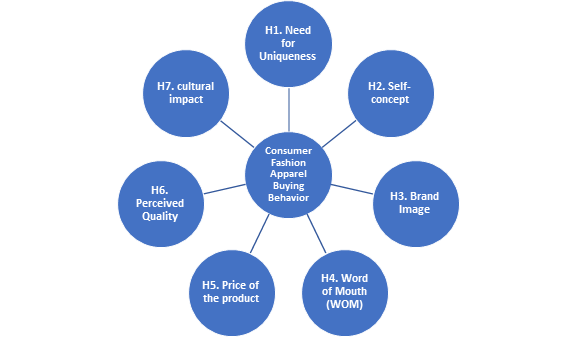
 Figure 4.9: Working environment at Tesco is hygienic, clean and safe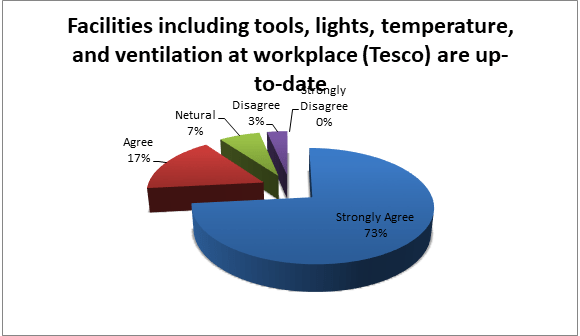
 Figure 4.11: Tesco offers flexible working hours
  Figure 4.12: Employees of Tesco are supportive and co-operative
  Figure 4.13: Tesco’s employees possesses friendly relationship with colleague
  Figure 4.14: Employees of Tesco have job security
  Figure 4.15: Tesco values individuals’ efforts and achievements
  Figure 4.20: Employees can grow and develop as a person at Tesco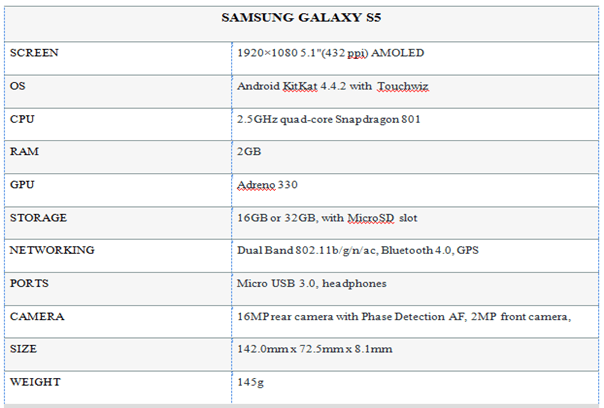
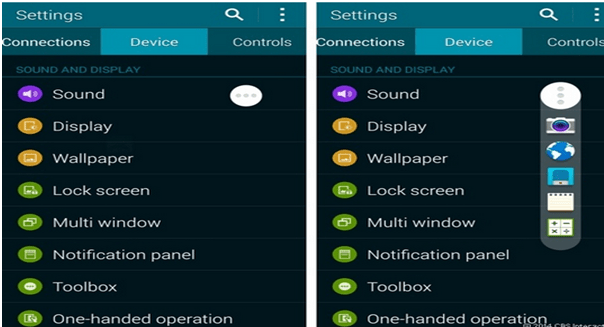
 Source: Interbrand (2014)
  Figure 4: Global market share held by leading smartphone vendors from 4th quarter 2009 to 3rd quarter 2014(Source: Statista, 2014)
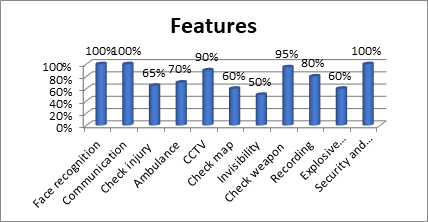
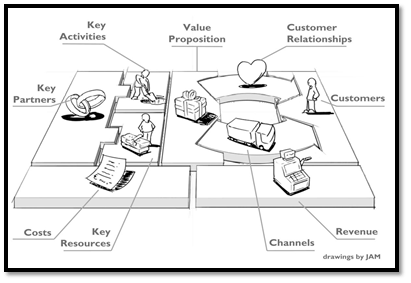
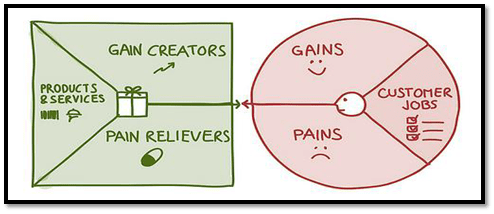
 An investigation of the product of the clothing business reveals that, up until this point, Bangladesh RMG has been able to export are for the most part moved in T-Shirt, Shirt, Sweater, jackets, Shorts, Jeans, women, under garments and youngsters’ wears. which are low-value items with low minimal benefits and holds just about 75 percent of Bangladeshi RMG items. In a globalized and regularly changing fashion world, item broadening is the way to constant business achievement. In this manner, the RMG segment needs to differentiate its item base from conventional low-value items to modern high value things too.
  By far most of turnover in the Dutch fashion branch is created by two sorts of fashion suppliers: brand providers and private name providers. Brands may additionally be separated as being either Dutch brands or international brands with a business office or territorial central command in the Netherlands.
  Figure 4.1: Perceptions of interviewees about Bangladeshi RMG products
  Figure 4.2: Perceptions of interviewees about Bangladeshi RMG products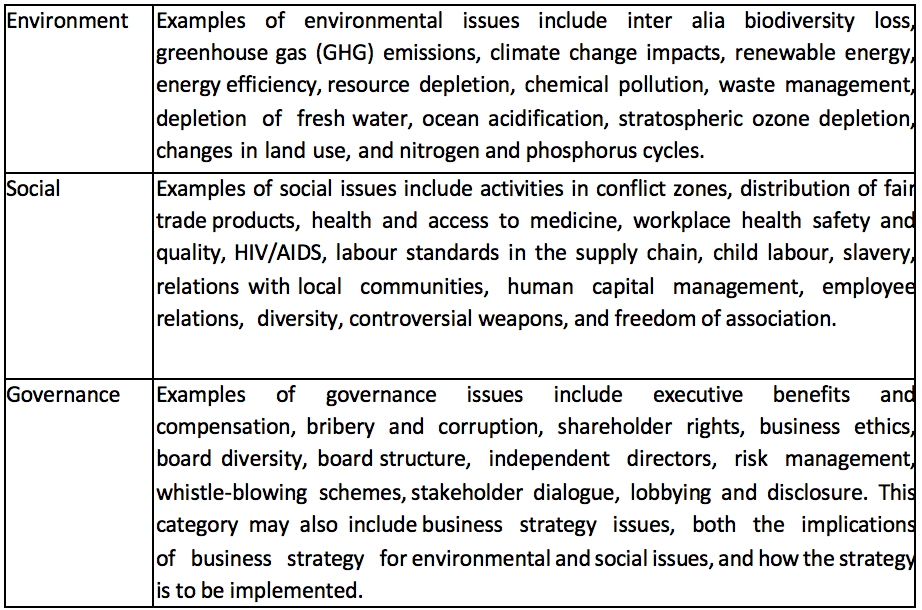
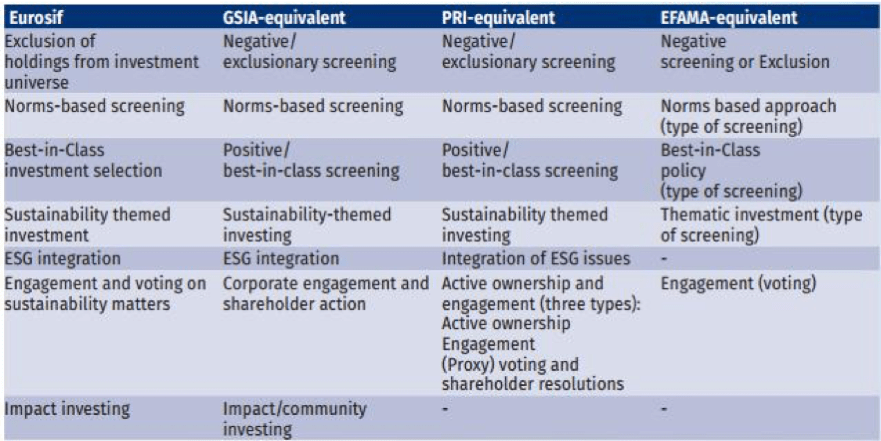
 Market Research