Atikur Bhuiyan
Introduction
The Business model is used to build basics fundamentals and relationships for a company. The BM are agreeing to use the business logic for a particular company. According to the Slywotzky (1995), BM defines the plan and make it easy to use for a company from the begin, how to selects customers for a company, how to describe and separate the offer, defines is the duties which are work for itself and outsource and put together all the resource from a particular form, collect the profit, do the best service for customer and look after the field work. Business models are the structure which provides service to customers and makes the profit for the business. Linder and Cantrell (2001), explain this definition very easily when people understand all about BM after that people start to think and speak about it. We are losing the benefit of the theoretical and international method when can see the limited view of BM. Explain business models such as realize, share by using the framework of theoretical and generic (Petrovic and Kittl, 2001). The BM is view by time and similarly copy and find out quantity (Osterwalder and Pigneur, 2002). BMs are a new implement for innovation by examination and motivating way (Stähler, 2001).
Framework of Business Model
Slywotzky (1995), explain use simple pillars which can fall down by Markides (1999), such as what, who, and how but how much we can add. That is to say, these pillars provide some information by doing it for example: what is the offers for customers, who are our potential customers and how we can understand and how much will be company’s profit.
According to Osterwalder and Pigneur (2010), the foundation of how a company produces, distributes and captures value explain by a business model. The positive features of this theory are simplicity. This theory can help an organization to look up externally and internally. Looking externally, I can find creating value and customer. Infrastructure and financial facts work on internally. A business model always matters to develop a business: such as business model has to be Clarify about customer, marketplace, infrastructure and help to develop financial structure.
In their theory, they have clarified few point, such as what a company offers to the key customer, how to operate a company with satisfying their customer. This theory shows only financial success, they did not say about competition, customer relationships and key activities are separate. An organization have to find out the problem while selecting the first product but Osterwalder (2010) said that people always succeed on that situation. Lack of knowledge about the market.
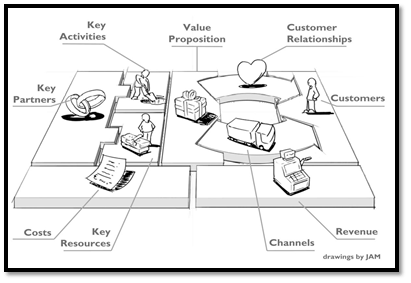
Figure 1: Business Model Canvas – the basic model (Source: Osterwalder and Pigneur, 2010)
Mäkelä and Lehtonen (2010), point out two factors for BMs which are internal and external factors. Internal factors look after the customer satisfy such as products, services, and financial needs. Internal factors organized how to fulfil all customer’s needs. Basically, internal factors work for a company geographical way such as how to deliver a product to the international customers included targeting the new customers, packaging, service, distribution sector. External factors are all about the value proposition. When the value proposition has been designing by that time an organization has to understand about different between international and local customer, legal environment affects, finding current value proposition and international distribution.
Mäkelä and Lehtonen (2010), didn’t mention about financial facets and only described value proposition. For better understand I am going to add below Osterwalder & Pigneur (2010), model value proposition canvas because they use the similar concept.
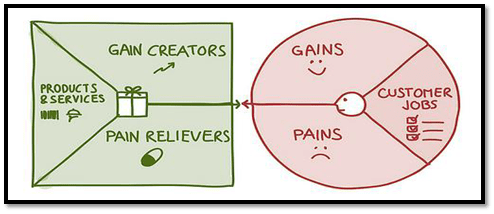
Figure 2: Osterwalder’s Value Proposition Designer (source: Osterwalder & Pigneur, 2010)
Demil and Lecocq (2010), approach between various BM components or ‘building blocks’ to make a proposition which can create value for the customer and an organization. We might call it a static approach. The BM is a kind of transformational approach which is always focused on creating and change. they defined BM by using resource, competences, organizational structure, and value proposition framework. BM advancement process which is always changing and it has the capability to take a decision. Winter and Szulanski (2001) argue, the business model not that close to the information which is flash, it is difficult to set of dependent routines because of by applying method we have to revealed and make it perfect. There is nothing missing to criticized in RCOV framework it can be the perfect model to follow for an organization.
Compare and Apply Business Model Framework
The most important required for the BM has to be applicable to the business. Compare and apply by analysing and discussing Osterwalder & Pigneur (2010), Mäkelä and Lehtonen(2010), Demil and Lecocq(2010), theories. I am already found limits and strengths and it checked by lots of organization. organization are using their method for open up a business. Compare to each other I think they are share quite similar theory. I am going to compare and apply their point by discussing the Value proposition, the design of the relation between the firm and partners, the design of how to apply and financial facets.
1. Osterwalder & Pigneur business Model (2010),
It is called adjusted version of a business model. Osterwalder & Pigneur (2010), BM discussed nine basic factors involves of a BM. Instead of having them in a row, put on a canvas for improving relation and understanding various issues. To better understand BM basic factors can be described product, customer, infrastructure management and financial facets this way.
Value: The value proposition is a customer. No competitor of the business model.
Design of relation: The building block key partner is one of the best factors. Because we need partners all time for creativity consultants and external communities. As an external community member, you are directly involved in its operation, it is a trust network. To reach customers segment, customer relationship and the path of a customer can be combined.
Design of How to Apply: This BM helps a company to open a new business then the company have to be focused on core product what they are going to sell, find the target customer, structure the activities, create resource value, finding the partner and discussed about financial facts. The Problem can understand and result will be less waste of source.
Financial aspects: Cost structure and revenue models.
2. Mäkelä and Lehtonen business Model (2010),
Mäkelä and Lehtonen (2010), are only said about products and customer.
Value: The value proposition is target customer with core products and services in a foreign market.
Design of relation: How to relation manage which is based on functional?
Design of How to Apply: Finding the customer to give them offer and service to buy more products, find different between international and local customer, looking for common channels and legal environment affect. how does distribution channels work geographically?
Financial aspects: Nothing specially discuss financial aspects.
3. Demil and Lecocq business Model (2010),
Demil and Lecocq(2010), BM theory is a static approach model and it can be a perfect transformational approach as well. The framework of RCOV can be used for any kind of businesses. Compare with another model Demil and Lecocq (2010), BM is work in every level to make the business successful because it can transformational any situation and able to take quick decision.
Value: The value propositions is customer with products and services
Design of relation: Build up the relation between organization to the organization by using its resources. In other words, relations with external investors by value chain activities.
Design of How to Apply: RCOV framework works such as resources which are looked after externally and internally, on the other hand, competences help to developed knowledge about business, organization structure look after how to build up relation with other organizations and value proposition is customer, products, and services. Monitor the risk internally and externally and decision-making capability.
Financial aspects: Nothing specially discuss financial aspects.
The Business Model Linkage to the Internationalization
with the increase of the global economy, lots of company are multiplied their business to the international market. Decision-making process is the related to internationalization issues and two different approaches which are a process of the internationalization, such as the economic approach and the behavioural approach (Hermannsdottir, 2008). To make any company move to international market decision making is the most important thing to look up such as partners and market selection. According to Welch and Luostarinen (1988), increasing involvement in the international market for an enterprise, internationalization is the first stage. Furthermore, Simmonds and Smith (1968), internationalization is the successful way of increasing exports trading. Internationalization is the method of rising home business participation in the international market (Susman, 2007).
The purpose of this part is how the BM linked to the internationalization. The internationalization challenges the international market by analysis data and the business logic needs to understand the foreign market and find out a link to internationalization.
1. Value proposition
The case of design and construction service company’s goal to provides joined facilities. mixing facilities which are delivered by the company, the customer gets the best quality design with a lower price. The transaction costs low-price for the customer if do not take care various service. lower construction costs and lower life-cycle costs building by getting the better design. The various international market needs different prominence for the value propositions. In the Russia, the customers are not interested in about the design process or the life-cycle cost, they focus on more urgent investment and construction cost. In the German market, service is a valuable process, on the other hand, they value the lower life-cycle costs due to designs.
2. Target customer
Target customer is a part and company wants them to provide value to. That customer can be an investor, contractors for any kind of business. The company used operating models in the local market. In the foreign markets, a small company can be adapting to the nearby existing operating models. In Germany large customers, have their individual operating models, In Russia, customers are trying to be establishing their operations in their country. Need to understand the customer background In Russia, the local market is very new, in the late 80’s the country’s economic reform. Some of them have the government organizations background, In Germany, they have larger and reputable firms. The German economy bigger than their home market.
3. Distribution channel
Trade is a project to understand all channels and market. In Russia and Germany, customers don’t speak English that’s why language is important using the channels. All requirement for international companies set up by the trade organization. In Russia and in Germany local attendance plays the key role because of language skills.
4. Customer relationship
The customer relationship link with the company and their customer. In Russia, many customers have the good personal relationship with the company. In Germany, relationships defined by transactions.
5. Value configuration
The value configuration arrangement activities which are creating value for the customer and depends on operating and contractual mode. In Russia and Germany able to manage their external resources by the case-by-case basis in the domestic market. this can be effected the role in projects. In Russia and Germany have quite a similar type of company. Sometimes customers hire project management to take care design and services. In Russia or Germany, the architect’s role is small in the local market.
Conclusion:
Based on the business model literature review, the basic BM framework offered company to collect information for the business. BM use formal method to take various elements. By doing this able to understand business, making connection with partners and customers, BM look after a service and product oriented business. The BM helps to visualizing the business idea for local or international market. The BM can be used for competitive advantage (Zott et al 2011). In an internationalization, there are different organization units and location which is create problem but using business model in internationalization can be successful in international market.
References
1. Demil, B. and Lecocq, X. (2010). Business Model Evolution: In Search of Dynamic Consistency. Long Range Planning, pp.227-245.
2. Hermannsdottir, A. (2008). Theoretical Underpinnings of the Internationalization Process.
3. Linder, J.C, Cantrell, S. (2001) Changing Business Models: Surveying the Landscape, Working Paper, Institute for Strategic Change, Accenture
4. Markides, C. (2000). All the right moves. Boston, Mass.: Harvard Business School Press.
5.Osterwalder, A. and Pigneur, Y. (2010). Business model generation. New York: Wiley&Sons.
6. Osterwalder, A., Pigneur, Y. (2002) An e-Business Model Ontology for Modeling e-Business, Proceedings of the Bled Electronic Commerce Conference.
7.Petrovic, O., Kittl, C. and Teksten, R. (2001). Developing Business Models for Ebusiness. SSRN Electronic Journal.
8.Simmonds, K. and Smith, H. (1968). The first export order: a marketing innovation. European Journal of Marketing, 2(2), pp.93-100.
9.Slywotzky, A. (1995). Value migration. Boston, Mass.: Harvard Business School Press.
10.Stähler, P. (2001). Merkmale von Geschäftsmodellen in der digitalen Ökonomie. Lohmar: J.Eul.
11.Susman, G. (2007). Small and medium-sized enterprises and the global economy. Cheltenham: Elgar
12.Welch, L. and Luostarinen, R. (1988). Internationalization: Evolution of a Concept. Journal of General Management, 14(2), pp.34-55.
13.Winter, S. and Szulanski, G. (2001). Replication as strategy. Organization Science, [online]12(6), pp.730-743. Available at: https://doi.org/10.1287/orsc.12.6.730.10084 [Accessed 12 Oct. 2017].
14. zott, c., amit, r. and massa, l. (2011). The business model: Recent developments and future research. Journal of Management, 37(4), pp.1019-1042.
 Market Research