Atikur Bhuiyan
EXECUTIVE SUMMARY
At present, there is more noteworthy social pressure for more capable and responsible business practices of significant organizations, encouraged in huge part by the embarrassments of substantial partnerships connected to an absence of straightforwardness and morals. Socially responsible investment, sustainable and capable investment are in this manner proposed to take an interest in re-establishing trust in the framework by including straightforwardness of business sectors with the point of adding to the accomplishment of more practical and socially dependable financial activity.
Besides, the development and union of new social estimations of Corporate Social Responsibility (CSR) have constrained the need to consider the social and natural outcomes of the economic development models of organizations onto the global financial plan. In this sense, the CSR recommends that an organization that needs to be aggressive in the future, can’t just consider accomplishing benefits, yet additionally needs to make perfect its beneficial movement with arrangements that demonstration to the advantage of environment in which its action is produced. Such approach must be founded on standards of the kind of regard for human rights, change of connections inside society and regard for environment.
In this specific circumstance, Socially Responsible Investment (SRI) assumes a basic part in the advancement of CSR: On the one hand, SRI goes about as an empowering influence of CSR in the financial and business setting, creating added value that prompts long-term benefits. Then again, SRI can be characterized as the broadest articulation of help from money related markets for good CSR practices.
In addition, I mention that the finance sector in light of its influence and impact has an unbelievable responsibility to consider notwithstanding its financial productivity, the social and environmental effect of its movement through the plan of risk items, arrangements of credit and investment, encouraging along these lines to recoup the social value of money.
All in all, the financial sector can be a power for good, with socially responsible investments represent a critical chance to bring advancement, motivating forces, and assets from business to the social sector.

1 Introduction
Government and private institutions perceive that the difficulties confronting the current globalized world have such greatness that conventional means and money related assets are not adequate to solve them. Social and environmental issues, for example, water and sustenance deficiencies, unemployment, absence of effective health frameworks, poor education, environmental change, amassing of waste or the utilization of non-renewable energy sources can’t be overlooked nor can be resolved just with philanthropic activities that don’t offer proficient and sustainable solutions.
Though, in a universe of information where these issues are progressively noticeable by governments as well as by nationals and private organizations, it is required that economic forces perceive this circumstance as well as intervene and raise arrangements. The request of responsibility to organizations, investors, and governments is expanding. The financial sector can’t disregard this circumstance. As an instrument of economic and business movement, it must contribute proficiently, monitoring the effect that its action has on society and the earth.
Sustainable finances along these lines, are situated towards the accomplishment of another economy that contributes to a sustainable advancement of the general public in which it works, turning into this great challenge that faces the humanity in the following years. All individuals and associations must assume the liability to address this difficulty.
This report will initially characterize the idea of sustainable finance and clarify how corporate social responsibility and socially responsible investment contributes to the improvement and sustainability of these new fiscal techniques. Subsequently, researcher will keep describing the principal attributes of socially responsible investment thus that the reader comprehends the premise and improvement of different types of sustainable and responsible investment effectively settled in the present economy. Afterwards, researcher will centre quickly around affect contributing as a creative sustainable investment procedure that plans to create society and enhance nature without yielding financial return for investors. Lastly, researcher will redirect researcher’s enthusiasm to the part that fiscal elements should play in accomplishing more social, ethical and sustainable finances, proposing ethical banking as an option.
2 Sustainability in Finances
As indicated by Soppe, A. (2009) “the sustainability in established finance is generally depicted regarding sustainable development rates or sustainable profits”. established sustainable development rates are characterized regarding investor wealth only. The sustainable development rate is characterized as the rate at which a firm can develop while keeping its profitability and financial approaches unaffected (Palepu, Healy and Bernard, 2000). Along these lines, a lower pay-out proportion, maintenance of cash flows, an expansion of the overall revenue or higher use through an increment in the level of debt suggests higher sustainable development in established financial hypothesis.
The center components are the statement of purpose of the organization, the related moral structure, suppositions on human conduct and the financial decisions made by the ownership of the organization. The accompanying demonstrates the advancement of finance from a conventional to a sustainable idea (Soppe, 2004).
Now, CSR and SRI assume an important part in fiscal sustainability. This is on the grounds that CSR alludes to the sustainable improvement of a business action; in other words, the improvement of an action that contributes to make in its environment economic, social and environmental value in the short and long term, beyond the satisfaction of lawful, financial or work commitments.
According to Drucker (1994) “organizations, before society, have the obligation to endeavour to discover substantial answers for the fundamental social issues that fit their capabilities”. In contrast, Milton Friedman (1970), Nobel Prize winner in Economics 1976, contended that an organization has just “one obligation”: financial outcomes. Accomplishing great outcomes is the “primary obligation,” and if it doesn’t get benefits at any rate equivalent to its aggregate costs, it is socially irresponsible, as it wastes assets from investors. In this manner, financial execution is the foundation, without which the organization can’t complete any other responsibility.
In brief, the methodology of an organization that needs to be sustainable seeks for both enduring connections of trust and proportional responsibility regarding partners and and commercial profitability to meet the desires of investors. Socially responsible investors are additionally taking a stab at partner mind, sustainable statements of purpose, fair administration relations and an agreeable demeanor of financial subjects by and large.
Accordingly, CSR and SRI are utilized as a balance for sustainable finance. SRI actions, nevertheless, are arranged on the supply side of the capital markets. In other words that SRI is financial investor-driven; while CSR is organization driven.
Finance is by definition the association between supply of economic implements and the request of organizations for such items. Sustainable finance, accordingly, is appropriate for consolidating both SRI and CSR.
Organization may either utilize SRI capital – if it is accessible in the market-or banks which they too have the chance to do business more sustainable, particularly ethical banks which will describe further.
3 Sustainable and Responsible Investment
Ever since the idea of investment for capital return was considered, shareholders have created their investment decisions with respect to an assortment of criteria, including whether investment damage or advantage society. investment decisions develop in parallel with societal values and norms, so though subjugation and child labour may have been typical in specific periods of human history, global norms now exclude such practices. Essentially, as society tends to the circumstances and end results of environmental change, investors progressively include such contemplations into their investing decisions (EUROSIF, 2012b).
Numerous terms, for example, the most understood “socially responsible investment ” (SRI), have been made to define investment procedures that try to consider both benefit and societal prosperity. Socially dependable or sustainable investors inspire business practices that promote issues, for example, environmental stewardship, customer protection, human rights, quality of professions, and in addition sustainable utilization of natural assets. These zones of concern are perceived by the sustainable investment industry, and as indicated by UNEP (2012a) can be additionally classified into natural, social, and governance issues (ESG; see Table 1 below).
Table 1: Key aspects characterizing SRI apportioned to different dimensions (ESG) of SD (UNEP, 2012a)
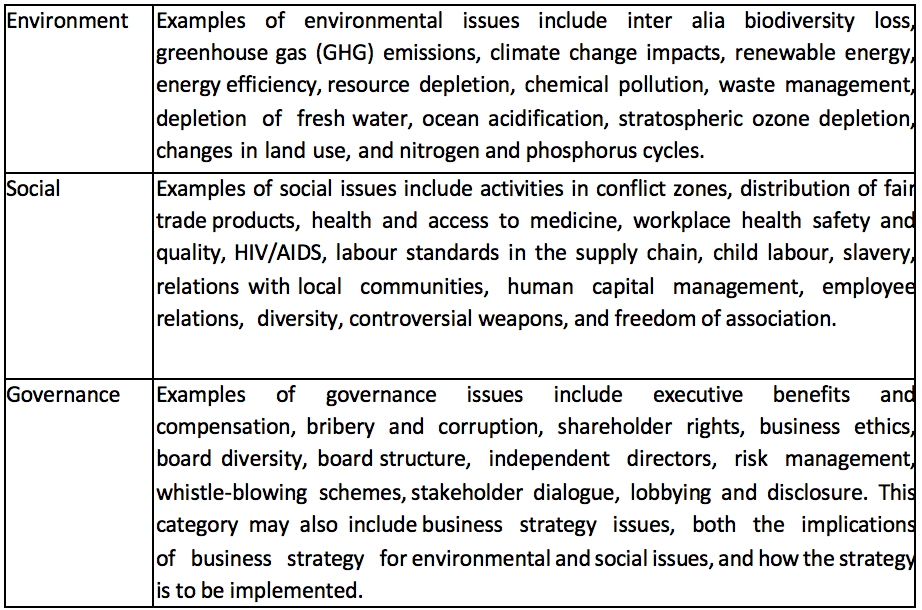
Figure 2 below gives a superior overview on various ideas of investment and their potential cover. In such manner, it values mentioning that the expression “socially responsible investment ” (SRI) has turned into the most across the board term in the Anglo-Saxon language zone and may really be utilized conversely with the term sustainable investment since it additionally identifies with performs that are key to the idea of sustainable improvement.
Figure 2: Concepts of investment considering both profit and societal well–being (adapted from Eichel, 2010)
Following this arrangement and to make it unequivocal, sustainable improvement has a stake in this point as it tries to adjust and incorporate the previously mentioned zones in approach settling on and corporate choices, as well as in the investment and finance industry. Basically, the United Nations Conference on Sustainable improvement in 2012 (Rio+20) contends to “… standard sustainable development at all levels, coordinating financial, social and natural perspectives and perceiving their between linkages, to accomplish sustainable improvement in every one of its dimensions.” in such manner, as of now AGENDA 21 (UN, 1992) perceived the imperative part finance plays as a vehicle encouraging advancement in particular zones in order to accomplish sustainable development: The cost to handle numerous difficulties ahead would include huge budgetary sums. The view that the allotment of capital towards ventures to make long-term, sustainable, financial prosperity is important to diminish neediness, propel social balance, and guarantee natural security was reaffirmed at Rio+20.
Like the fairly difficult and uncertain discourse on the sustainable investment wording is the characterization of various investment procedures really attempted on the financial capital market. Bridges Ventures (2012) tries to catch the expansiveness of these distinctive investment systems as showed in figure 3. The term affect investment cover investment made into organizations, associations, and assets with the expectation of creating social and natural effect nearby a financial return (Bridge Ventures, 2012).
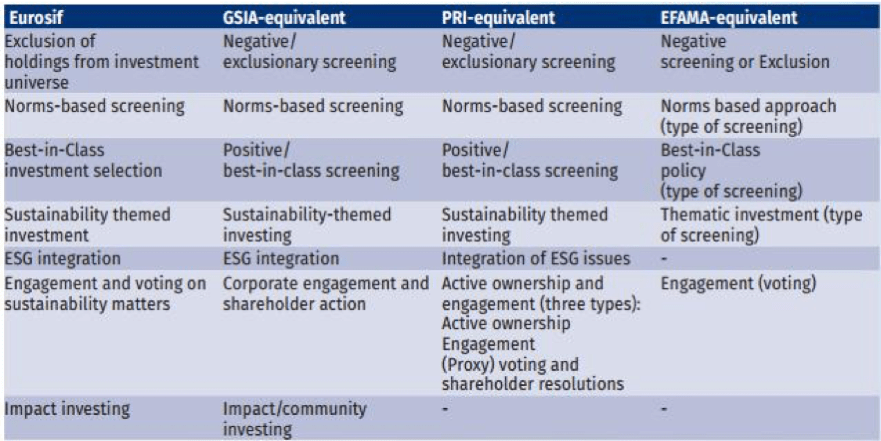
Figure 3: Different investment strategies for SRI (Bridges Ventures, 2012)
3.1 Classifying Different Strategies of Socially Responsible Investment
Today, SRI is a developed industry offering an assortment of specific and institutionalized items to both retail and institutional financial specialists. European Sustainable Investment Forum (EUROSIF, 2012b) offers a wide-ranging organization plan that covers the extensive variety of SRI and other responsible investment methodologies. For instance: a few financial investors will look to maintain a strategic distance from specific items, though some will assess organizations against a base standard; some are roused to include Environmental, Social, and Governance (ESG) criteria by risk avoidance, while others look for investment went for outflanking the market by benefiting from the interest for sustainable items and arrangements. A few investors look for ecological and additionally social effect; others search for long-term dependability of financial returns. Normal to all, other than long-term benefit introduction, is the thought of ESG criteria in the investment procedure as portrayed above in Table 1.
EUROSIF established a structure that distinguishes seven unmistakable SRI forms, alluded to as systems, showed in the Table 2 below. Actually, these seven procedures represent the systems utilized by resource supervisors that incorporate sustainable growth into their investment choices or consider ESG criteria in different shapes and structures.
Table 2: Overview of SRI investment strategies (EUROSIF, 2012b)
There are numerous sustainable and responsible investment strategies, the most prevalent being the Exclusion Strategy and the Norms-Based screening. In any case, researcher might want to concentrate to Impact Investing for being the most inventive, from researcher perspective.
Impact Investing is another strategy that is developing quickly and represents an opportunity for organizations and markets to drive social esteem. Impact Investing goes past an aloof screen of prohibition by currently investing into organizations or tasks that can possibly make positive financial, social as well as natural results.
3.2 Performance and Trends of SRI
As indicated by Global Alliance of Banking Values (GABV, 2012), the idea of sustainable investment and finance keeps on developing, particularly in the wake of a standout amongst the most obliterating economic disasters ever. This incorporates duty from the corporate side (CSR) and in addition the financial investor side (SRI) of the capital markets.
In this regard, a portion of the key discoveries on a comparison of sustainable banks and Global Systemically Important Financial Institutes by GABV (2012) demonstrate that sustainable banks have:
- much larger amounts of value to add up to resources, with somewhat more elevated amounts of BIS 1 capital proportions than GSIFIs;
- generally better or similar Return on Assets and Returns on Equity over the day and age secured. The profits of Sustainable Banks are additionally less unstable than those of GSIFIs;
- significantly higher development in credits and stores prompting higher development in resources and wage than GSIFIs.
Among the most well-known topic of investment is clean tech, with financial investors making allotments to, for instance, sustainable power source, asset and energy productivity, and waste innovation. On the social side, microfinance stays prominent with PRI signatories and in addition different divisions, for example, worldwide health, instruction, and social infrastructure. With respect to patterns of investment, while sustainable ranger service has generally been a vital resource class for some asset owners, sustainable agriculture is likewise increasing expanding consideration (UNEP, 2012b).
Concerning future improvement trends in SRI, EUROSIF (2012b) contends that future national and EU regulation may guarantee and one of the fundamental drivers for SRI – it is at present the second most imperative factor for development. Advance development will be relied due to components – positioning from most to minimum important –, for example, ” Demand from institutional financial investors “, ” International activities”, “External difficulty “, and “Request from retail financial investors “.
3.3 The Financial Crisis and Sustainable Investment
The most recent years, an extraordinary and massive verbal debate has criticized the international financial framework, inquiring the part and activities of banks specifically. Critics especially have brought up issues with reference to how, where, and why financial actors invest. This analysis examines the inquiries of how and where investment might be taken keeping in mind the end goal to assist the sustainable improvement plan.
When breaking down and observing at investment decisions, as a rule consideration is centred around two parameters: profitability and risk. Nonetheless, in the wake of a standout amongst the most overwhelming financial crises emergencies ever, different ideas, for example, sustainable or green investment, keep on becoming critical in capital markets. As indicated by examinations by EUROSIF (2012a) and Novethic (2010), investors observe investment decidedly affecting on society and environment as another option to philanthropy, a commitment to sustainable advancement and maximising their beneficiaries’ long-term interests. Following this contention, this paper tries to feature what sort of alternatives exist for financial specialists to practice sustainable investment and offers a look on what sort of changes are expected to in some general sense change investment decisions with the goal that they end up arranged more towards sustainable development.
Since the financial market and its complex performing action contain a fairly complex structure, the report unequivocally clarifies the part of bankers, investors, and experts inside the field of sustainable investment. In any case, as pointed out by Schmidheiney et al. (1996), two diverse covering sets of connections between sustainable improvement und the financial related markets exist, considering all parts of the financial group: (1) issues of accounting, valuation, and risk – representing environmental and social costs/advantages; and business and opportunity issues – putting resources into eco-proficiency, sustainable power source, biodiversity and so forth.
4 Impact Investing
– Origins
On November 29, 2010 JP Morgan released the article ” Impact Investments. An emerging asset class,” established mutually with the Rockefeller Foundation. In it they clarified the introduction of another class of financial resource with an investment opportunity of near $400 billion and a potential benefit between $183 billion and $667 billion throughout the following decade. These investments would essentially mark five divisions: low-priced housing, access to consumable water in country zones, nurturing health, essential education and microfinance.
– Definition
As per Global Impact Investing Network (GIIN), Impact Investments will be investments made into organizations and assets with the expectation to produce quantifiable social and ecological effect and financial return. Impact Investments can be made in both rising and created markets and focus on a scope of profits from underneath market to market rate, contingent on the conditions.
Impact financial investors effectively try to put capital in organizations and assets that can saddle the positive energy of big business. A quickly developing supply of capital is looking for situation in impact investments crosswise over natural regions, segments, and resource classes, with an extensive variety of return desires. In this way, the fundamental highlights of Impact Investing are:
1.They look for a financial return – as a base, the measure of capital contributed and, in this way, can’t outline the impact investing into the universe of philanthropy. As it were, impact investments dependably and without exclusion look for a financial return, at any rate equivalent to the primary capital invested.
2.Investments are coordinated particularly to activities that can deliver a social effect. This social target is unequivocally looked for and, along these lines, some portion of the investment choice.
Besides, the impact investments are gone for:
1.Social combination, concentrating on access to low-priced accommodation, health, schooling, finance, employability.
2.Tasks identified with sustainability in the field of generation and access to sustainable power source, sustainable agriculture, nutrition, water. This classification is extremely centered around creating markets.
The pattern has just picked up energy among an expansive scope of investors, including huge financial establishments, wealth administrators, establishments, business banks and improvement banks, pension funds.
The distinctive types of investment that exist cover a range that extents from investment for only financial purposes, where conventional investment and socially responsible investment are found, to philanthropic types of capital contribution, in which both the established philanthropy and the venture philanthropy are found. Impact Investing is in a middle of the position amongst philanthropy and a solitary interest on benefit amplification.
The target of creating a social effect recognizes impact investing from other sustainable and responsible investment strategies that are fewer dynamic in doing as such. Thusly, all together for the social measurement to be regarded with an indistinguishable thoroughness from the economic one, the issue of estimating social effect is likewise imperative. This estimation is indispensable for financial specialists and social enterprises to set up their goals, complete their observing and consolidate the social measurement into their basic leadership forms.
There are, therefore, a large number of instruments created to quantify and report the social effect of a venture, for example, IRIS, Social Return on Investment (SROI), Microfinance Transparency, SMART Campaign, Social Performance Task Force and so forth.
One region where the estimation of the effect is less unpredictable is in microfinance. A case to better comprehend this is the BlueOrchard Microfiance Fund by BlueOrchard Impact Investing Managers, which is pioneer in advancing the financial incorporation in developing nations. For example, if a venture of $60,000 is made in the stock and held for a long time, the effect would be 200 individuals.
As of now, this fund has financed more than 30 million smaller entrepreneurs worldwide in 70 developing nations. It is hard to get personal lend without security and significantly more in poor zones. Though, BlueOrchard offers lends in return for characterizing precisely what sort of individual is financed, setting up adequate loan fees. Furthermore, the Fund has comprehensively perceived quality affirmations, for example, LUXFLAG, PRI and SMART Campaign.
In brief, impact investing is changing how we see ventures and improvement, demonstrating benefit and positive social effect. As a developing resource class, impact investing takes advantage of new origins of capital, opening the possibility to unravel the present most troublesome social and natural issues.
5 Exploring principles of sustainable banking and investment
With a specific end goal to get a first review on transforming investment choices and conduct into more economical and socially responsible ones, two arrangements of principles are featured in this part: The United Nations- backed Principles for Responsible Investment (PRI) and the Global Alliance of Banking Values’ Principles of Sustainable Banking.
The principles of the two establishments will be clarified below, and their characteristic principles of and connections to sustainable growth will be uncovered through a similar analysis. Thus, this will help us to understand how SD principles are now surrounded inside investment decisions, and also which SD principles are not yet completely considered.
5.1 United Nation’s Principles of Responsible Investment
The United Nations-supported Principles for Responsible Investment are an arrangement of broad principles that go about as direction for financiers so as to better adjust investments to more extensive objectives of society. The principles reflect the view that not just investment ought to add to societal objectives, for example, SD, yet in addition that social, environmental and corporate governance (ESG) issues can influence the execution of investment selections, and in this way should be given right thought by financial investors on the off chance that they are to satisfy their guardian (or proportionate) obligation (UNEP, 2012b). These principles are connected as a deliberate structure by which all investors can consolidate ESG issues into their basic leadership and ownership practices.
The principles can be summarized as:
- Include ESG issues into investment investigation and decision-making procedures.
- Go about as dynamic owners and Include ESG issues into our proprietorship rules and practices.
- Appropriate exposure on ESG issues by the substances in which we contribute.
- Acknowledgment and usage of the Principles inside the investment business.
- Upgrade effectiveness in executing the Principles.
- Give an account of activities and development towards actualizing the Principles.
5.2 Principles of Sustainable Banking: A View of One of the Largest Collaborations of SRI
One among numerous who created sustainable banking principles is the Global Alliance of Banking Values (GABV). In view of the prerequisite to secure investment capital outside of the GABV, they set forward this set by methods for which sustainable banks could be characterized, distinguished, and checked. The principles of GABV ought to be viewed as model instead of broadly utilized, and, along these lines, offer a first look on sustainable banking principles – i.e. meeting the genuine needs of society, the actual economy, and communities now and for future ages – could resemble.
The GABV principles have the accompanying key features and goals and are clarified in more detail assist beneath:
- They are expert based and master dynamic; that is, they emerge from coordinate involvement of the GABV individuals instead of trying to react to administrative or different requirements;
- They represent an interrelated arrangement of rules that must be performed completely by a banking organization;
- They look to cover social and operational parts of sustainable financing; and
- They ought to in time have the capacity to be checked by methods for fiscal and non- fiscal measurements set up through a multi-partner growth process.
5.3 Spotting SD in Principles for SRI
So as to unequivocally demonstrate how sustainable banking and investment principles are connected to the ideas of sustainable growth, the table beneath tries to recognize certain SD measurements and ideas inside thereof. The below specified SD ideas give a somewhat wide picture of SD and are seen to be the most important ones when ascribing to principles of SRI.
Table 4: Mirroring Sustainable Banking and investment principles with SD concepts and related ones
Since the PRI can be connected in different conditions, they shape a somewhat unspecific and expansive arrangement of rules. All the more particularly, PRI are more cross-cutting in nature and, accordingly, harder to allocate to tangible SD ideas because of their expansive confining and their verifiable governance character. Then again, GABV’s principles are focused on and explicit since they are particularly intended for distinguishing a solitary arrangement of performers and describing their part in SRI. Generally, both arrangement of principles verifiably consolidates the most vital dimensions of SD.
6 Social Responsibility of The Banking Sector
Jeucken (2004) concentrated his work on the banking sector to recognize features of the reaction of banks to supportability issues. Though practical finance grasps sustainable banking as well as SRI, CSR and reasonable corporate finance, researcher consider that the banking sector shows a vital part in the improvement of a sustainable finance.
This is on the grounds that the financial framework satisfies an essential capacity inside the economy, economic intermediation. It puts extra money units in contact among shortage units and channels individual’s extras mostly to the beneficial part of the economy. Finance affects the setup of some kind of society relying upon the goal of that extra currency.
It isn’t the same to loan cash to production weapons or place it in expense safe houses than to relegate it to ventures with a positive social effect. The financial framework, which was created with an employment of consideration regarding the requirements of financing beneficial activities. The massive current power collected by fiscal foundations makes some of them remain beyond sovereign states.
This extraordinary power and impact of the current financial segment thusly involves a countless social responsibility, which ought to be at the service of sustainable human improvement. The new financial elements that expect and adopt CSR with conviction will offer route to another, enhanced financial sector.
Therefore, the business of banking intermediation and investing in the financial markets ought to be:
- Economically viable
- Socially beneficial
- Environmentally responsible
The primary financial organizations presently utilize an extremely restricted idea of social responsibility in which appearance and status excel, far from a worldwide administration technique that includes the whole structure of the substance. Its accomplishments are conveyed in positive Sustainability Reports that don’t reflect the truth of the demands of every one of its partners, particularly in the joining of social and natural targets, neither in the outline of inactive items nor in credit and investment approaches. The advancement of Socially Responsible Investment items and additionally the benchmark of Ethical Banking as a model of another method for directing financial administrations is almost forward temporarily.
7 Ethical Banking
Because of the most recent financial crisis, the notoriety of the banking area has been dynamically debilitated. Theoretical lead embarrassments, corporate defilement and the European Union bailout that created a feeling of exemption among the populace has set off an expansion in the significance of different contrasting options to traditional banking, as on account of ethical banking.
Ethical Banking is a qualification given to each one of those elements that offer financial items whose goal is to make social utility for their encompassing condition, going past the quest for financial benefit. This social target alludes to the social benefit of the capital contributed and to the social responsibility of the financial specialist.
As per Ballesteros (2003) “cash is a method – not an end – to enhance the lives surprisingly as a rule, and not only a few.” It is a model that accordingly tries to substitute financial reasonability by one that looks for an all the more just society.
These elements base their movement first by giving loans to individuals who have a suitable business venture with a high social or ecological goal, and then again, enables its investors or savers to put resources into actions as per their moral principles. Different individualities of this sort of banking are data straightforwardness and the utilization of dynamic interest instruments (Castro Cotón and Romero Castro, 2011).
At last, it is critical to consider that ethical banking is an alternate economic model, moderately new and rousing, that does not currently represent rivalry for conventional banking, since it is a division really taking shape. Nonetheless, a portion of its inalienable qualities might be of commitment to the recharging and change of the conventional method for managing banking movement.
8 Changes needed in order to stimulate investment for sustainable development
The purposes behind absence of investment in sustainable improvement, or all the more particularly for SRI investment, are complex. An examination of a progression of related analyses on SRI (EUROSIF, 2012b) uncovered that distributions to SRI frequently stay small in contrast with financial investors entire AuM because of the accompanying reasons: While numerous are wanting to expand the scope of their investments, they are compelled by issues for example bargain estimate, absence of historical execution information, absence of learning about these investment zones, and additionally high genuine or saw risk levels.
In the following sections researcher reflect about possible strategies and changes required to additionally stimulus the future development of and expelling limitations for investment on sustainable improvement.
(1) Promoting and further developing innovative and successful products and services with a positive environmental and social impact to attract clients
As said by Weber (2011), two future difficulties must be met in the region of sustainable banking so as to present effective items and administrations contributing to sustainable improvement: Firstly, capital must be ensured to stream into tasks or organizations that positively affect society, the earth and SD; Secondly, financial systems of items must be intended to meet the objectives of sustainable banks. In this specific circumstance, Weber (2011) infers that the further improvement and broad utilization of micro-finance items and SRI funds are a noteworthy progress for the development of investment into economic improvement.
(2) Applying robust reporting and assessment is key for enhancing the credibility of sustainable investment
Absolutely, one approach to stimulate sustainable investment in the banking area, and investment generally, is to additionally create ways to deal with estimating effects of investment, thusly prompting more educated partners and customers. As far as sustainable investment, the general objective is to explain customers and investors about the effect of the organisations items and administrations on society and the earth.
As per a current report by the Global Alliance for Banking on Values (2011), there is an absence of systems particularly accessible for sustainable banks to quantity and report their effect in an important and applicable way. Subsequently, stimulate direction for building up a typical structure for quantitative and subjective reportage would be a strong progress, and fundamental given the restricted assets accessible to create announcing by smaller banks. EUROSIF (2012b) contended that as investors become informed with these investment sectors and their related effects better, numerous have discovered that the risks related with these investments may not be as high as they were at first saw to be, and that these investments can essentially produce solid financial returns.
(3) Putting in place regulations in order to remove investment barriers to small–scale sustainable enterprises
Concerning SRI, nonetheless, the issue of threat assumes a significant part: as maximum of the firms that positively affect society and the environment are smaller imaginative firms and, consequently, not exchanged on stock trades, risk related with these firms is frequently higher than for greater firms. Moreover, retail investment items are just permitted to invest into values that meet certain regulatory ethics for reporting fiscal issues, for which smaller firms don’t have the limit. In order to adjust both the positive societal and natural effects, and the financial risk and return, additional collaboration with regulatory bodies could demonstrate successful (Weber, 2011). In this regard, EUROSIF (2012b) hypothesizes that future national and EU regulation may guarantee and one of the fundamental drivers for SRI.
9 The future of sustainable investing
Adjusting to a sustainable investment environment will be a test for firms and will expect changes to the current culture, innovation and procedures. Researcher view is that organizations must arrange counsellor awareness with millennial qualities and guarantee counsellors are completely prepared and furnished with the tools required to have significant thoughts around sustainable investing. It is basic that financial services firms perceive their changing customer socioeconomics and prepare rapidly to serve an expanding customer base. Firms most sufficiently arranged to address sustainable investing and the intergenerational resources exchange together won’t just gain by the obtaining of new customers, yet in addition successfully serve their present customer base. Given the fast-approaching intergenerational resources exchange, researcher see an open door ahead for wealth and resource administration firms to rethink the standard for investment choices in an industry that will soon be commanded by the socially capable responsible financial investor. To capture market stake and achievement an economical advantage in this developing industry, we trust wealth and resource administrators must embrace esteems-based investment choices to serve another period of investors. At EY, our groups can give broad industry encounter that will strengthen firms as they advance to meet the new needs of the millennial financial investors. Regardless of whether it’s new computerized contributions or strategic creativities to catch this regularly developing market share, we are here to help, and together keep on building a healthier working world.
10 Conclusion
From my perspective, the presence of effect investing appears an imaginative proposition in the realm of financial movement and has the ability to reform customary fiscal services.
Against the prevailing worldview that financial investors as agents of economic action try to amplify short-term benefit, affect investments incorporate investors open to different promoters and interests, with a more extensive perspective of their duties and commitment to social welfare.
The gravity of the social clashes of our time requests the responsibility of all economic agents, particularly the individuals who have a more noteworthy ability to manage financial action, who must make an economically proficient and sustainable global financial framework ready to create long-term esteem. Therefore, the individuals who, through their investments, give funding to entrepreneurial activities can’t stand aside.
So as to accomplish more capable and sustainable financial practices, social responsibility criteria must be joined at the core of business movement. This implies the CSR of an organization can’t be considered as only included value, rather, must be incorporated into the organization’s essential action. This same thought must be connected to the social responsibility of financial investors.
Hence, similarly as socially responsible investments can be coordinated towards an ethically and socially dependable business environment, any organization with CSR can think about adjusting its investment criteria to more social, ethical and environmental principles.
As has been more than once brought up all through this content, the commitment to the improvement of society and the desire to acquire a reasonable financial return require not struggle goals. In this sort of investment social effect and financial return are two incorporated and indissoluble conditions.
To accomplish financial sustainability, notwithstanding CSR and sustainable, responsible investments and financial investors, a sustainable banking division additionally assumes an essential part as a mediator of every one of them.
The Ethical Banking model, notwithstanding still initial, is showing that economic intermediation can be completed with different purposes and that the combination of social and environmental qualities and criteria into banking organization does not keep its financial suitability, yet rather the inverse.
Nevertheless, it was not the goal of this paper to give an inside and out investigation and screening of ethical banking practices, but instead to define the cutting edge of a rising financial part with the principle that it could turn into a critical factor in the public arena, not such a great amount as far as volume, but rather in wording included human esteem.
Reference:
Ballestero, E., Bravo, M., Pérez-Gladish, B., Arenas-Parra, M. and Plà-Santamaria, D. (2012). Socially Responsible Investment: A multicriteria approach to portfolio selection combining ethical and financial objectives. European Journal of Operational Research, 216(2), pp.487-494.
BlueOrchard. (2017). Impact Investing – BlueOrchard. [online] Available at: https://www.blueorchard.com/impact-investing/.
Bridges Ventures, 2012. Bridges Ventures & Impact Investing: An Overview. http://www.bridgesventures.com/sites/bridgesventures.com/files/Impact_Investment_market.pdf
Cotón, M. C., & Castro, N. R. (2011). Cooperativas de crédito y banca ética¿ un camino por explorar? CIRIEC-España, Revista de Economía Pública, Social y Cooperativa, 72, 262-300.
Drucker, P. (1994). Post-capitalist society. New York, NY: HarperBusiness.
Eichel, C., 2010. Prinzipien geleitetes Investment und Wirtschaftpolitik – Eine wohlfahrtstheoretische Untersuchung. Europäische Hochschulschriften. Reihe V Volks- und Betriebswirtschaft Bd. 3372.
EFAMA, 2012. 5th Annual Review: Asset Management in Europe – Facts and Figures. http://www.efama.org/Publications/Statistics/Asset%20Management%20Report/Asset%20Management%20Report%202012.pdf
European Commission, 2011. Regulation of the European Parliament and of the Council on European Social Entrepreneurship Funds. COM(2011) 862 final http://ec.europa.eu/internal_market/investment/social_investment_funds/index_en.htm
EUROSIF A.I.S.B.L., 2012a. High Net Worth Individuals and Sustainable Investment Study. http://www.eurosif.org/images/stories/pdf/1/1.%20report_hnwi.pdf.pdf
EUROSIF A.I.S.B.L., 2012b. 5th European Socially Responsible Investment Study. http://www.investmenteurope.net/digital_assets/5925/2570912_eurosif_sri_study_low-res.pdf
Eurosif.org. (2016). European SRI Study. [online] Available at: http://www.eurosif.org/wp-content/uploads/2016/11/SRI-study-2016-HR.pdf.
Friedman, M. (1970). A theoretical framework for monetary analysis. Journal of Political Economy, 78(2), pp.198-238.
Global Alliance for Banking on Values (GABV), 2012. Strong, Straightforward and Sustainable Banking – Financial Capital and Impact Metrics of Values Based Banking. http://www.gabv.org/wp-content/uploads/Full-Report-GABV-v9d.pdf
Healy, Paul M., and Krishna G. Palepu. ”The Fall of Enron.” Journal of Economic Perspectives 17, no. 2 (Spring 2003).
Jeucken, M. (2004). Sustainability in finance. Delft: Eburon.
Novethic, 2010. European Asset Owners: ESG Perceptions and Integration Practices. http://www.eurosif.org/images/stories/pdf/Research/Novethic_Esif_ESG_Survey_2010.pdf
PRI. (2018). About the PRI. [online] Available at: https://www.unpri.org/about.
Schmidheiney, S., Zorraquin, F. and World Business Council for Sustainable Development, 1996. Financing change: The financial community, eco-efficiency, and sustainable development. Cambridge, UK: MIT Press.
Soppe, A. (2004). Sustainable Corporate Finance. Journal of Business Ethics, 53(1/2), pp.213-224.
Soppe, A. (2009). Sustainable Finance as a Connection Between Corporate Social Responsibility and Social Responsible Investing. Indian School of Business WP Indian Management Research Journal, [online] 1(3), pp.13-23. Available at: https://papers.ssrn.com/sol3/papers.cfm?abstract_id=1336182##.
The GIIN. What You Need to Know about Impact Investing. [online] Available at: https://thegiin.org/impact-investing/need-to-know/#what-is-impact-investing.
Thegiin.org. (2016). 2016 Annual Impact Investor Survey. [online] Available at: https://thegiin.org/assets/2016%20GIIN%20Annual%20Impact%20Investor%20Survey_Web.pdf.
The Rockefeller Foundation. (2010). Impact Investments: An Emerging Asset Class. [online] Available at: https://www.rockefellerfoundation.org/report/impact-investments-an-emerging-asset-class/.
UNEP, 2012a. Integrating Environmental, Social and Governance issues into executive pay: guidance for investors and companies. http://www.unpri.org/files/Integrating%20ESG%20issues.pdf
UNEP, 2012b. Investing in the sustainable economy. http://www.unpri.org/files/20120611%20Investing%20Sustainable%20Economy.pdf
UN, 1992. AGENDA 21. http://www.un.org/esa/dsd/agenda21/
UN, 2012. The future we want – final outcome document. A/CONF.216/L.1 http://rio20.net/wp-content/uploads/2012/06/N1238164.pdf
Weber, O., 2011. The future of social banking. In Social Banks and the future of sustainable finance. Eds. Weber, O. & Remer, S., 2011. New York, NY: Routledge.
 Market Research