Atikur Bhuiyan
Chapter 1: Introduction
1.0. Introduction
The aim of this study is to examine the extent of employee motivation in UK retail sector, particularly Tesco Plc. This chapter provided the background issues of the research along with rationale of the research, research aims and objectives, research questions, organisational background, as well as organisation of the study.
1.1. Research Background:
Retail industry is one of the most crucial components of UK economy, mainly due to its acts on large scale. There are 428000 retail businesses (8.9% of UK business) in the UK that accounts 35% of all turnover (Rhodes, 2014) and 14% of all employment in the UK (Mosley et al. 2012). The retail industry in the UK undergone huge change over the last few decades and new retail facilities and formats ranging from retail stores to superstores have provided scope to widened the landscape of retail business (Experian, 2011). The industry is full of competition due to the existence of many local and international players mainly Tesco, Sainsbury’s, Asda, Morrison, and so on. Due to extensive competition in the market and the changing customer behaviour, retailers are subject to strive to have competitive advantage where employees play the crucial role as employees meet the customers (Rhodes, 2014). Therefore, human resource management is always a key concern of retailers in the UK.
Nowadays the business organisations are forcing by the globalisation and due to the rapid growth of information technology the firms are having a strong cut-throat competition in any business. Human resource management is one of the most important sectors to consider in any business and it plays a significant role in attaining the competitive advantage and sustain in the market as human resource or the employed are directly connected with the customer. Human elements and the firms are identical (Tella, 2007). Overcoming competition and meeting changing customer needs is the most difficult task retailers are facing where inspiration can be brought through by satisfying and motivating employees as the commitment and hard work of employees are likely to bring a base to develop organisational commitment that is crucial to deliver quality service to the customers (Kumar, 2014). Motivation is a part of human resource management, which are usually practiced in every aspect of activities to encourage people to work better. It is vast in nature than just defining with encouragement in terms of human resource management (Lisa et a., 2013).
The idea of motivation is quite old in the business world yet it is an important aspect to consider by a business to ensure the quality and effective performance of the employees and therefore the organisation as a whole (Wei-Tsong and Ya-Pei, 2015). Motivation is the internal and external driver to influence the employees in achieving their goals whether it is personal, professional or organizational. Similarly, it also inspires and influences the individuals’ interest towards the work resulting into the higher commitment towards their job leading to positive environment at workplace motivating others too. The commitment towards the job can be being efficient and effective, being punctual, following the policies, maintaining the standards and so on (Adzei and Atinga, 2012; Kaanfer, 1990). The importance of motivation is widely accepted and suggested by different author, researchers and writers, in the context of having potential workforce and ensures the highest level of productivity, performance of the firm and achieving the objectives of organisation goal.
Motivation is a widely studied human resource management concept. Over the years different authors developed different motivational frameworks which can be categorised or discussed two categories, which are content theories and process theories (Pattyanayak; 2006; Aina, 2014).
Content theories of motivation address the needs and values of people to be fulfilled, whereas process theories address the process of initiating behaviour, sustaining it and finally extinguishing. Content theories focus more on needs those are to be fulfilled so these needs are to be studied so that people can be satisfied effectively by fulfilling their needs. Hence, their performance can improve to higher level (Thomson, 1996; Aina, 2014). Some of the key content theories include Herzberg’s Two Factor Theory, Maslow’s Needs of Hierarchy Theory, Alderfer’s ERG Theory, McGregor’s X-Y Theory, and David McClelland’s Three-Need Theory (Adzei and Atniga, 2012).
On the other hand, process theories focus on the individual behaviour that needs to be uplift, lead and maintained. That means, process theories are more concerned with the individual behaviour driven by their satisfaction towards their job due to the kind of incentives or rewards they are provided with or no rewards at all. Process theories include Goal Setting Theory, Expectancy Theory of Victor Vroom and Adam’s Equity Theory (Aina, 2014).
1.2. Rationale of the Research
Employees or workforce are being more valuable and important asset for a firm and the employers needs to ensure the motivation of the employees with offering positive environment and different incentives (Honore, 2009). When the employees of the firm are motivated the turnover reduces and there have enthusiastic individuals who perform better. The motivation has been a strategy for organisation and the academic and practitioner’s community have identified different aspects of motivations on their studies (Robbins, 2003; Henderson and Tulloch, 2008). Employee motivation has been subject to research area over the years due to its significance contribution in the attainment of organisational goals. However, it is still remains unexplored to some extent as a general understanding has not yet been developed when it comes to researches conducted in different working settings at different times and retail sector (Kumar, 2014). Earlier studies have formulated different motivational tools (Aina, 2014), yet a unique motivational tool or framework is yet to develop for the UK retail sector though motivated workforce is required for this industry to ensure survival of the organisation.
The basic reason to constructs the topic motivation at work is particularly significant as well as appropriate in current consequence of the subject area and the results of researcher on the contest of motivational factors (Honore, 2009). This research is focus on the motivational key factors of employees at Tesco and identifies these factors which will allow the research to the literature to determine the key factors of motivation in modern business, especially in retail business in the UK.
The selection of the case study organisation is chosen Tesco Plc, where the researcher can enter to discover the main factors or the pointers of employee motivation (Henderson and Tulloch, 2008). In addition, Tesco needs motivated workforce to ensure its survival and competitive advantage in the dynamic marketplace full of competition while the purchasing behaviour of customers is changing constantly. Employee motivation is significant for the continued growth of the company (Times 100, 2014). Besides, the researcher has personal experience to work at the selected organisation as a part-time worker for two years which will facilitate the researcher to offer the insight into the aspects of motivation of the firm.
1.3. Aim and objectives:
The purpose of this study is to examine the extent of employee motivation in UK retail sector, particularly Tesco Plc. The objectives of this study include the followings:
- To critically investigate the key employee motivation issues or factors in a retail setting.
- To examine the extent of employee motivation of Tesco Plc.
- To offer some recommendations to Tesco Plc to improve employee motivation.
1.4. Research questions:
In order to attain the above-mentioned research objectives, the following questions will be answered through collecting and analysing data:
- What are the key motivational factors in retail the context of retail industry?
- Are the incentives offered by Tesco to its employees enough to motivate the adequately?
- How a retailer can improve employee motivation to enhance employee performance?
1.5. Organisational Background:
Tesco Plc is a UK based multinational retailers which spread its wings into 12 economies across United Kingdom, Europe and Asia. It is the largest retailer in the UK consisting of around 3378 stores and over 310000 colleagues (Reuters, 2014; Tesco Plc UK, 2014). In 12 markets, the numbers of employees of Tesco is over 50000 who are dedicated to offering the most impelling offer to the customers, and serving around 85 millions of customer every week (Tesco Plc, 2014).
Tesco consistently strives to understand customers, be the first to meet their needs, and act responsibly for the shareholders including communities. The company focuses to understand what matter to the customers, employees and communities so as to act in a manner to make those things better (Tesco UK, 2014).
Human resource management is always a key to Tesco. The company recognised employees as a key of its success and base to ensure its future success (Times 100, 2014). Thus, it treats colleagues how they really want to be treated such as working as team, sharing knowledge and experiences, trusting and respecting each other, and listening and supporting employees (Tesco UK, 2014).
Chapter 2: Literature review
2.0. Introduction:
Literature review refers to the use of ideas, concept, models or theories in the literature with the intention of justifying the specific approach to the research topic, and the demonstration which this research contributes something new (Hart, 1998). In this chapter, the concept of employee motivation, its importance and theories are reviewed to identify the dependent variables (motivational factors) and independent variables (employee motivation and job satisfaction). The ultimate goal of this chapter is to have a theoretical framework for this research.
2.1. Employee motivation
Motivation is a part of human resource management, which are usually practiced in every aspect of activities to encourage people to work better. It is vast in nature than just defining with encouragement in terms of human resource management. According to Meyer et al. (2004), there have been various involvements of authors in defining motivation where it has been described in different perspectives. So, there is no general universal definition of motivation. Nahavandi and Malekzadeh (1999) stated motivation as the key factor to establish mind-set in an individual with setting goals and attentiveness while operation, which consequently lead to accomplishment.
On the other hand, Steiner (1972) defined motivation as inner condition of individuals that influences their behaviour in such a way that directs them towards the goals achievement. That means, motivation is reflected as the internal forces that drives the individual’s effort, attitude, behaviour and persistence. In addition to that, Latham and Pinder (2005) also stated motivation as the set of internal and external forces of an individual to initiate activities, which determines the behaviour and passion. However, Locke and Latham (2004) argued that motivation couldn’t only be internal factor influencing individual behaviour but also set of incentives as encouragement.
Thus, as per the understanding from the above definitions from different perspectives, it can be summarized that motivation is the internal and external driver to influence the employees in achieving their goals whether it is personal, professional or organizational. Similarly, it also inspires and influences the individuals’ interest towards the work resulting into the higher commitment towards their job leading to positive environment at workplace motivating others too. The commitment towards the job can be being efficient and effective, being punctual, following the policies, maintaining the standards and so on (Adzei and Atinga, 2012; Kaanfer, 1990).
2.2. Importance of Motivation in retail sector
Motivation at work has been very influencing in achieving organizational goals (Manolopoulos, 2007). According to Nahavandi and Malekzadeh (1999), motivation contributes to individual performance and hence results into better organizational performance. It also provides strength to do any tasks for people and allow them to concentrate on their job committedly (Huitt, 2003). In addition to that Ogunrin (2007) added it to strengthen the individual psychologically. Whereas, Manolopoulos (2007) further stated apart from psychological strength, it also induces higher performance and productivity due to internal and external motivations.
On the other hand, Luthans (2011) signifies that motivation is an expression to understand the behaviour of the individuals in organizations. For example, any individual implied with motivational aspect might transfer or change its behaviour at work, which means the person was seeking motivations and inspirations. Likewise, it will benefit company to understand its employees closely. Similarly, in case of Dwivedi (2012), it defines motivation to be important aspects for the organization to enhance employees’ performance, which will consequently enhance the performance of the organization. On the other hand, as discussed by Curz et al., (2009), it is crucial for the employees as well to realize or experience their value being appreciated by the company. That means, if an employee works for a company and has never been appreciated or given any kind of incentives might not be able to perform well in long run. Hence, the company needs to make the employee that he or she plays important role in achieving company’s goals. This can be done by providing the employees with various further career opportunities and personal growth. It further adds that employers need to maintain the well-being and good relationship with employees by offering them a safe and satisfactory working environment, which will definitely enhance the performance resulting into efficient outcome from the employees. (Luthans, 2011)
Thus, according to Osterloh et al. (2002), it is clear that particular motivational factors implied at right time and right place can play a vital role in defining and achieving organization goals. While many other researchers (e.g. Griffine and Neal, 2000) recognized motivation as the significant factor that determines the creative and innovative behavioural aspects of employees (Shalley et al., 2004). So, in line with that Lin and Liu, (2012) justified that these creative and innovative skills are realized as the key success factor and competitive advantage that can be used to adjust with the changing environment of economy, workplace, social life and so on. Therefore, these innovative and creative skills are enriched with motivations so that it will lead to enhancement of the behaviour at work. (Amabile, 1988).
Furthermore, as mentioned earlier about influencing the work environment due to practice of motivational aspects, it can be understood that motivation stands as key factor to transfer the knowledge to the other colleagues at work and building proper relation at work (Curz et al., 2009). That means, practice of motivations allows employees to transfer the knowledge within the organization as a result of which it will incorporate the employees to work together efficiently and effectively. Hence, this will lead the individuals to generate extrinsic and intrinsic motivation. Extrinsic motivation addresses personal and professional wellbeing, whereas intrinsic motivation refers to the employees’ commitment towards the goals and objective of organization. Thus, these motivations, both extrinsic and intrinsic, will allow the individual to improve their personal and professional life (Pattanayak, 2006).
According to Gignac and Palmer (2011), when it comes to motivation it is also necessary to realize the organization culture where it is important to engage the highly committed employees. This will allow the company to enhance its organizational culture, which will further allow creating motivational workplace environment inspiring employees to work in team passionately and hence lead to organizational success. From the facts and figures analysed by Harter et al. (2009), it can be seen that when 75% of employees are engaged to prosper the organization culture has benefited more than the one with 25% employee’s engagement i.e. 16% higher profit. Thus, it is important for organization to engage more of its employees for thriving culture, which is also found out by Welch (2011) and it definitely influences and uplifts the organization performances, competitiveness and hence leads to success.
There are 428000 retail businesses (8.9% of UK business) in the UK that accounts 35% of all turnover (Rhodes, 2014) and 14% of all employment in the UK (Mosley et al. 2012). The retail industry in the UK undergone huge change over the last few decades and new retail facilities and formats ranging from retail stores to superstores have provided scope to widened the landscape of retail business (Experian, 2011). The industry is full of competition due to the existence of many local and international players mainly Tesco, Sainsbury’s, Asda, Morrison, and so on. Due to extensive competition in the market and the changing customer behaviour, retailers are subject to strive to have competitive advantage where employees play the crucial role as employees meet the customers (Rhodes, 2014). Therefore, human resource management is always a key concern of retailers in the UK.
Overcoming competition and meeting changing customer needs is the most difficult task retailers are facing where inspiration can be brought through by satisfying and motivating employees as the commitment and hard work of employees are likely to bring a base to develop organisational commitment that is crucial to deliver quality service to the customers (Kumar, 2014). Motivation is a part of human resource management, which are usually practiced in every aspect of activities to encourage people to work better. It is vast in nature than just defining with encouragement in terms of human resource management (Lisa et a., 2013).
2.3. Theoretical framework of Motivation:
Motivation is a widely studied human resource management concept. Over the years different authors developed different motivational frameworks which can be categorised or discussed two categories, which are content theories and process theories (Pattyanayak ; 2006; Aina, 2014).
Content theories of motivation address the needs and values of people to be fulfilled, whereas process theories address the process of initiating behaviour, sustaining it and finally extinguishing. Content theories focus more on needs those are to be fulfilled so these needs are to be studied so that people can be satisfied effectively by fulfilling their needs. Hence, their performance can improve to higher level (Thomson, 1996; Aina, 2014). Some of the key content theories include Herzberg’s Two Factor Theory, Maslow’s Needs of Hierarchy Theory, Alderfer’s ERG Theory, McGregor’s X-Y Theory, and David McClelland’s Three-Need Theory (Adzei and Atniga, 2012).
On the other hand, process theories focus on the individual behaviour that needs to be uplift, lead and maintained. That means, process theories are more concerned with the individual behaviour driven by their satisfaction towards their job due to the kind of incentives or rewards they are provided with or no rewards at all. Process theories include Goal Setting Theory, Expectancy Theory of Victor Vroom and Adam’s Equity Theory (Aina, 2014).
The purpose of the study is to examine the employee motivation in current scenario based in Tesco. This study will focus on the key factors those influence the motivational aspects of the employees in Tesco. It will mainly focus on content theories than the process theories of motivation. However, some of the process theories are also being addressed as correspond the analysis of content theories and the study.
2.3.1. Content theories of motivation:
According to Mcshame and Glinow (2000), content theories deals with the various aspects of employees’ need so that variances and fluctuations in employees’ need can be understood better varying in different time. In addition to that, similar levels of needs are hold by each individual in a workplace, which give rise to certain kind of behaviours those are seen in the workplace. So, it is also known as need theories. Likewise, content theories deal with the motivation of individual as per the level of satisfaction on their needs and values. These levels of satisfaction due to motivation influence their behaviour at work. Thus, content theories for motivation will allow the people to understand the others’ need, factors to energise or stimulate and their behaviours.
Adzei and Atniga (2012) have mentioned various content theories including Herzberg’s Two Factor Theory, Malow’ Needs of Hierarchy Theory, Alderfer’s ERG Theroy, McGregor’s X-Y Theory and David McClelland’s Three-Need Theory. From these given theories only two main theories will be analysed to understand the motivational theory. Those are Herzberg’s Two Factors and Maslow’s Needs of Hierarchy. Both of these theories are basically concentrated on the individuals’ needs and satisfaction that apparently motivate them upon fulfilment of need and gaining satisfaction.
Maslow’s Hierarchy of needs theory:
Maslow (1943) and Maslow (1970) enlightened the content theories developing the pyramid of hierarchical needs of human being. This is called Maslow’s Hierarchy of Needs Theory. Fincham and Rhodes (2005) mentioned this theory as widely referred literature while carrying out the studies of motivational theory. The pyramid of the Maslow’s Hierarchy of needs include the successive growth of the needs that starts from physiological and followed by security, then social, esteem and self-actualization as shown in the figure 2.1. So, the hierarchy of needs as shown in the pyramid has the initial need of physiological. Then, once the person is satisfied with the physiological needs then the motivational aspect will not work for the person as the need will shift upward to security. Similarly, when security is satisfied, it will further move upward and so on. (Maslow, 1943)
Figure 2.1: Maslow’s Hierarchy of Needs Theory
Based on Maslow (1970)
As shown above, Abraham Maslow classified various states of needs among which self-actualization lies at the top level. These four of the needs below self-actualization are classified as the deficiency needs. Such deficiency needs are always appearing one by one. For example, if one of the needs is fulfilled another need will appear in an individual. So, these needs are always found to be endless and insatiable. Likewise, people realize deficiency when they have such needs.
Adzeia and Antiga (2012) stated physiological needs as the basic survival needs of an individual, which includes water, food, air, health care, house, clothes, etc…. On the other hand, safety needs are moreover relating to the individual needs of protection various damages such as physical, mental, job and so on. While social needs include the needs for companionship, union and relationship. Whereas, esteem needs address the need of individual towards self-respects from any other personnel. It also includes key factors like appreciation, self-confidence, success, etc. Finally, self-actualization lies at the top level of the need. It exists when all the other needs are fulfilled. It holds the need of individual to acquire certain position or level working with efficient use of their capabilities, potentiality and skills. (Gwynne, 1997)
Due to successive use of the hierarchy and formation of new theories, Maslow’s theory of needs has also been criticized. According to Manfred (1992), the needs as mentioned in the hierarchy may not be in hierarchical in nature. That means, any need can arise randomly in an individual. Similarly, Wahba and Bridgewell (1976) have also criticized as inappropriate ranking of the level of needs. On the other hand, Hofstede (1984) also pointed out that Maslow’s hierarchy fails to explain about the differences in needs based on the distinctive and collectivist societies.
Herzberg’s Two Factor Theory:
Herzberg’s Two Factors Theory is highly used and appreciated theory due to its practicality in terms of motivation. It is also known as motivation hygiene theory, which was later on changed to Herzberg’s Motivation Theory in 1959. Pinder (1998) informed that it was modified from Maslow’s needs of hierarchy theory. It includes two factors of motivations; those are hygiene factors and motivation factors (ShaemiBarzoki et al., 2012). Pinder (1998) suggested them to be intrinsic motivations and hygiene factors, so, for example, when intrinsic factors are achieved then individual becomes motivated and hence enhances the performances. Thus, both the factors play key role in success, efficiency and failure.
As per the theory, it is likely to have satisfaction and dissatisfaction in employees. Any individual realizing the needs might face satisfaction or dissatisfaction upon achieving the need. Yet, there are only two hierarchies of needs for motivation unlike Maslow’s hierarchy of altogether five. The two factors are shown in the figure 2.2 with their key points to understand them better. (Landy and Conte, 2010; Ololube, 2006)
Figure 2.2.Herzberg’s Two Factor Theory
Based on Herzberg (1968)
Hygiene factors:
It is the key factor for motivation from Herzberg, which includes quality of supervision, pay (salary), company policies, physical working conditions, relationship, companionship and job security. So, each of them are studied below in relation with motivation (Landy and Conte, 2010; ShaemiBarzoki et al., 2012 Ololube, 2006).
Quality of Supervision: It assesses the ability of the seniors for supervision who are willing to teach, direct, delegate authority to take decision, fairness, etc… So, it has been found out that the relationship between supervisor and the subordinates play key role in significant motivational aspect leading to satisfaction. (Mayo, 1949; Lucas, 1985)
Pay: It accumulates every kind of cash benefits that employees can profit from, such as salaries, bonuses, wages, etc… It is obvious and has been acknowledged by various studies that monetary pay has been the most substantial motivation for the individuals. It is so because cash benefit can provide the individual to invest that money for other most preferred or needed desirable objects (Lawler, 1971), such as fulfilling basic needs e.g. shelter and food (Maslow, 1943).
Company Policies: It includes the policies those address the motivational approaches found in vision, mission, human resource strategy, dress code, holiday policy, communication strategy and so on.
Working Conditions: It relates to environment maintained or given by the workplace to carry out the activities that might motivation such as working hour, health and safety, work flexibility, working environment and so on. Job satisfaction and motivation of an employee can be influenced by the kind of working condition the company has provided to the employee. If the working hour is long then it might demotivate employee to be committed. (Parker and Wall, 1998)
Relationship with Peers: It addresses to the relationship that employees hold with managers, colleagues and associates. Depending upon the level of relationship one holds at work with peers can lead to self-motivation and satisfaction at work environment. So, it is necessary to hold socialization and workshop programs among employees. (Lucas, 1985)
Job Security: It is one of the strongest policies of the companies to retain their loyal and hardworking long-term employees. The kind of incentives provided to certain level of employees hold realization of motivation. (Ruthankoon and Ogunlana, 2003; Smith, 1999; Wiley, 1997)
Motivators:
Intrinsic motivators include promotion opportunities, opportunities for personal growth, recognition, responsibility and achievement.
Achievement: It includes the realization of success where tasks are completed, issues are resolved and personal pleasure is experienced. (Parker and Wall, 1998)
Responsibilities: It refers to the individual roles and duties, which are already communicated and cleared to the person about what to do and how to do. The roles and duties can range from functional level to higher-level decision-making. Any individual carrying responsibilities might seek to understand the nature of it and as per its nature the individual realizes motivation and satisfaction while carrying out those tasks. Also, allowing an individual to carry out responsibilities and followed by participation in decision-making can enhance the individual with higher level of motivation. (Hunsker, 2005).
Recognition: The positive reaction or compliments passed by the the organisation or the managers to the employees when performing the work or their tasks at work is recognition. The recognition may be verbal or written compliments or appreciation passed by the organisation or manager.
Growth opportunities: It implies the opportunities of training and developments for the employees in order to enhance their knowledge and development of the skills and also includes the advancement of job position i.e. promotion.
Promotion and advancement: this includes the opportunity to get advancement in job position on the basis of the job performance and recognition by the organisation or manager. Promotion emphasise the positive impact on the employees and their performance. Hence, it creates the best opportunities for the employees to show their best performance or their capabilities where as it may enhance the relationship of the employees and organisation as well (Simons and Enz, 1995).
The commitment of the employees towards their work and the organisation increases when the motivation issues are implemented in the organisation. Hence, it increases the capability of the employees, inspire employees at work, employees are more attracted towards their job in term of innovation and creativity. In contrary, the employees get bored, effortless and unattractive towards the job when the motivation issues are avoided in the country and hence may affect the entire activities at the organisation. Therefore, inspiring the employees are very important issues relating to organisation’s performance (Paswan et al., 2005).
The two factors that Herzberg pointed are hygiene and motivation that affects different areas of job and is different from traditional approach to motivation (Kafi, 2006). The hygiene factors and motivational factors stand on the same line but is different where hygiene factors avoid dissatisfaction and concludes that not satisfying doesn’t regard as dissatisfaction.
Hence, the motivation factors lead to satisfaction at work. (Herzberg, 1996) In addition, other researchers have concluded that the achievements are the main factors that is followed by money making, promotions, etc. that drives an individual satisfaction. (Patriota, 2009)
In contrast, the Herzberg’s two-factor theory is highly recognised and mostly implemented in organisations despite it is difficult to operate (Kafi, 2006). We the tests, studies and research of this theory, it is pointed that the need of job satisfaction is must in the organisations. However, the satisfaction level might not be enough in all aspects. The Herzberg’s theory on motivation experienced criticisms on the basis of limitations by various authors (Patriota, 2009). Furthermore, Herzberg et al. (1959) has been pointed out with major limitation of the two factors theory appears while presenting the content in terms of the motivation and its element. On the other hand, hygiene factors such as monetary benefit have most probability to be used to motivate the employees and gain high performance at work from them. However, this theory has proven to be useful on various factors to motivate and satisfy the employees at work. (McShane and Glinow, 2000)
Alderfer’s ERG Theory:
ERG stands for Existance Relatedness and Growth. This is the basic needs that the Alderfer (1972) advanced through the Maslow’s Hierarchy of needs. He extended and filtered the five Maslow’s Hierarchy of needs to ERG theory through outcomes achieved by empirical researches in order to separate the relationship of human needs and desires. This theory of Alderfer’s ERG was later supported by Schneider and Alderfer (1973) and Robbins and Judge (2008).
Figure: 2.4. Alderfer’s ERG theory
In Alderfer’s ERG theory, Existance includes the mixture of basic or materials need, safety needs and psychological needs extended and refined from Maslow’s hierarchy. The material needs refer to the basic needs of people that they use in their daily life. It is the basic things for survival that includes food, water, shelter, clothing, etc… Relatedness refers to the all the necessary factor that is needed to enhance the social security which includes the combination of belonging, security, respects, etc needed to standardise in the society. At last, Growth refers to the individual self-esteem required to enhance the power or gain respect in the in the society in term of self-actualisation and status. This stage includes the self-esteem factor and self-actualisation factor of Maslow’s hierarchy of needs.
Though there are many factors that have been refined from the Maslow’s hierarchy of needs in Alderfer’s ERG theory, the author disagrees to the significant points of Maslow’s hierarchy of needs theory where Alderfer’s points out that the individual seeks high level of need to satisfy themselves first and then only reach for the lower level of needs. Alderfer (1972) further suggests that strict formulation of hierarchy is not needed in order to satisfy the needs of an individual as described in Maslow’s hierarchy of needs. In addition, the ERG theory adds the difference cultural preference factor so the order of needs may vary from people to people and adds that an individual seek for higher level needs and if they fail to achieve higher level of needs to satisfy then they go for the lower level of needs to achieve satisfaction which is considered as the most significant factor of ERG theory compared to Maslow’s hierarchy of needs.
Furthermore, Alderfer’s ERG theory emphasizes on different factors of needs and wants of the individual to be satisfied at same time. He explains that there are different needs of an individual it once which can be satisfied together unlike the Maslow’s hierarchy theory that is based on upgrading to another level when one is satisfied. Hence, the emphasis is motivating to the employees where wide range of needs can be satisfied at a time as well as mentions the frustration-regression principles where the employees can change their job in order to satisfy their needs if they fail to achieve different needs at a time. (Alderfer, 1972)
Criticism of Content theories:
Content theories were supported by different authors for its potential applicability contents to satisfy the needs of people. However, at the same criticism, the theory has been criticised by different authors for different aspects of the theory. The major component of the criticism in this theory is that the difference in cultural aspects may fall in different circumstances and hence the theory is not applicable in such situations or barrier may occur. Furthermore, Luthans (1989 cited in Banerjee, 1995) includes that the theory lacks the difficulties in motivation in term of power at working environment and doesn’t suggest for strong desire to fulfil the different needs at work. Hence fails to motivate the employees for satisfying their needs and is not fruitful for the company’s practices for human resources.
In addition, the other criticism that the theory got by Crowther and Green (2004) is that the theory is constant on the basis of employees’ awareness at work where it tends to motivate the employees as well as demotivate at the same time. Hence the theory emphasis doesnot clarify prioritise of needs of an individual to the managers or an organisation. That means which content that an individual need to the first extent is not identified easily by the organisations or managers. (Raj and Morpeth, 2007)
2.3.2. Process Theories of motivation:
Process theories are mainly dynamic in nature and concerns more about the techniques or ideas that are creates the motivations rather than the ideas or strategies that are to be adopted to motivate. In short, it emphasises on how motivation occurs rather than what motivates people. Thos also includes the behavioural factors that explains the choices and preference of an individual including the initiation, sustainsion and extinguision level of human behaviour, explains (Thomson, 1996). Process theories include Goal Setting Theory, Expectancy Theory of Victor Vroom and Adam’s Equity Theory (Aina, 2014).
Vroom Expectancy Theory:
Vroom Expectancy Theory is a mathematical theory of motivation created by Victor Vroom in 1964 does not imply any ideas or comments on motivating individual and is different from the content theories of Herzberg, Alderfer, Maslow and McClelland. This theory implies on the cognitive factors that shows the difference in work motivation of employees. Vroom Expectancy theory of different from content theory that only limits to motivating factors in working area where as Vroom Expectancy Theory extends to process of employee’s motivation in term of ideas, efforts, working area, outcome, performance, etc.
The Vroom Expectancy Theory is based on the four main assumptions which include:
- An individual joining a company or an organisation with the expectation of satisfying their needs and influencing their past experience with the expectation of motivation and their reactions to the company.
- The second assumptions include the behavioural factors of an individual where their choices are prioritised and considered hat their choice to choose the motivational recommended behaviour on the basis of their own expectancy calculations.
- The third assumptions are based on the employee’s expectations from the company ie good wages, promotions, job security, benefits, etc.
- The fourth assumption is that an individual will performance the best and chose the suiFigure alternative in order to get best outcome or to satisfy them.
Furthermore, the key factors that the Vroom theory of expectancy is based on are pointed below:
Figure: 2.5. Basic Expectancy Model Based on Vroom (1968)
The Model shows that the motivation to an individual is done to the extent that the individual trusts and believes of what has been offered which includes the performance of an individual in a company that generates or shows its expectancy to the company. When the performance is rewarded it is known as instrumentally and the proportion of positive reward is Valence.
Equity Theory:
Equity Theory implies on the motivation that is taken equally to the social level. Adams (1963) established this theory considering the social aspects relating to the resources distribution. In addition, there are three categories of equity theory. They are achievement of fair return of the outcome through inputs and efforts of the employees at work relating to the acquisitions of resources. The employees monitor the outcomes and compare the returns achieved by others and try to control or reduce the difference in ineviFigure position.
Figure: 2.6. Adam’s Equity theory of Motivation Based on Adam (1963, 1965)
Adam’s Equity Theory of Motivation emphasise on the factors that impacts the perception of employees at work where the possible moves are formulated to balance the inputs and outputs of the employees. It calculates that the employees are motivated when inputs which are efforts, time, quality work, etc are fairly balanced to the outcome which includes benefits, job security, recognition, pay rise, promotions, etc… If the inputs do not balance the outcome then this may lead to the distress and impacts the performance as a whole. And hence may lead to de-motivation. However, it can also be diverted through change and rewards so as to appraise the efforts done by the employees. While this also depends on the relationship between the company or manager and the employees where they chose to decide fairly and individually
Goal Setting Theory:
Goal Setting Theory of motivation has been researched over 25 years of time by many researchers on the basis of organisational psychology where they found that high level of commitment towards the organisation is the result of high goals concentration through motivation. Hence, the commitment of an individual may lead to gain the desired goal. (Locke and Latham, 2002)
Figure: 2.7. Essential Elements of Goal Setting Theory and high-performance cycle Based on Locke and Latham (2002)
According to Robbins (2003), the managers set the difficult goals for the employees on the basis of performance or efforts they put in the job so as to achieve the desired goal of an organisation as a whole. However, when setting the goal, the manager considers and analyse the possible track of the goals such as challenging goals, formation of goal, goal specification, commitment and goal feedback.
Criticism of Process theories
Process theories are cultural based and mainly focus on the process of motivation and avoids the factors like contents. Hence, according to Mullins (2007), this theory is more likely appears in diverse cultural context. Therefore, the process theory of motivation is criticised. On the other hand, the equity theory and expectancy theory is criticised as it mainly focuses on psychological aspects that is applicable on motivation at work (Katzell andThompson, 1990).
However, it has been argued that this theory is based on external factors and eliminates the important parts i.e. personality, relationships, emotions, etc… (Landy and Conte, 2010)
2.4. Intrinsic and extrinsic motivation:
Many authors have researched over the motivational theories in order to create an effective theory over many years. However, the motivation is then classified to two elements i.e. intrinsic and extrinsic motivations which can be mobilised in any types of organisations. When the organisation successfully satisfies the needs of the employees or the employees are fully satisfied in term of psychological needs then it is intrinsic motivation. In contrary, extrinsic motivation implies the monetary rewards where employees tend to satisfy themselves indirectly (Manolopoulos, 2007).
2.5. Theoretical framework of the study:
The main objective of the dissertation is to analyse the motivational factors through various motivational theories critically so that the analysis of Tesco, employee’s satisfaction and performance orientation are examined and motivate people within the company. The analysis on content theory clarifies the ideas that motivates the employees and helps organisation to carry out framework to motivate their employees. When exploring these theories Herzberg’s Two Factor Theory is selected for the study and used as the basic framework for employee motivation in a retail organisation. Hence the questionnaire for the development of Tesco in relation to the motivation will be created on the basis of Herzberg’s Hygiene Factors and Motivators. In addition, the theory will be followed by the processes and other theories of the study.
Chapter 3: Methodology
3.0. Introduction:
Research methodology is the systematic way or process or techniques a researcher uses to conduct a research project. The successful completion of a research project mostly depends on the choices and execution of appropriate research methodology (Saunders et al. 2009). The purpose of this chapter is to justify the research methods and techniques for data collection and data analysis for this research.
There are different methodological frameworks which guide the researchers to select and justify appropriate methods and techniques. This research adopted the ‘Research Onion’ model (Saunders et al. 2009) to select and justify the methods and technique used in this research.
Figure 3.1: Research Onion
Saunders et al (2009, p. 138)
3.1. Research Philosophy:
Research philosophy forms, affects and guides the entire research procedure in a definite direction, thus the selection of the appropriate research philosophy is crucial. The concern of research philosophy in general is to deal with the nature of the knowledge and knowledge development (Saunders et at. 2009).
The two key philosophical views are positivism and interpretivism. These two philosophies of science are contrasting. Positivism is rooted in the school of traditional science seeking to ascertain laws through using quantitative approach. Positivists assume that the existence of an object truth in the world. Positivism philosophy focuses to measure relationship between variables (dependent and independent) to discover that truth. Such measurement is done a statistically and systematically. Thus, the key focus is on validity and reliability as well as generalization of the measurements (Anderson, 2004).
This research bases production and interpretation of knowledge of positivism philosophy. This research aimed to describe the situation, the extent of employee motivation at Tesco. In order to do so a theoretical framework was developed, based on earlier empirical findings and motivational theories that identified motivational factors in a retail context. In doing so positivism philosophy guides to develop knowledge as the social reality was treated here as observable and quantitative research methods were adopted to collect primary data or empirical data.
3.2. Research approach
Referring to the onion model, deductive and inductive are the two research approaches. A researcher develops hypothesis based on existing theory, knowledge and data when he or she applies deductive approach. Researchers use deductive approach attempt to test theories through collecting data often in quantitative form. (Bryman and Bell, 2011). Deductive approach is typically associated with quantitative data that is in the line with positivism philosophy though some large-scale studies can be considered as inductive deriving quantitative data (Hair et al. 2007).
On the other hand, researchers use indicative approach attempt to develop theory through collecting primary data often in qualitative form. Though some large-scale studies can be considered as inductive researches obtaining quantitative data, inductive approach is typically related with qualitative data that is in the line with interpretivism philosophy (Bryman and Bell, 2011).
Considering the nature of this research, its objectives and the types of data needed to answer the research questions so as to describe the situation; describing the relationship between the dependent variable (employee motivation) and independent variables (motivations facts), deductive reasoning is the best fitted research approach. In addition, the researchers collected data based on theoretical framework developed through critically reviewing existing motivational models and theories that is in the line with deductive logic and positivism philosophy.
3.3. Research strategy:
Research strategy is another important methodological choice as it refers to the general plan that guides how a research goes to conduct a research so as to answer research questions set (Saunders et al. 2009). The onion model shows numbers of strategies including survey, case study, ground theory, action research, ethnography, experiment and archival research.
This research adopted the survey strategy as it is the most widely used strategy in quantitative research. Survey allows the research to collect large amount from a large population using sampling technique time and cost effectively (Saunders et al. 2009). The aim of survey was to attain employees’ perceptions about the use and influence of different motivational factors at Tesco. The details of survey questionnaire are outlined later in this chapter.
3.4. Research choices – quantitative research
The purpose of this study was to examine the extent of employee motivation in UK retail sector, particularly Tesco Plc. The research questions were answered through collecting numeric data using a survey questionnaire due to its flexibility and usability (Hair et al. 2007). Considering the nature of this research, it is best fit with quantitative research that is based on deductive reasoning, in the line with positivism philosophy. Researchers use inductive logic start their project with developing hypothesis or theoretical framework and collect primary data to test the theories or hypothesis (Bryman and Bell, 2011). In this research, the researcher collected data based on theoretical framework developed through critically reviewing existing motivational models and theories that is in the line with deductive logic and positivism philosophy; thus, this research is a quantitative research.
In addition, quantitative method, often in the form of survey questionnaire, collects and analyse numeric data to test the theory or phenomena. It is further selected because it enables the researcher to collect large quantity of data from a large population cost and time effectively. Therefore, the collection of quantitative data is cheap and easy to collect (Yin, 2003). Most importantly, survey is the best fitted and the most widely used strategy in quantitative that allows the researcher to collect large quantity of data from a large population using a sampling technique (Connaway and Powel, 2010).
3.5. Types of research:
A quantitative research can be categorised into three: exploratory, descriptive and explanatory. Considering the nature of this research, this research is descriptive in nature because it will seek to offer precise descriptions of observations of a phenomenon. This research will collect data to describe the extent of employee motivation accurately at a particular point of time. Such research concerns with describing and counting particular features of people or market (Chisnall, 2005)
3.6. Data collection:
Data collection methods are categorised into two: secondary data and primary data (Saunders et al. 2009).
Secondary data: Secondary data are the published data which were acquired for other purpose than the purpose of this research. In this study, secondary data were used mainly in the literature chapter to develop the theoretical framework for this research. The needed secondary data will be collected from different employee motivation and retail industry related journal, books, newspaper and magazines. These were collected through using electronic library, print library and internet search. In addition, secondary data in relation to Tesco’s incentives and reward programme were sourced from company’s employee handbook, annual report, company website and Tesco’s monthly and yearly journals published for employees.
Primary data: On the other hand, primary data refers to the first-hand data collected only for the purpose of current research. In this research, primary data were required for the purpose of answering research questions and meeting research objectives. As mentioned above that this research was quantitative in nature and adopted survey strategy, a survey questionnaire was formed to collect primary data from the employees of Tesco’s selected store, Bromley-by-Bow store.
3.7. Survey questionnaire:
A survey questionnaire was the source of empirical data of this research. As mentioned earlier that this research is quantitative in the form of survey strategy. The aim of survey was to attain employees’ perceptions about the use and influence of different motivational factors at Tesco. A survey questionnaire consisting of multiple close-ended questions was designed based on the motivational factors suggested by the theoretical framework, the Herzberg’s Theory. Questionnaire survey was used because it allowed the researcher to collect large amount of data in a time and cost-effective manner. In addition to that data gather through conducting questionnaire survey is easy to compare and analyse as the questions used in the questionnaire were standard since they were based on empirical findings and theoretical framework that ensured that answers were predetermined in advance (Saunders et al. 2009).
Prior to the questionnaire generation, a very careful planning and preparation regarding the design and execution of the questionnaire was done to make sure the reliability and validity of empirical findings of this research. In addition to that a check list proposed by Saunders et al (2009) was used to very high extent regarding wording, order of questions and the lay-out of the questionnaire to make sure that questionnaire quality was standard enough.
Structure of the questionnaire:
Questionnaire refers to a set of predetermined questions used for gathering response from object of analysis (Connaway and Powel, 2010). The questionnaire was formed in a self-administrative format using close ended questions. Self-administrative format offered freedom and flexibility to the participants; while close-ended format of questions consumed less time in filling the questionnaire. In addition, close-ended format questions increased increase the validity and reliability of findings. Prior to the questionnaire generation, a very careful planning and preparation regarding the design and execution of the questionnaire was done to make sure the reliability and validity of empirical data.
The questionnaire was divided into two parts. The initial part consisted numbers of close ended questions regarding respondent demographic characteristics including their age, gender, duration of job, etc. The last part of the questionnaire was the key part as it consisted multiple close ended questions aim to gain response from the employees of Tesco regarding the use and influence of employee motivation.
Questionnaire administration:
As mentioned earlier that the form of the questionnaire was self-administrative, the questionnaires were distributed to 50 employees who were given the charge to answer the question with full of freedom and flexibility. A total of 50 employees of Tesco were conducted between the period starting 02 February 2015 and ending 17 February 2015. The employees were met after finishing their work in a walk-in basis by the researcher. Though this technique is considered as an expensive and difficult technique, the research found it flexible and easy as he or she resides in the same area and had experience of working in the same store.
3.8. Target population:
The target population of this research include the day-time employees of Tesco Bromley-by-Bow store. The participants will be met in walk-in basis after completing their shift by the researcher.
3.9. Sampling:
Though the numbers of employees of Tesco’s selected store was counFigure and limited, time resources and time allocated for this research is not adequate to conduct the entire population. Therefore, a sampling technique was used to select a manageable sample size. The sample size for this research was 50 and they were selected using probability, convenience sampling technique. Probability technique was selected because it offered opportunity to every unit of the total population to be included, while convenience technique allowed the research to select them based on their willingness and availability to participate the survey. Such technique was suiFigure in ensuring a larger response rate (Champion, 2002).
3.10. Pilot test:
A pilot test was conducted prior to the main survey. As a part of pilot study, 5 questionnaires were given to the customers of five different retail stores to fill. The successful completion of pilot test helped the researcher to modify the questionnaire. In addition to that, the researcher has god confidence on the research process and instrument used.
3.11. Data analysis technique:
Data are required to be analysed after collecting to answer research questions and meet research objectives. Since this research used quantitative method, in the form of survey questionnaire, it generated numeric and statistical data. Thus, the collected data were analysed using quantitative method, statistical tools, including statistical software such as SPSS, percentage, Figure and graph.
3.12. Accessibility:
Accessibility is a key issue a research needs to consider when it comes to data collection. Since this research involves human participation, the accessibility issue was crucial for this research. Since the researcher he or she worked in the selected organisation and the target population of the research are the employees of his organisation, it was easily accessible. In addition, the respondents were met outside the store, after completing their work, in walk-in basis, thus the accessibility for the collection of primary data was a challenge in this research.
Considering the needs for secondary data, the accessibility was an issue since the required secondary data were collected from different published sources from where the researcher had access to source them and cite them.
3. 13. Reliability and validity:
Prior to the questionnaire generation, a very careful planning and preparation regarding the design and execution of the questionnaire was done to make sure the reliability and validity of empirical data. In addition, the researcher has sought advised from the supervisor in each and every step of the research. Most importantly, a pilot test was conducted prior to the research to justify the applicability of the questionnaire and other research instrument and processes used in this research.
3.14. Research ethics:
Nowadays, the awareness for ethical issues and responsibility issues has become an evident concept and it is very much true in carrying out a research project. This research involves human participations; thus, the key ethical consideration of this research was mostly associated with consent and confidentiality. In order to comply with ethical guideline, the researcher took consent from the participants and other related parties. In addition, any sort of bias, false, conflicting and discriminatory activity or information was kept away from the research process. The privacy and the confidentially of the participants and the information they offered have key priority to the researcher. In addition, to what extent the collected information was published and used were based on the consent attained from the participants.
Chapter 4: Findings and analysis
4.0. Introduction:
The primary data for this research were collected from the employees of four Tesco stores located in Eastland, London using a self-administrative survey questionnaire consisting of a set of close-ended questions. A total of 50 employees of Tesco were conducted between the period starting 02 February 2015 and ending 17 February 2015. The employees were met after finishing their work in a walk-in basis. Among the 50 employees only 30 employees responded thus the response rate was 60%. It seems that the response rate is not very good, thus might be due to employees were on hurry to go home after finishing their job.
The purpose of this chapter is to present and analyse the collected data using different statistical methods including graph, table, frequency and percentage.
4.1. Demographic information
Demographic data include respondents’ age, gender, education, and length of service. In this section, 3 questions were developed to collect respondents’ demographic information because demographic characteristics or employees’ personality aspects have significant impact on job satisfaction.
Gender
| GENDER | FREQUENCY | PERCENTAGE (%) |
| MALE | 18 | 60 |
| FEMALE | 12 | 40 |
| TOTAL | 30 | 100 |
Figure 4.1: Gender of Tesco’s employees
According to the finding of the very first question, out of 30, 18 employees are male while rest are female and the percentages are 60% and 40% respectively. Therefore, it can be said that Tesco has both of male and female employees considerably.
Figure 4.1: Gender of Tesco’s employees
Age
| AGE GROUP (YEAR) | FREQUENCY | PERCENTAGE (%) |
| 20 OR LESS | 0 | 0 |
| 21 TO 30 | 9 | 30 |
| 31 TO 40 | 14 | 47 |
| 41 TO 50 | 7 | 23 |
| 50 OR MORE | 0 | 0 |
| TOTAL | 30 | 100 |
Figure 4.2: Respondents’ age
The above Figure shows that the highest numbers of Tesco’s employees are between 31 to 40 years followed by 21 to 30 years and 41 to 50 years; the figures are 47%, 30% and 23% accordingly. On the other hand, no employees are fond below 20 years or above 50 years. Therefore, most of Tesco’s employees are young.
Figure 4.2: Age of employees
Employment duration
| DURATION | FREQUENCY | PERCENTAGE (%) |
| LESS THAN 1 YEAR | 4 | 13 |
| 1 TO 4 YEARS | 19 | 64 |
| 5 TO 8 YEARS | 6 | 20 |
| 9 TO 12 YEARS | 1 | 3 |
| MORE THAN 12 YEARS | 0 | 0 |
| TOTAL | 30 | 100 |
Figure 4.3: Employment duration
Duration of employment is crucial in determining employees’ commitment or motivation towards organisational goals. According to findings, the highest 64% of employees are 1 to 4 years experienced followed by 5 to 8 years, 20%. In addition to that 13% of employees were found working less than 1 year while only 3% were found 9 to 12 years experienced and none was found having more than 12 years’ experience. Therefore, Tesco has experienced employees.
Figure 4.3: Employment duration
4.2: Employee motivation- Motivators and Hygiene factors
4.2.1: Hygiene factors
In order to investigate how Tesco’s reward policy, meet the hygiene factors inducing quality of supervision, company policy, working conditions, relationship with college, and job security to prevent employee job dissatisfaction, a set of questions were set in 4.2.1 section. Supervision quality: Supervision quality is always curial in determining employee job satisfaction. According to Herzberg’s theory, it plays crucial role to prevent employee dissatisfaction. Supervision quality can be justified trustworthiness of supervisor and their relationship with associates.
| OPINION | FREQUENCY | PERCENTAGE (%) |
| STRONGLY AGREE | 6 | 20 |
| AGREE | 15 | 50 |
| NEUTRAL | 7 | 23 |
| DISAGREE | 2 | 7 |
| STRONGLY DISAGREE | 0 | 0 |
| TOTAL | 30 | 100 |
Figure 4.4: Supervisors’ trustworthiness
According to the above table, 50% of employees agreed that their supervisors are trustworthy and honest and 20% strongly agree with the statement; while only 7% opposed it as rest of 23% stayed neutral. Therefore, overall 70% of employees are happy about the trustworthiness of their supervisor. However, a considerable figure, 7% was found unhappy with the extent of their supervisors’ trustworthiness.
Figure 4.4: Supervisors’ trustworthiness
| OPINION | FREQUENCY | PERCENTAGE (%) |
| STRONGLY AGREE | 6 | 20 |
| AGREE | 15 | 50 |
| NEUTRAL | 7 | 23 |
| DISAGREE | 2 | 7 |
| STRONGLY DISAGREE | 0 | 0 |
| TOTAL | 30 | 100 |
Figure 4.5: Good relationship with supervisor
The above Figure shows that 50% of employees agreed that they have good relationship with their supervisors and 20% strongly agree with the statement; while only 7% opposed it as rest of 23% stayed neutral. Therefore, overall 70% of employees possess good relationship with their supervisor. However, a considerable figure, 7% do not possess good relationship with supervisors
Figure 4.5: Good relationship with supervisor
Pay
| OPINION | FREQUENCY | PERCENTAGE (%) |
| STRONGLY AGREE | 4 | 13 |
| AGREE | 13 | 43 |
| NEUTRAL | 8 | 29 |
| DISAGREE | 2 | 7 |
| STRONGLY DISAGREE | 3 | 10 |
| TOTAL | 30 | 100 |
Figure 4.6: Attractive salary/wages structure
Salary or wages is considered as the most crucial determinant of why people do work. According to the above table, the highest 43% of employees are agreed and 13% strongly agreed with the statement that the salary/wages structure of Tesco is attractive; while a total of 17% opposed it as rest of 29% were found neutral regarding this hygiene factor. Therefore, a mix response was found regarding the pay issue of Tesco.
Figure 4.6: Attractive salary/wages structure
Company policy
| OPINION | NUMBER | PERCENTAGE (%) |
| STRONGLY AGREE | 22 | 73 |
| AGREE | 7 | 23 |
| NEUTRAL | 1 | 4 |
| DISAGREE | 0 | 0 |
| STRONGLY DISAGREE | 0 | 0 |
| TOTAL | 30 | 100 |
Figure 4.7: Tesco’s employment policy is fair
The fourth question in Hygiene factor section significantly revealed that that highest 73 of employee strongly believe that Tesco’s employment policy is fair and out of bias procedures followed by 23% agree, while none of the respondents was found offering negative opinion as the rest of 4% were found neutral. Therefore, it can be said that Tesco successfully practices fair employment policy.
Figure 4.7: Tesco’s employment policy is fair
| OPINION | FREQUENCY | PERCENTAGE (%) |
| STRONGLY AGREE | 4 | 14 |
| AGREE | 7 | 23 |
| NEUTRAL | 14 | 47 |
| DISAGREE | 4 | 13 |
| STRONGLY DISAGREE | 1 | 3 |
| TOTAL | 30 | 100 |
Figure 4.8: Employees understand Tesco’s vision and mission as well as corporate goal
Understanding the mission, vision and goals of organisations is crucial to prevent employee dissatisfaction. The above Figure shows that the highest 47% of employees stayed neutral about this hygiene issue. Around 37% of respondents showed positive opinion that they understand Tesco’s vision, mission and corporate goals, while around 16% opposed it. Therefore, the employment policy of Tesco failed to ensure that its employees know what the company strives for.
Figure 4.8: Employees understand Tesco’s vision and mission as well as corporate goal
Working conditions
| OPINION | FREQUENCY | PERCENTAGE (%) |
| STRONGLY AGREE | 22 | 73 |
| AGREE | 5 | 17 |
| NEUTRAL | 2 | 7 |
| DISAGREE | 1 | 3 |
| STRONGLY DISAGREE | 0 | 0 |
| TOTAL | 30 | 100 |
Figure 4.9: Working environment at Tesco is hygienic, clean and safe
According to above table, the highest 73% of employees of Tesco are strongly agreed followed by 17% agreed with the statement that working environment at Tesco is hygienic, clean and safe, while on 3% opposed it. Therefore, it can be said that the management of Tesco successfully offered working environment enough to prevent employee dissatisfaction.

| OPINION | FREQUENCY | PERCENTAGE (%) |
| STRONGLY AGREE | 22 | 73 |
| AGREE | 5 | 17 |
| NEUTRAL | 2 | 7 |
| DISAGREE | 1 | 3 |
| STRONGLY DISAGREE | 0 | 0 |
| TOTAL | 30 | 100 |
Figure 4.10: Facilities including tools, lights, temperature, and ventilation at workplace (Tesco) are up-to-date.
According to above table, the highest 73% of employees of Tesco are strongly agreed followed by 17% agreed with the statement that Facilities including tools, lights, temperature, and ventilation at workplace (Tesco) are up-to-date, while on 3% opposed it. Therefore, it can be said that the management of Tesco successfully offered facilities at workplace enough to prevent employee dissatisfaction.
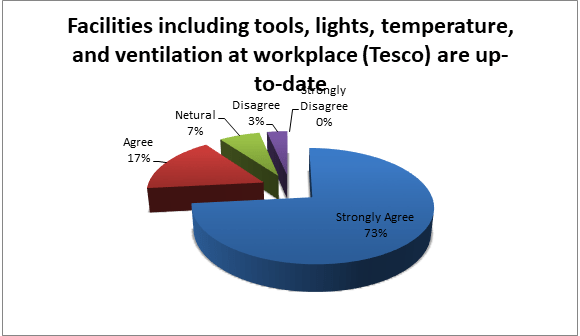
Figure 4.10: Facilities including tools, lights, temperature, and ventilation at workplace (Tesco) are up-to-date.
| OPINION | FREQUENCY | PERCENTAGE (%) |
| STRONGLY AGREE | 2 | 6 |
| AGREE | 5 | 17 |
| NEUTRAL | 12 | 40 |
| DISAGREE | 8 | 27 |
| STRONGLY DISAGREE | 3 | 10 |
| TOTAL | 30 | 100 |
Figure 4.11: Tesco offers flexible working hours
Offering flexible working hour is considered as a key hygiene factor work to prevent employee dissatisfaction. However, Tesco failed to ensure that it offers flexible working hours at an extent that is adequate as around 37% of employees opposed with that statement that Tesco offers flexible working hours while only 23% showed positive response towards this statement.

Colleague relationship
| OPINION | NUMBER | PERCENTAGE (%) |
| STRONGLY AGREE | 5 | 17 |
| AGREE | 3 | 10 |
| NEUTRAL | 13 | 43 |
| DISAGREE | 6 | 20 |
| STRONGLY DISAGREE | 3 | 10 |
| TOTAL | 30 | 100 |
Figure 4.12: Employees of Tesco are supportive and co-operative
According to findings, the highest 43% of employees stayed neutral on the statement that Tesco’s employees are supportive and co-operative. The above Figure shows that a total of 27% employees do believe that they have found their colleague supportive and co-operative while 30% of employee have found it opposite. Therefore, the extent in which employees find their colleague supportive and co-operative is not adequate.

| OPINION | NUMBER | PERCENTAGE (%) |
| STRONGLY AGREE | 5 | 17 |
| AGREE | 3 | 10 |
| NEUTRAL | 13 | 43 |
| DISAGREE | 6 | 20 |
| STRONGLY DISAGREE | 3 | 10 |
| TOTAL | 30 | 100 |
Figure 4.13: Tesco’s employees possesses friendly relationship with colleague
According to findings, the highest 43% of employees stayed neutral on the statement that T Tesco’s employees possess friendly relationship with colleague. The above Figure shows that a total of 27% employees do believe that they have good and friendly relationship with their colleague while 30% of employee have found it opposite. Therefore, the extent in which employees possess friendly relationship with colleague is not adequate.

Job security:
| OPINION | FREQUENCY | PERCENTAGE (%) |
| STRONGLY AGREE | 7 | 23 |
| AGREE | 14 | 47 |
| NEUTRAL | 5 | 17 |
| DISAGREE | 3 | 10 |
| STRONGLY DISAGREE | 1 | 3 |
| TOTAL | 30 | 100 |
Figure 4.14: Employees of Tesco have job security
The last question in Hygiene section was designed to investigate employee perceptions regarding their job security at Tesco. The above Figure shows that 70% of employees are positive about their job security at Tesco while 13% of employees are negative and rest of 17% stayed neutral regarding this hygiene factor.

Motivators
Motivators are the actual factors the fulfilment of which drive to job satisfaction.
Achievements:
Achievement is a crucial motivator. In order to investigate the extent of achievement at Tesco, two questions were designed.
| OPINION | FREQUENCY | PERCENTAGE (%) |
| STRONGLY AGREE | 4 | 13 |
| AGREE | 7 | 23 |
| NEUTRAL | 8 | 27 |
| DISAGREE | 6 | 20 |
| STRONGLY DISAGREE | 5 | 17 |
| TOTAL | 30 | 100 |
Figure 4.15: Tesco values individuals’ efforts and achievements
Recognition play crucial role in employee job satisfaction. The above Figure shows that around 36% of employees of Tesco do believe that the company values individuals’ efforts and achievements; while around 37% of employees showed contrary opinion as rest of 27 stayed neutral. Therefore, the way Tesco values individuals’ efforts and achievement is not adequate to satisfy the employees adequately.

| OPINION | FREQUENCY | PERCENTAGE (%) |
| STRONGLY AGREE | 4 | 13 |
| AGREE | 7 | 23 |
| NEUTRAL | 8 | 27 |
| DISAGREE | 6 | 20 |
| STRONGLY DISAGREE | 5 | 17 |
| TOTAL | 30 | 100 |
Figure 4.2.16: Tesco offers satisfactory bonus for achievement or accomplishment
Bonus of reward on achievement drives job satisfaction and motivates employees to strive for further achievement. According to findings, around 36% of employees of Tesco do believe that the company offers satisfactory bonus for the achievement or accomplishment; while around 37% of employees showed contrary opinion as rest of 27 stayed neutral. Therefore, the way Tesco offers bonus for achievement or accomplishment is not adequate to satisfy the employees adequately.
Figure 4.16: Tesco offers satisfactory bonus for achievement or accomplishment
Responsibilities:
| OPINION | FREQUENCY | PERCENTAGE (%) |
| STRONGLY AGREE | 5 | 17 |
| AGREE | 7 | 23 |
| NEUTRAL | 8 | 27 |
| DISAGREE | 7 | 23 |
| STRONGLY DISAGREE | 3 | 10 |
| TOTAL | 30 | 100 |
Figure 4.17: Tesco offers challenging tasks or responsibilities
Challenging tasks or responsibilities encourage employees to strive for accomplishment thus it leads to job satisfaction. According to findings, employees offered mix response regarding this motivator as around 40 of employees were found believing that Tesco offers challenging tasks or responsibilities while 33% were found opposite and rest of 27 found neutral. Therefore, it can be said that Tesco failed to understand the significance of offering challenging or breathtaking tasks or responsibilities to employees.
Figure 4.17: Tesco offers challenging tasks or responsibilities
| OPINION | FREQUENCY | PERCENTAGE (%) |
| STRONGLY AGREE | 1 | 3 |
| AGREE | 4 | 13 |
| NEUTRAL | 12 | 40 |
| DISAGREE | 8 | 27 |
| STRONGLY DISAGREE | 5 | 17 |
| TOTAL | 30 | 100 |
Figure 4.18: Tesco encourages and offer adequate opportunity to employees to involve in decision making
Employees were given the statement that Tesco encourages and offer adequate opportunity to employees to involve in decision making. The above Figure shows that the highest 40% of respondents showed neutral opinion regarding this motivator. Around 16% were found holding positive perceptions whereas around 44% were found showing negative perceptions. Therefore, employees usually do not get opportunity to be involved in decision making at Tesco.
Figure 4.18: Tesco encourages and offer adequate opportunity to employees to involve in decision making
Recognition:
| OPINION | FREQUENCY | PERCENTAGE (%) |
| STRONGLY AGREE | 7 | 23 |
| AGREE | 14 | 47 |
| NEUTRAL | 4 | 13 |
| DISAGREE | 3 | 10 |
| STRONGLY DISAGREE | 2 | 7 |
| TOTAL | 30 | 100 |
Figure 4.19: Employees get adequate appreciation when jobs are done well
Appreciation for the efforts is crucial to motivate employees. According to findings around 70% of employees think employees of Tesco get adequate appreciation from their manager or immediate boss when jobs are done well, whereas 17% oppose it and rest of 13% stayed neutral position.
Figure 4.19: Employees get adequate appreciation when jobs are done well
Personal growth and advancement:
| OPINION | FREQUENCY | PERCENTAGE (%) |
| STRONGLY AGREE | 7 | 23 |
| AGREE | 9 | 30 |
| NEUTRAL | 3 | 10 |
| DISAGREE | 8 | 27 |
| STRONGLY DISAGREE | 3 | 10 |
| TOTAL | 30 | 100 |
Figure 4.20: Employees can grow and develop as a person at Tesco
Employees offered mix responses on the statement that employees can grow and develop as a person at Tesco as around 53% of respondents were found either strongly agree or agree while 37% were found either disagree or strongly disagree and rest of 10% were found neutral regarding this motivator issue.
 Figure 4.20: Employees can grow and develop as a person at Tesco
| OPINION | FREQUENCY | PERCENTAGE (%) |
| STRONGLY AGREE | 9 | 30 |
| AGREE | 13 | 43 |
| NEUTRAL | 5 | 17 |
| DISAGREE | 3 | 10 |
| STRONGLY DISAGREE | 0 | 0 |
| TOTAL | 30 | 100 |
Figure 4.21: Tesco offers adequate training and development to the employees
Training and development is one of the most significant motivator that motivates employees to be more committed towards organizational goals. Training helps the employees to be more skilled and competent to conduct their tasks successfully thus attain organisational goals more effectively and efficiently. The above Figure shows that around 73% of employees think that Tesco offers adequate training and development to the employees; while around 10 oppose it and rest of 17% stayed neutral.
Figure 4.21: Tesco offers adequate training and development to the employees
Promotion:
| OPINION | FREQUENCY | PERCENTAGE (%) |
| STRONGLY AGREE | 13 | 43 |
| AGREE | 6 | 20 |
| NEUTRAL | 5 | 17 |
| DISAGREE | 5 | 17 |
| STRONGLY DISAGREE | 1 | 3 |
| TOTAL | 30 | 100 |
Figure 4.22: Tesco offers adequate promotion opportunity
Promotion is always crucial for employee motivation thus to attain employee job satisfaction. The last question was designed to investigate the extent of employee satisfaction on promotion opportunity at Tesco. According to findings, 63% of employees think they get adequate opportunity of promotion while 20 oppose it and rest of 17% stayed neutral regarding this motivator factor.
Chapter 5: Interpretation and discussion
5.1. Introduction
Employees or workforce are being more valuable and important asset for a firm and the employers needs to ensure the motivation of the employees with offering positive environment and different incentives (Honore, 2009). Employee motivation has been subject to research area over the years due to its significance contribution in the attainment of organisational goals. However, it is still remains unexplored to some extent as a general understanding has not yet been developed when it comes to researches conducted in different working settings at different times and retail sector (Kumar, 2014). Earlier studies have formulated different motivational tools (Aina, 2014), yet a unique motivational tool or framework is yet to develop for the UK retail sector though motivated workforce is required for this industry to ensure survival of the organisation. The basic reason to constructs the topic motivation at work is particularly significant as well as appropriate in current consequence of the subject area and the results of researcher on the contest of motivational factors (Honore, 2009). This research is focus on the motivational key factors of employees at Tesco and identifies these factors which will allow the research to the literature to determine the key factors of motivation in modern business, especially in retail business in the UK.
The purpose of this study is to examine the extent of employee motivation in UK retail sector, particularly Tesco Plc. The objectives of this study include the followings:
- To critically investigate the key employee motivational issues or factors in a retail setting.
- To examine the extent of employee motivation of Tesco Plc.
- To offer some recommendations to Tesco Plc to improve employee motivation
The purpose of this chapter is to interpret and discuss the empirical data shown in the earlier chapter so as to describe the relationship between the dependent variable (employee motivation) and independent variables (motivational factors).
5.2. Interpretation and discussion:
5.2.1 Findings one: Demographic information
Demographic data include respondents’ age, gender, education, and length of service. In this section, 3 questions were developed to collect respondents’ demographic information because demographic characteristics or employees’ personality aspects have significant impact on job satisfaction. The findings showed in the Figure 4.1 to Figure 4.3 showed that the employees of Tesco Plc hold different demographic characteristics. Though the number of male employees is higher that the number of female employees, it can be said that Tesco has both of male and female employees considerably. In the someway, the employees of Tesco fall under different age group, yet they are mostly young. Finally, duration of employment is crucial in determining employees’ commitment or motivation towards organisational goals. According to findings, the highest 64% of employees are 1 to 4 years experienced followed by 5 to 8 years, 20%.
5.2.2. Findings 2: Hygiene factors:
According to Herzberg (1968), the hygiene factors are not true motivator as they cannot lead to employee job satisfaction, yet they are imperative as they prevent employee dissatisfaction. Therefore, the fulfilment of hygiene factors is crucial to create a motivation workplace environment. Hygiene factors include quality of supervision, pay (salary), company policies, physical working conditions, relationship, companionship and job security. So, each of them are studied below in relation with motivation (Landy and Conte, 2010; ShaemiBarzoki et al., 2012 Ololube, 2006).
First of all, supervision quality is always curial in determining employee job satisfaction. According to Herzberg’s theory, it plays crucial role to prevent employee dissatisfaction. Supervision quality can be justified trustworthiness of supervisor and their relationship with associates (Mayo, 1949; Lucas, 1985). The findings revealed that the supervision quality at Tesco is adequate as same 70% of employees believe that their supervisors are trustworthy and employees have good relationship with their supervisors, while only 7% opposed it. However, still there is opportunity of improvement as 23% of employees were found neutral and 7% were found disagree regarding this issue.
Pay is another key hygiene factors accumulating every kind of cash benefits that employees can profit from, such as salaries, bonuses, wages, etc… It is obvious and has been acknowledged by various studies that monetary pay has been the most substantial motivation for the individuals. It is so because cash benefit can provide the individual to invest that money for other most preferred or needed desirable objects (Lawler, 1971; Adzei and Atinga, 2012), such as fulfilling basic needs e.g. shelter and food (Maslow, 1943). The findings revealed that the salary structure of Tesco is enough to satisfy only 56% of employees as 17% were found dissatisfied and rest of 29% were found neutral. Therefore, a mix response was found regarding the pay issue of Tesco.
Company includes the policies those address the motivational approaches found in vision, mission, human resource strategy, dress code, holiday policy, communication strategy and so on (Landy and Conte, 2010). The utilization of this hygiene factor at Tesco is quite remarkable as the empirical findings suggest that employees perceived Tesco’s employment policy as fair. However, the performance of the company in ensuring that employees are understood the mission, vision and goal of the company, is not adequate as only 37 showed positive opinion while 47%of employees stayed neutral about and 16% showed adverse opinion regarding this hygiene issue.
Working condition relates to environment maintained or given by the workplace to carry out the activities that might motivation such as working hour, health and safety, work flexibility, working environment and so on. Job satisfaction and motivation of an employee can be influenced by the kind of working condition the company has provided to the employee. If the working hour is long then it might demotivate employee to be committed (Parker and Wall, 1998). The utilization of this hygiene factor at Tesco is satisfactory except offering flexible working hours as only 23% of employee claimed that they got flexible working schedule from Tesco. However, the performance of the company in ensuring safe, and secure, hygienic working environment, and offering up-to-date facilities include tools, lights, temperature, and ventilation at workplace.
Relationship with colleague or peers addresses to the relationship that employees hold with managers, colleagues and associates. Depending upon the level of relationship one holds at work with peers can lead to self-motivation and satisfaction at work environment. So, it is necessary to hold socialization and workshop programs among employees (Lucas, 1985). Tesco failed to create a working environment where employee will have good relationship with colleague as only 27% of employees found their colleague supportive, and 27% of employees possess good and friendly relationship will colleague; while rest of the employees were undecided or disagreed with these factors.
Job security is one of the strongest policies of the companies to retain their loyal and hardworking long-term employees. The kind of incentives provided to certain level of employees hold realization of motivation (Ruthankoon and Ogunlana, 2003; Smith, 1999; Wiley, 1997). The findings revealed that 70% of employees are positive about their job security at Tesco while 13% of employees are negative and rest of 17% stayed neutral regarding this hygiene factor.
Finally, the performance of Tesco in term of the utilization of hygiene factors to prevent employee job satisfaction is not adequate though the highest numbers of employees were found satisfied with supervision quality, company policy, working environment, pay, colleague relationship and job security. Because considerable numbers of employees perceived these factors as inadequate as means of preventing their job dissatisfaction, specifically in term of pay, flexible working hour, and job security.
5.2.3. Findings 3: Motivators
Motivators are the actual factors the fulfilment of which drive to job satisfaction. According to Herzberg (1968), motivators are the factors which truly influence or motivate employees to be more committed and work hard and enjoy their jobs. Motivators entail what individuals actually do on the job and should be engineered into the jobs employees do for developing intrinsic motivation. Intrinsic motivators include promotion opportunities, opportunities for personal growth, recognition, responsibility and achievement (Daft, 2003; Hyun and Oh, 2011).
Achievement is a key motivator. It includes the realization of success where tasks are completed, issues are resolved and personal pleasure is experienced (Parker and Wall, 1998). The performance of Tesco in term of achievement factors is not adequate as 37% of employees think that the company does not value individuals’ effort and achievements, and does not offer satisfactory bonus for achievement adequately; in addition to 27% were found neutral.
Responsibility refers to the individual roles and duties, which are already communicated and cleared to the person about what to do and how to do. The roles and duties can range from functional level to higher-level decision-making. Any individual carrying responsibilities might seek to understand the nature of it and as per its nature the individual realizes motivation and satisfaction while carrying out those tasks. Also, allowing an individual to carry out responsibilities and followed by participation in decision-making can enhance the individual with higher level of motivation (Hunsker, 2005; Ncube and Samue, 2014). The performance of Tesco in term of responsibility is not adequate. The findings revealed that 33% of employees do not think that Tesco offer challenging tasks or responsibilities, while 27% stayed neutral. Therefore, it can be said that Tesco failed to understand the significance of offering challenging or breathtaking tasks or responsibilities to employees. In the same way, 44% of employees argued that Tesco does not encourage and offer adequate opportunity to the employee to be involved in decision making; while 40% stayed neutral. Therefore, employees usually do not get opportunity to be involved in decision making at Tesco.
The positive reaction or compliments passed by the organisation or the managers to the employees when performing the work or their tasks at work is recognition. The recognition may be verbal or written compliments or appreciation passed by the organisation or manager (Ncube and Samue, 2014). The performance of Tesco is not adequate though 70% of employees think employees of Tesco get adequate appreciation from their manager or immediate boss when jobs are done well. Because 17% showed negative opinion and 13% were found neutral.
Growth opportunity is another key motivator. It implies the opportunities of training and developments for the employees in order to enhance their knowledge and development of the skills and also includes the advancement of job position i.e. promotion (Ncube and Samue, 2014). According to findings, only 53% of employees think that they can grow and develop as a person at Tesco, while 37% opposed it and rest of 10% stayed neutral. Therefore, employees offered mix responses on the statement that employees can grow and develop. However, Tesco understand the significance of training and development because 73% of employees argued that the company offer adequate training and development to the employees while only 10% opposed it.
Promotion includes the opportunity to get advancement in job position on the basis of the job performance and recognition by the organisation or manager. Promotion emphasise the positive impact on the employees and their performance. Hence, it creates the best opportunities for the employees to show their best performance or their capabilities where as it may enhance the relationship of the employees and organisation as well (Simons and Enz, 1995; Ncube and Samue, 2014). According to findings, 63% of employees think they get adequate opportunity of promotion while 20 oppose it and rest of 17% stayed neutral regarding this motivator factor.
Finally, the commitment of the employees towards their work and the organisation increases when the motivation issues are implemented in the organisation. Hence, it increases the capability of the employees, inspire employees at work, employees are more attracted towards their job in term of innovation and creativity. In contrary, the employees get bored, effortless and unattractive towards the job when the motivation issues are avoided in the country and hence may affect the entire activities at the organisation. Therefore, inspiring the employees are very important issues relating to organisation’s performance (Paswan et al., 2005; Ncube and Samue, 2014). However, the way Tesco understand the significance of employee motivation and the execution of human resource strategy to get employees adequately motivated is not enough to ensure high level of employee motivation. Though the highest numbers of employees were found satisfied regarding each motivational factor, a considerable number of employees were found dissatisfied or in neutral position. Thus, the company must need to reshape its strategy to ensure adequate level of employee motivation.
Objective one: To critically investigate the key employee motivational factors or issues in retail industry
The first objective of this research was to investigate the key employee motivational factors or issues in retail industry. Over the years many motivational theories were suggested by different scholars who identified the factors that motivate people (Pattyanayak, 2006; Aina, 2014). Some of key motivational theories include Herzberg’s Two Factor Theory, Maslow’s Needs of Hierarchy Theory, Alderfer’s ERG Theory, McGregor’s X-Y Theory, David McClelland’s Three-Need Theory, Goal Setting Theory, Expectancy Theory of Victor Vroom and Adam’s Equity Theory (Adzei and Atniga, 2012; Aina, 2014). These theories identified motivational factors, and many empirical studies later supported these theories in different context. For the purpose of this research, the Herzberg’s Two Factor Theory was used as the theoretical framework.
According to this theory, motivational factors can be mainly divided into two: hygiene factors and motivators. Hygiene factors are not true motivator as they cannot lead to employee job satisfaction, yet they are imperative as they prevent employee dissatisfaction. Therefore, the fulfilment of hygiene factors is crucial to create a motivation workplace environment. Hygiene factors include quality of supervision, pay (salary), company policies, physical working conditions, relationship, companionship and job security. So, each of them are studied below in relation with motivation (Landy and Conte, 2010; ShaemiBarzoki et al., 2012 Ololube, 2006). Motivators are the actual factors the fulfilment of which drive to job satisfaction. According to Herzberg (1968), motivators are the factors which truly influence or motivate employees to be more committed and work hard and enjoy their jobs. Motivators entail what individuals actually do on the job and should be engineered into the jobs employees do for developing intrinsic motivation. Intrinsic motivators include promotion opportunities, opportunities for personal growth, recognition, responsibility and achievement (Daft, 2003; Hyun and Oh, 2011).
The findings of this research support Herzberg’s theory as employees of Tesco found both hygiene factors and motivational factors relevant to workplace motivation.
Objective 2: To examine the extent of employee motivation of Tesco Plc.
The performance of Tesco in term of the utilization of hygiene factors to prevent employee job satisfaction is not adequate though the highest numbers of employees were found satisfied with supervision quality, company policy, working environment, pay, colleague relationship and job security. Because considerable numbers of employees perceived these factors as inadequate as means of preventing their job dissatisfaction, specifically in term of pay, flexible working hour, and job security.
In addition, the way Tesco understand the significance of employee motivation and the execution of human resource strategy to get employees adequately motivated is not enough to ensure high level of employee motivation. Though the highest numbers of employees were found satisfied regarding each motivational factor, a considerable number of employees were found dissatisfied or in neutral position. Thus, the company must need to reshape its strategy to ensure adequate level of employee motivation.
Objective 3: To offer some recommendations to Tesco Plc to improve employee motivation
The last objective of this study is to offer some strategic recommendation to Tesco Plc upon the improvement of employee motivation. Some strategic recommendations are outlined in the following chapter.
Chapter 6: Conclusion and recommendation
6.1. Conclusion:
The idea of motivation is quite old in the business world yet it is an important aspect to consider by a business to ensure the quality and effective performance of the employees and therefore the organisation as a whole. Motivation is the internal and external driver to influence the employees in achieving their goals whether it is personal, professional or organizational. The importance of motivation is widely accepted and suggested by different author, researchers and writers, in the context of having potential workforce and ensures the highest level of productivity, performance of the firm and achieving the objectives of organisation goal.
Human resource management is always a key to Tesco. The company recognised employees as a key of its success and base to ensure its future success. Thus, it treats colleagues how they really want to be treated such as working as team, sharing knowledge and experiences, trusting and respecting each other, and listening and supporting employees. This research was focused on the motivational key factors of employees at Tesco and identifies these factors which will allow the research to the literature to determine the key factors of motivation in modern business, especially in retail business in the UK.
A quantitative method in the form of survey questionnaire was adopted to investigate the extent of employee motivation at Tesco or to assess how the reward strategy of Tesco does is effective to motivate its workforce. The questions of the questionnaire based on the Herzberg’s Two-Factor Theory of motivation.
The performance of Tesco in term of the utilization of hygiene factors to prevent employee job satisfaction is not adequate though the highest numbers of employees were found satisfied with supervision quality, company policy, working environment, pay, colleague relationship and job security. Because considerable numbers of employees perceived these factors as inadequate as means of preventing their job dissatisfaction, specifically in term of pay, flexible working hour, and job security.
In addition, the way Tesco understand the significance of employee motivation and the execution of human resource strategy to get employees adequately motivated is not enough to ensure high level of employee motivation. Though the highest numbers of employees were found satisfied regarding each motivational factor, a considerable number of employees were found dissatisfied or in neutral position. Thus, the company must need to reshape its strategy to ensure adequate level of employee motivation.
Finally, the findings of this research strengthened the employee motivation literature as it has found the relevance and applicability of Herzberg’s Theory in UK retail context. In addition to that, these findings will be very valuable to the retail managers, specifically the managers of Tesco to understand employee motivation, its importance and how the company lacks in offering adequate incentives or reward that caused lack of motivation. Such understanding will further help them to develop and execute their incentives or reward strategy and execute it more effectively and efficiently.
6.2. Recommendation:
After critically reviewing the related literature and analysing the findings of this dissertation, the following recommendations are suggested for Tesco Plc to consider for motivating the employees in the achievement of the highest productivity from them:
Job security is perceived as a mind state in which employees see their job stability with the existing organisation in near future and it is the outcome of organisations’ own practices and policies regarding employees that make them more secure towards their job. Job security has got countless significance as motivational factors through studies (Maslow, 1949; Herzberg, 1959; Pearce, 1998). Employees expect job security from employers (Roussean and Tijoriwala, 1998); and there is a negative inverse relationship between perceived job insecurity and both employee satisfaction and employee commitment (Steers, 1977; Oldham et al. 1986). But according to findings, the sales associates of Tesco perceived job insecurity. Thus, it is recommended that the company should ensure job security for the employees. The management of the company can apply employee involvement programs in superior faith efforts which in turn will lead job security.
According to findings the extent of promotional opportunity in Tesco Plc is not satisfactory though promotion opportunity has important optimistic relationship with employee performance (Guest, 2007); having a fair promotion policy means rewarding success and promotion enable the employee to have higher status and higher wage (Simons and Enz, 1995). Thus, in spite of having a certain career path for the employees, due to lack of application of the policy, the associates perceived the promotional extent negatively. Therefore, it is recommended that the company should review its promotional policy and ensure the employees that they will get promoted based on their performance and experience fairly.
There are numerous studies which found pay as one of the most significant motivation as it is useful to attain so many other desirable things (Lawler, 1971), to fulfil lower order needs such as food and shelter (Maslow, 1943), as yardstick for social status (Frank, 1999) and personal accomplishment (Trank et al. 2002). Despite of having the fundamental significant, the extent of salary in Tesco Plc is not satisfactory. Thus, the company should increase the salary range of the sales people. The company can offer a realistic and satisfactory salary to its associates based on their living expenses, skills, potential and productivity.
The company should offer greater roles and responsibilities and challengeable tasks to the employees that will enable them to attain confidence, learn new skills and abilities for further career development. The company can enhance the responsibilities through empowering the employees, engaging them in decision making, offering them more challengeable and exiting tasks, offering leadership, encouraging creativity etc.
Recognition play significant role as motivational variable in order to increase employee productivity that leads to improvement of organisational performance (Deeprose, 1994). Tesco should facilitate fair and effective recognition programme for ensuring the highest employee productivity. The managers should praise and gratitude or give thanks to the associates when job is well done through verbal appreciation or written letter. Moreover, the company should value the efforts and achievements fairly and rewarded them according to their performance or accomplishments.
There should be better communication channel between the superiors and the associates. Corporate communication is one of the important factors which play significant roles in motivating employees (Morgan, 1990). The managers should make sure that they practice effective communication system with their followers. They should schedule regular appraisal for employees to review the progress, problems and plans. Moreover, they should encourage the employees to feel free to discuss and problems with them.
6.3. Limitation and further research:
A cross-sectional study like most of academic researches, this research encountered numbers of barriers including time, money and other resources. Because of such barriers the research had to select a manageable sample size of 50 employees. Considering the numbers of employees of Tesco, the sample size seems not sufficient, thus the findings of this research may lack validity and reliability. In addition, the participants of this research were the employees of only one retail store of Tesco, thus they are likely to come from a limited geographic area hardly from outside the London. The findings of this research therefore are likely to vary in different geographic area or in different store.
Considering the limitations and barriers, it is suggested that the future research may be conducted in multiple Tesco stores as well as other retail stores in different geographical areas. In addition, a web-based survey questionnaire technique can be used to collect data from a large population.
References:
Adams, J. S., 1963. Towards an Understanding of Inequity, Journal of Abnormal and Social Inequity, Vol. 67, pp. 422-436
Adzei, F. A. and Atinga, R. A., 2012. Motivation and retention of health workers in Ghana’s district hospitals: Addressing the critical issues, Journal of Health Organization and Management, Vol. 26, No. 4, pp. 467 – 485
Aina, O. O., 2014. Application of Motivation Theories in the Construction Industry, Journal of Business and Management, Vol. 16, No. 7, pp. 1-06
Alderfer, C. P., 1972. Existence, Relatedness, and Growth, New York: The Free Press
Amabile, T. M., 1988. A model of creativity and innovation in organisation, Greenwich: JAI Press, pp. 123-167
Antomioni, D., 1999. What Motivates Middle Managers? Journal of Industrial Management, Vol. 41, No. 6, pp. 27-30
Anderson, V., 2004. Research Methods in Human Resource Management, London: Chartered Institute of Personnel and Development
Armstrong, M., 2007. Employee Reward Management and Practice, London: Kogan Page
Banerjee, M., 1995. Organisation Behaviour, 3rd Edition, Bombay: Allied Publishers Limited
Bartol, K. M. and Srivastava, A., 2002. Encouraging knowledge sharing: the role of organizational reward systems, Journal of Leadership and Organization Studies, Vol. 9, No. 1, pp. 64-76.
Belcher, D. W., 1962. Towards behavioural science theory of wages, Academy of Management Journal, Vol. 5, No. 2, pp. 102-116
Bjorklund, C., 2001. Work Motivation- Studies of its Determinants and Outcomes, Stockholm: Elanders Gotab
Blaxter, L.; Hughes, C.; Tight, M., 2006. How to do Research, 3rd Edition, Brekshire: McGraw-Hill Education
Blumberg, B., Cooper, D. R. and Schindler, P. S., 2008. Business Research Methods, 2nd edition, Berkshire, Mcgraw-Hill Education
Bowen, B. E. and RadhaKrinshna, R. B., 1991. Job satisfaction of Agriculture Education Faculty: A Constant Phenomena, Journal of Agriculture Education, Vol. 32, No. 2, pp. 16-22
Broussard, S. C. and Garrison, M. E. B., 2004. The Relationship between Classroom Motivation and Academic Achievement in Elementary School-aged Children, Journal of Family and Consumer Sciences Research, Vol. 33, No. 2, pp. 106–120
Bryman, A., 2007. Barriers to Integrating Quantitative and Qualitative Research, Journal of Mixed Methods Research, Vol. 1, pp. 8-22
Bryman, A. and Bell, E., 2007. Business research methods, 2nd Edition New York: Oxford University Press Inc.
Buchanan, D. and Huczynski, A., 2004. Organisational Behaviour: An Introduction Text, 5th Edition, Harlow: Prentice Hall
Burney, A. S. M., 2008. Inductive and deductive research approach, [Online] Available at http://www.scribd.com/doc/13920229/Inductive-Deductive-Research-Approach-060320081 (Accessed on 22 March 2015)
Burns, R. B., 2000. Introduction to research methods. London: Sage Publications.
Calder, B. J. and Staw, B. M., 1975. The self-perception of intrinsic and extrinsic motivation, Journal of Personality and Social Psychology, Vol. 31, No. 4, pp. 599-605
Carrell, M. and Dittrich, J., 1978. Equity Theory: The Recent Literature, Methodological Considerations, and New Directions, Academy of Management Review, Vol. 3, No. 2, pp. 202-210.
Chua, L. L., 2011. Importance of Perceived Competence and Intrinsic Motivation, Motivation in Educational Research, NIE
Collis, J. and Hussey, R., 2009., Business Research: A Practical Guide for Undergraduate and Postgraduate Students, 2nd Edition, Hampshire, Palgrave Macmillan
Cooper, D. R. and Schindler, P. S., 2006. Research Methods in Education, 9th Edition, Boston, McGraw-Hill Irwin
Connaway, L. S. and Powel, R. R., 2007. Basic Research Methods for Librarians, 5th Edition, California: ABC-CLIO
Crowther, D. and Green, M., 2004. Organisational Theory, London: Chartered Institute of Personnel and Development
Curz, N. M., Perez, V. M. and Cantero, C. T., 2009. The Influence of Employee Motivation on Knowledge Transfer, Journal of Knowledge Management, Vol. 13, No: 6, pp. 478-490
Daft, R. L., 2003. Management, 6th Edition, Mason, OH: South-Western
Daft, R. L., 2005. Why I recommended that your manuscript be rejected and what you can do about it, (in ends) L. L. Cummings and Peter, J. Frost, Publishing in the Organisational Sciences, Richard D. Irwin, Homewood IL, pp. 193-209
Deci, E., 1975. Intrinsic Motivation, New York, Plenum Press
Deci, E. L., Koestner, R. M., 1999. A meta analytic review of experiments examining the effects of extrinsic rewards on intrinsic motivation, Journal of Psychological Bulletin, Vol. 125, No. 6, pp. 627-668
DeCenzo D. A. and Robbins S. P., 2005. Human Resource Management, 2th Edition, London, John Wiley and Sons, Inc. pp. 34-45
Denscombe, M., 2007. The Good Research Guide for Small-Scale Social Research Projects, 3rd Edition, Buckingham: Open University Press
Dewhurst, M.; Guthridge, M. and Mohr, E., 2009. Motivation People: Getting beyond money, [Online] Available at http://www.mckinseyquarterly.com/Motivating_people_Getting_beyond_money_2460 (Accessed at 17th March 2015)
Experian, 2011. The changing face of UK retail in today’s multi-channel world, An Experian White Paper, [online] Available at http://www.experian.co.uk/assets/business-strategies/white-papers/RWC-whitepaper2.pdf (Accessed 10 January 2015)
Fincham, R. and Rhodes, P., 2005. Principles of Organizational Behaviour, New York: Oxford University Press Inc.
Foster, M., 2012. How to Keep Turnover Low and Employees Motivated in the Midst of Economic Turmoil, [Online] Available at http://www.fosterinstitute.com/articles/management/pdf/how%20to%20keep%20turnover%20low%20and%20your%20employees%20motivated%20in%20the%20midst%20of%20economic%20turmoil1.pdf (Accessed at 15th March 2015)
Frank, R. H., 1999. Luxury Fever: Why Money Fails to Satisfy in an Era of Excess, New York: The Free Press.
Gignac, G. E. and Palmer, B. R., 2011. The Genos employee motivation assessment, Industrial and Commercial training, Vol. 43, No. 2, pp. 79-87
Gill, J. and Johnson, P., 2010. Research Methods for Managers, 4th Edition, City of London, SAGE Publications Limited
Griffin, M. A. and Neal, A., 2000. Perception of safety at work: a framework for linking safety climate to safety performance, knowledge, and motivation, Journal of Occupational Health Psychology, Vol. 5, No. 3, pp. 347-358
Guest, D., 2007. Human Resource Management and the Worker: Towards a New Psychological Contract, International Journal of Human Resource Management, Vol. 12, No. 7, pp. 1092-1106
Gwynne, R., 1997. Maslow’s Hierarchy of Needs, [Online] Available at http://web.utk.edu/gwynnemaslow.htm (Accessed at 15 March 2015)
Hall, H., 2001. Input-friendliness: motivating knowledge sharing across intranets, Journal of Information Science, Vol. 27 No. 3, pp. 139-46.
Harder, M., 2008. How Do Rewards and Management Styles Influence the Motivation to Share Knowledge? Strategic Management and Globalization Working Paper No. 6. Copenhagen Business School
Harter, J. K., Schmidt, F. L., Killham, E. A. and Agrawal, S., 2009. Q12 Meta-analysis: The Relationship between Engagement at Work and Organizational Outcomes, Gallop, Omaha, NE
Henderson, L. N. and Tulloch, J., 2008. Incentives for retaining and motivating health workers in Pacific and Asian countries, Journal of Human Resources for Health, Vol. 6, No. 18.
Herzberg, F., 1966. Work and the Nature of Man, Cleveland: World Publishing Company
Hoffmann, S., 2007. Classical Motivation Theories: Similarities and Differences Between Them, Munich: GRIN Verlag
Holt, D. H., 1997. Management Principles and Practices, Sydney: Prentice-Hall
Hyun, S. and oh, H., 2011. Re-examination of Herzberg’s Two-Factor Theory of Motivation in the Korean Army Foodservice Operations, Journal of Foodservice Business Research, Vol. 14, No. 2, pp. 100-121
James, H. J., 2005. Why did you do that? An economic examination of the effect of extrinsic compensation on intrinsic motivation and performance, Journal of Economic Psychology, Vol. 26, pp. 549-566
Kafi, B., 2006. A Theory of Human Resource Management, Tehran: Faeazandishsabz Publications.
Katzell, R. A. and Thompson, D. E., 1990. Work motivation: Theory and practice, American Psychologist, Vol. 45, pp. 144-153.
Kessler, H. W., 2003. Motivate and Reward: Performance Appraisal and Incentive Systems for Business Success, Norwich: Curran Publishing Services
Kreisman, B. J. (2002) Insights into Employee Motivation, Commitment and Retention, [Online] Available at http://www.ascendrewards.com/static/resources/papers/employee-commitment.pdf (Accessed at 5th March 2015)
Kumar, A., 2014. An Empirical Study: Relationship between Employee Motivation, Satisfaction and Organizational Commitment, International Journal of Management and Business, Vol. 4, No. 2, pp. 81-93
Landy, F. J. and Conte, J. M., 2010. Work in the 21st Century: An Introduction to Industrial and Organisational Psychology, 3rd Edition, New Jersey: Wiley-Blackwell
Latham, G. P. and Pinder, C. C., 2005. Work motivation theory and research at the dawn of the twenty first century, Annual Review of Psychology, Vol. 56, pp. 485-516.
Lawler, E. E., 1971. Pay and Organisational Effectiveness: A Psychological View, New York: McGraw Hill
Lin, C. Y. and Liu, F., 2012. A cross-level analysis of organisational creativity climate and perceived innovation: The mediating effect of work motivation, Europian Journal of Innovation Management, Vol. 15, No. 1, pp. 55-76
Lisa, E., Therese, G., Simon, B. and Mien, S., 2013. Employee motivation for personal development plan effectiveness, European Journal of Training and Development, Vol. 37, No, 6, pp. 527-543
Locke, E. A., and Latham, G. P., 1990. A theory of goal setting and task performance, New Jersey: Prentice-Hall.
Locke, E.A. and Latham, G. P., 2002. Building a practically useful theory of goal setting and task motivation: A 35-year odyssey, American Psychologist, Vol. 57, pp. 705–717
Locke, E. A. and Latham, G. P., 2004. What should we do about motivation theory? Six recommendations for the twenty-first century, Academy of Management Review, Vol. 29, No. 3, pp. 388-403.
Longest, B. B., Rakich, J. S. and Darr, K., 1992. Managing Health Services Organisation, 3rd Edition, Baltimore, Health Profession Press
Lucas, G. H., 1985. The relationship between job attitudes, personal characteristics, and job outcomes: a study of retail store manager, Journal of Retailing, Vol. 61, No. 1, pp. 35-61
Lunenburg, F. C., 2011. Expectancy Theory of Motivation: Motivating by Altering Expectations, International Journal of Management, Business, and Administration, Vol. 15, No. 1, pp. 1-6
Luthans, F., 1998. Organisational Behaviour, 8th Edition, Boston: Irwin McGraw-Hill
Manfred, M., 1992. Development and Human Needs, New York: Routledge
March, J. G., 1999. The Pursuit of Organisation Intelligence, Oxford, Blackwell Publication
Manolopoulos, D., 2007. An evaluation of employee motivation in the extended public sector in Greece, Journal of Employee Relations, Vol. 30, No. 1, pp. 63-85
Maslow, A. H., 1943. A theory of human motivation, Journal of Psychological Review, Vol. 50, pp. 370
Maslow, A. H., 1970. Motivation and Personality, 2nd Edition, New York: Harper & Row Publishers.
Mathios, A., 1989. Education, Variation in Earnings, and Nonmonetary Compensation, Journal of Human resource, Vol. 24, pp. 456-468
Maylor, H. and Blackmon, K., 2005. Researching Business and Management: A Roadmap for Success, Basingstoke: Palgrave Macmillan
Mayo, E., 1949. The Social Problem of Industrial Civilization, London: Routeledge and Kegan
McShane, S. L. and Glinow, M. A., 2000. Organizational Behaviour: Emerging Realities for the Work Place Revolution, New York, McGraw-Hill
Meyer, J. P., Becker, T. E. and Vandenberghe, C., 2004. Employee commitment and motivation: a conceptual analysis and integrative model, Journal of Applied Psychology, Vol. 89, No. 6, pp. 991-1007.
Molander, C., 1996. Human Resources at Work, Lund: Student litterateur
Morgan, W. J., 1990. Hospitality personnel Management, Boston: CBI Publishing Company
Mosley, P., Winters, G. and Wood, S., 2012. Wholesale and retail sector skills assessment 2012, Wath upon Dearne: UK Commission for Employment and Skills
Mullins, L. J., 2007. Management and Organisational Behaviour, 8th Edition, Harlow: Pearson Education Limited
Nahavandi, A. and Malekzadeh, A., 1999. Organizational Behaviour: The Person-Organization Fit, New Jersey, Prentice Hall
Naylor, J., 1999. Management, Harlow, Prentice Hall
Ncube, C. M. and Samuel, M. O., 2014. Revisiting Employee Motivation and Job Satisfaction within the Context of an Emerging Economy: Theoretical Representation and Developing the Model, Mediterranean Journal of Social Sciences, Vol. 2, No. 9, pp. 267-282
Nykiel, R. A., 2007. Handbook of Marketing Research Methodologies for Hospitality and Tourism, New York: The Haworth Hospitality and Tourism Press
Ogunrin, F. O., Ogunrin, O. and Akerele, A., 2007. Motivating Nigerian doctors for improved healthcare delivery, International Journal of Health Care Quality Assurance, Vol. 20, No. 4, pp. 290-306
Oldham, G. R.; Julik, C. T.; Ambrose, M. L; Stepine, L. P., 1986. Relations Between Job Facet Comparisons and Employee Relations, Organisational Behaviour and Human Decision Processes, Vol. 38, pp. 28-47
Ololube, J., 2006. Teacher job satisfaction and motivation for school effectiveness: an assessment, Journal of Essays in Education, Vol. 18, [Online] Available at http://www.eric.ed.gov/PDFS/ED496539.pdf (Accessed at 10 February 2015)
Osterloh, M., Fery, B. and Frost, J., 2002. The dynamics of motivation of new organisational forms, International Journal of Economics and Business, Vol. 9, No. 1, pp. 6-771
Parker, S. K. and Wall, T. D., 1998. Job and Work Design: Organizing Work to Promote Well-Being and Effectiveness, San Francisco: Sage Publication
Parvin, M. M. and Kabir, M. M. N., 2011. Factors Affecting Employee Job Satisfaction of Pharmaceutical Sector, Australian Journal of Business and Management Research, Vol. 1, No. 9, pp. 113-123
Paswan, A. K., Pelton, L. E. and True, S. L., 2005. Perceived managerial sincerity, feedback seeking orientation and motivation among front line employees of a service organisation, Journal of Service Marketing, Vol. 19, No. 1, pp. 3-12
Patriota, D., 2009. Employee retention: an integrative view of supportive human resource practices and perceived organisational support, Master thesis in International Business Management
Pattanayak, B., 2006. Human Resource Management, 3rd Edition, new Delhi, Prentice-Hall India Private Limited
Pearce, J. L., 1998. Job Insecurity is Important, but not for the reasons you: The Example of Contingent Workers, Trends in Organisational Behaviour, Vol. 5, pp. 31-46
Pinder, C. C., 1998. Work Motivation in Organizational Behaviour, New Jersey: Prentice-Hall
Proctor, S., 1998. Linking philosophy and method in the research process: the case for realism, Nurse Researcher, Vol. 5, No. 4, pp. 73-90
Pugh, D. S., 1997. Organization Theory- Selected readings, 4th Edition, London, Penguin Group
Raj, R. and Morpeth, N. D., 2007. Religious Tourism and Pilgrimage Management: An International Perspective, Oxfordshire: CABI
Ramlall, S., 2004. A review of Employee Motivation Theories and Their Implications for Employee Retention Within Organisations, The Journal of American Academy of Business, Vol. 5, No. 2, pp. 52-63
Reuters, 2014. Company Profile: Tesco Plc, [online] Available at: http://uk.reuters.com/business/quotes/companyProfile?symbol=TSCO.L (Accessed 12 December 2015)
Rhodes, C., 2014. The Retail Industry: Statistics and Policy, House of Commission, Economic Policy and Statistics,
Robbins, S. P., 2003. Essentials of Organisational Behaviour, 7th Edition, New Jersey: Pearson Education, Inc.
Robbins, S. P. and Judge, T. A., 2008. Organisational Behaviour, 13th Edition, Prentice-Hall
Ruthankoon, R. and Ogunlana, S. O., 2003. Testing Herzberg’s Two-Factor Theory in the Thai Construction Industry; Engineering, Construction and Architectural Management, Vol. 10, No. 5, pp. 333-342
Ryan, R. M. and Deci, E. L., 2000. Intrinsic and extrinsic motivations: classic definitions and new definitions, Journal of Contemporary and Educational Psychology, Vo. 25, No. 1, pp. 54-67
Salant, P. and Dillman, D. A., 1994. How to Conduct Your Own Survey, New York: John Wiley and Sons
Sansone, C. and harackiewicz, J. M., 2000. Intrinsic and Extrinsic Motivation: The Search for Optimal Motivation and Performance, San Diego, Academic Press
Saunders, M., Lewis, P., and Thornhill, A., 2009. Research Methods for Business Students, 5th Edition, Essex: Pearson Education Limited
Scheinder, B. and Alderfer, C. P., 1973. Three Studies of Measure of Need Satisfaction in Organisations, Administration Science Quarterly, Vol. 18, No. 4, pp. 489-505
Selart, M., Nordstrom, T., Kuvaas, B. and Takemura, K., 2008. Effects of reward on self-regulation, intrinsic motivation and creativity, Scandinavian Journal of Educational Research, Vol. 52, No. 5, pp. 439-458
Selden, S. C. and Brewer, G. A., 2000. Work motivation in the senior executive service: testing the high-performance cycle theory, Journal of Public Administration Research and Theory, Vol. 10, No. 3, pp. 531-550
ShaemiBarzoki, A.; Attafar, A. and Jannati, A. R., 2012. An Analysis of factors Affecting the Employee Motivation based on Herzberg’s Hygiene Factors Theory, Australian Journal of Basic and Applied Sciences, Vol. 6, No. 8, pp. 115-123
Shalley, C. E., Zhou, J. and Oldham, G. R., 2004. The effects of personal and contextual characteristics on creativity: where should we go from here, Journal of management, Vol. 30, No. 6, pp. 933-958
Silverman, D., 2000. Doing qualitative research: A practical Handbook, CA: Sage Publications
Simons, T. and Enz, C. A., 1995. Motivating Hotel Employees: Beyond The Carrot and The Stick, Cornell Hotel and Restaurant Administration Quarterly, Vol. 36, NO. 1, pp. 20-27
Skudiene and Aurusskeviciene, 2010. The contribution of corporate social responsibility to internal employee motivation, Baltic Journal of management, Vol. 7, No. 7, pp. 49-67
Smith, L., 1999. An Evaluation of Programmes for Staff in NHS and Hotel Ancillary, Staff Facilities, Vol. 17, No. 7, pp. 264-271
Steers, R., 1977. Antecedents and Outcomes of Organisational Commitment, Administrative Science Quarterly, Vol. 22, pp. 46-56
Steiner, I. D., 1972. Group Process and Productivity, New York: Academic Press
Strumpel, 1975. Higher Education and Economic Behaviour, New York: McGraw-Hill
Tella, A.; Ayeni, C. O.; Popoola, S. O., 2007. Work Motivation, Job Satisfaction, and Organisational Commitment of Library Personnel in Academic and Research Libraries in Oyo State, Nigeria, [Online] Available at http://www.webpages.uidaho.edu/~mbolin/tella2.pdf (Accessed at 26 February 2015)
Tesco Plc, 2014. About Tesco Plc, [online] Available at http://www.tescoplc.com/index.asp?pageid=6#ref_about (Accessed 9 December 2014)
Tesco Plc UK, 2014. Tesco UK, [online] Available at: http://www.tescoplc.com/index.asp?pageid=282 (Accessed 9 December 2014)
Thomas, A. B. (2004) Research Skills for Management Studies, London, Routledge
Thomas, K. W. and Velthouse, B. A., 1990. Cognitive Elements of Empowerment: An Interpretive Model of Intrinsic Task Motivation, Academy of Management Review, Vol. 15, pp. 666-681
Thomson, D. P., 1996. Motivating Others: Creating the Conditions, New Jersey: Eye on Education
Tietjen, M.A. and Myers, R. M., 1998. Motivation and job satisfaction, Journal of Management Decision, Vol. 36, No. 4, pp. 226-31.
Trank, C, Q.; Rynes, S. L. and Bretz, R. D., 2002. Attracting Applicants in the War for Talent: Difference in Work Preferences Among High Achievers, Journal of Business and Psychology, Vol. 17, pp. 331-345
Trehan, M. and Trehan, R., 2010. Advertising and Sales Management, New Delhi: VK (India) Enterprise
Trifunovska, K. and Trifunovaski, R., 2010. Human Resource Management: Motivating Among Employees in Multinational Corporation, International Business and Economics Program, Spring 2010, Kristianstad University
Vroom, V. H., 1964. Work and Motivation, San Francisco: Jossey-Bass
Wahba, A. and Bridgewell, L., 1976. Maslow Reconsidered: A Review of Research on the Need Hierarchy Theory, Organizational Behaviour and Human Performance, Vo. 15, pp. 212–240.
Watson, T., 1994. Linking Employee Motivation and Satisfaction to the Bottom Line, CMA Magazine, Vol. 68, No. 3, p. 4
Wei-Tsong, W. and Ya-Pei, H., 2015. Motivations of employees’ knowledge sharing behaviours: A self-determination perspective, Information and Organisation, Vol. 25, No. 1, pp. 1-26
Welch, M., 2011. The evolution of the employee engagement concept: communication implications, Corporate Communications: An International Journal, Vol. 16, No. 4 pp. 328 – 346
Wheelhouse, D., 1989. Managing Human resource in the Hospitality Industry, USA: Timothy J. Eaton and Knet F. Premo
Wiley, C., 1997. What motivates employees according to over 40 years of Motivation surveys, International Journal of Manpower, Vol. 18, No3, pp. 264-280
Willis, J., 1995. A Recursive, Reflective Instructional Design Model based on Constructive-Interpretivst Theory, Education Technology, Vol. 35, No. 6, pp. 5-23
Winer, L. and Schiff, J. S., 1980. Industrial Salespeople’s Views on Motivation, Industrial Marketing Management, Vol. 9, No. 4, pp. 319-323
Part 1:
Demographic Data
Please choose the option goes with you and put a tick mark in the left box of the option
- Please select your gender
[ ] Female [ ] Male
- Please select your age group
| 18 or less | 19 to 30 | 31 to 42 | 43 to 54 | 55+ |
- How long you are working with Tesco Plc
| Less than 1 year | 1 to 4 years | 5 to 8 years | 9 to 12 years | More than 12 years |
Part 2:
Hygiene factors and Motivators in Tesco Plc
Please circle the box with goes with your mind.
(SA= Strongly Agree, A= Agree, N= Neutral, D= Disagree and SD= Strongly Disagree)
Hygiene factors:
| No | Quality of Supervision | |||||
| My supervisors are trustworthy | SA | A | N | D | SD | |
| My relationship with my supervisor is satisfactory | SA | A | N | D | SD | |
| Pay | ||||||
| I am satisfied with the salary I get | SA | A | N | D | SD | |
| The company provide other financial benefits such as commission, bonuses, etc. satisfactorily | SA | A | N | D | SD | |
| Company policies- | ||||||
| Company’s policies and procedures are fair and unbiased | SA | A | N | D | SD | |
| I understand the mission and vision of TESCO | SA | A | N | D | SD | |
| The attitude of the administrative in TESCO is very accommodative | SA | A | N | D | SD | |
| Working Conditions | ||||||
| TESCO is an excellent place to work the physical working environment in TESCO safe, clean and hygienic for the employees. | A | A | N | D | SD | |
| TESCO offer the updated facilities need for performing the tasks such as light, tools, temperature, space, ventilation, and so on. | SA | A | N | D | SD | |
| TESCO offer flexible working hours and tasks | SA | A | N | D | SD | |
| Relationship with Co-workers | ||||||
| My colleagues are co-operative and supportive | SA | A | N | D | SD | |
| The employees of TESCO are friendly | SA | A | N | D | SD | |
| Job Security | ||||||
| I have job security in TESCO | SA | A | N | D | SD |
Motivators:
| No | Achievement | |||||
| TESCO values my achievement and efforts. | ||||||
| Responsibilities | ||||||
| My job is breath-taking and challenging to me with satisfactory responsibilities and empowerment. | SA | A | N | D | SD | |
| TESCO encourages me to involve in decision making and values my opinion effectively | SA | A | N | D | SD | |
| Recognition | ||||||
| 17. | My accomplishments are always appreciated and praised in TESCO. | SA | A | N | D | SD |
| Personal Growth and advancement | ||||||
| 18. | My job allows me to grow and develop as a person | SA | A | N | D | SD |
| 19. | TESCO offers me sufficient training and development programme | SA | A | N | D | SD |
| 20. | My job allows me to learn new skill and experiences for my further career development | |||||
| Promotion | ||||||
| 21. | I have satisfactory opportunity to get promotion in Tesco | SA | A | N | D | SD |
 Market Research